










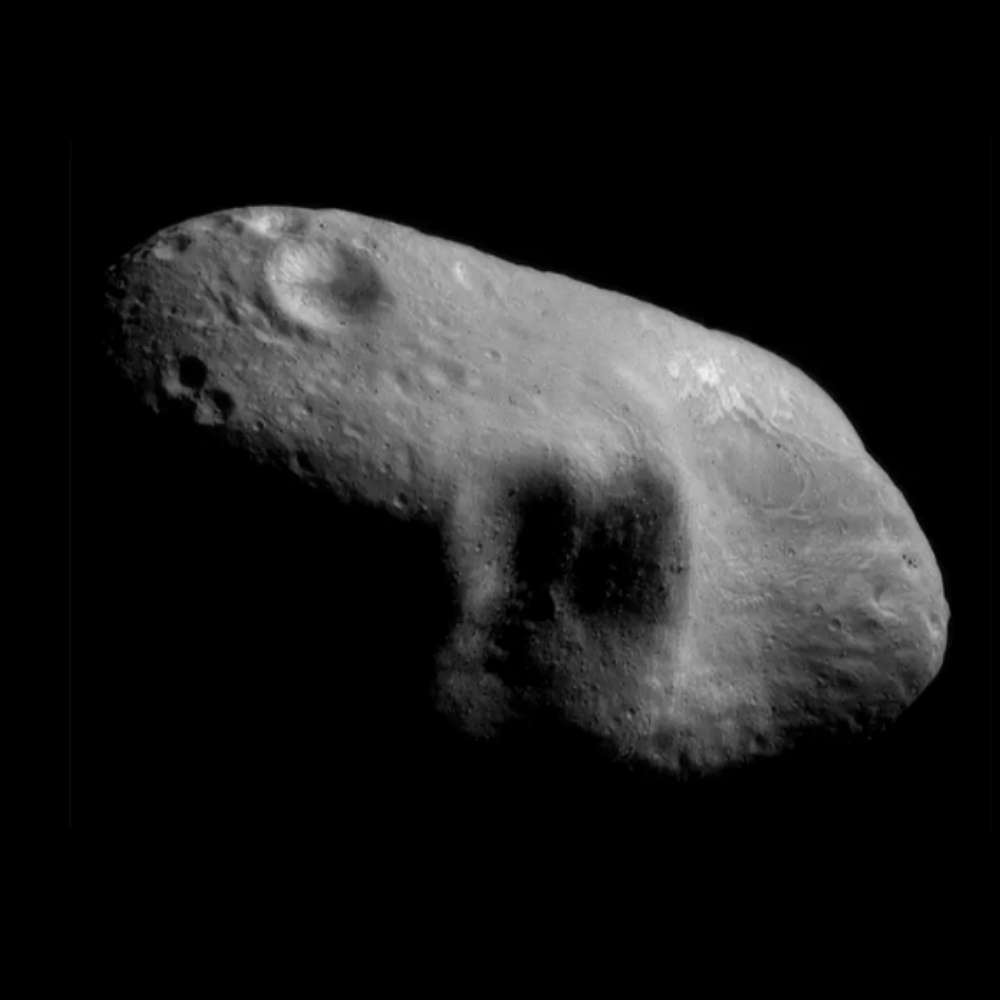
1685 Toro
The Asteroid That Repeatedly Visits Earth’s Neighborhood
Quick Reader
| Attribute | Details |
|---|---|
| Official Designation | 1685 Toro |
| Object Type | Near-Earth Asteroid (Apollo group) |
| Discovery Year | 1948 |
| Discoverer | Karl Reinmuth |
| Orbital Class | Earth-crossing (Apollo-type) |
| Orbital Period | ~1.76 Earth years |
| Semi-major Axis | ~1.37 AU |
| Eccentricity | ~0.44 |
| Inclination | ~9.4° |
| Estimated Diameter | ~3–4 km |
| Rotation Period | ~10.2 hours |
| Hazard Status | Potentially Hazardous Asteroid (PHA) |
| Resonance | Near 5:8 resonance with Earth |
Key Insights
- 1685 Toro is one of the largest and best-studied near-Earth asteroids
- It follows a repeating orbital pattern that brings it close to Earth
- Its orbit is dynamically stable on long timescales
- Toro plays a key role in understanding Earth-crossing asteroid dynamics
Introduction – A Familiar Visitor with a Predictable Path
Most near-Earth asteroids pass by once and vanish into deep space, never to be seen again.
1685 Toro is different.
It returns again and again, following a remarkably regular orbital rhythm that brings it close to Earth at predictable intervals. Because of this stability and size, Toro has become one of the most important reference objects for studying how potentially hazardous asteroids behave over long periods of time.
What Is 1685 Toro?
1685 Toro is a large Apollo-type near-Earth asteroid, meaning its orbit crosses Earth’s orbit around the Sun.
However, “Earth-crossing” does not mean chaotic or random.
Toro’s motion is governed by:
A well-defined elliptical orbit
Moderate inclination relative to Earth’s orbital plane
Subtle gravitational resonances with Earth
These factors combine to create a surprisingly orderly trajectory.
Why Toro Is Classified as Potentially Hazardous
An asteroid is classified as a Potentially Hazardous Asteroid (PHA) if:
Its minimum orbit intersection distance (MOID) with Earth is less than 0.05 AU
Its size is large enough to cause significant damage if an impact occurred
1685 Toro meets both criteria.
That said, “potentially hazardous” does not mean “imminently dangerous.”
It means the object is worth careful, long-term monitoring.
Discovery and Early Observations
1685 Toro was discovered in 1948 by German astronomer Karl Reinmuth.
At the time:
Near-Earth asteroids were poorly understood
Long-term orbital predictions were limited
The population of Earth-crossers was largely unknown
Toro quickly stood out due to its size and repeated close approaches, making it a natural target for continued observation.
An Orbit Shaped by Resonance
One of Toro’s defining characteristics is its near 5:8 orbital resonance with Earth.
This means:
For every 8 orbits Earth completes
Toro completes nearly 5 orbits
This resonance helps:
Maintain long-term orbital stability
Prevent chaotic close encounters
Produce repeating approach geometries
Rather than increasing danger, this resonance reduces unpredictability.
Why Toro’s Orbit Is Surprisingly Stable
Many Earth-crossing asteroids evolve chaotically due to repeated gravitational kicks.
Toro does not.
Its stability arises from:
Resonant timing with Earth
Avoidance of very close encounters
A relatively large mass that resists rapid perturbation
Numerical simulations show Toro’s orbit remains coherent over hundreds of thousands to millions of years.
Physical Characteristics – A Large Near-Earth Asteroid
With an estimated diameter of 3–4 kilometers, 1685 Toro is large compared to most near-Earth asteroids.
This implies:
Strong self-gravity
A likely rubble-pile or fractured interior
A significant impact energy potential
Its rotation period of ~10 hours suggests a structurally stable body rather than a loose, rapidly spinning aggregate.
Why Scientists Pay Special Attention to Toro
Toro is not studied because it is the most dangerous asteroid.
It is studied because it is:
Large enough to matter
Close enough to monitor easily
Dynamically stable enough to model accurately
As a result, Toro serves as a benchmark object for testing near-Earth asteroid theories.
1685 Toro in the Context of Near-Earth Objects
Toro sits at an important middle ground:
More stable than most Earth-crossers
More accessible than distant asteroids
Less chaotic than newly injected near-Earth objects
This makes it ideal for understanding how some asteroids remain near Earth for very long periods without colliding.
Universe Map Context – Why 1685 Toro Deserves Focus
1685 Toro connects multiple themes central to Universe Map:
Orbital resonance
Planetary defense
Long-term Solar System stability
The behavior of large near-Earth bodies
It demonstrates that proximity does not always imply danger, and that gravitational structure can impose order even in Earth-crossing space.
Long-Term Orbital Evolution of 1685 Toro
1685 Toro’s orbit has been modeled extensively because it represents a rare case of an Earth-crossing asteroid with predictable, long-term behavior.
Numerical integrations show that:
Toro’s semi-major axis and eccentricity vary slowly
Close encounters with Earth are regulated by resonance timing
Orbital chaos is suppressed compared to typical Apollo asteroids
Rather than random scattering, Toro follows a quasi-regular evolutionary path that can be traced far into the past and future.
Close Approaches – Regular, Not Random
Toro approaches Earth repeatedly, but not dangerously close on human timescales.
Key characteristics of its encounters:
Close approaches occur in repeating cycles
Distances remain well outside impact thresholds
Encounter geometry is similar each cycle
This repeatability is a direct consequence of its near 5:8 resonance with Earth, which acts as a gravitational metronome.
Minimum Orbit Intersection Distance (MOID)
Toro’s classification as a Potentially Hazardous Asteroid is based on geometry, not imminent risk.
Its MOID is below 0.05 AU
This qualifies it for long-term monitoring
It does not imply an impending collision
In practice, current orbital solutions show no credible impact risk for many thousands of years.
Why Resonance Reduces Risk Instead of Increasing It
Resonance is often associated with instability, but Toro demonstrates the opposite.
In Toro’s case:
Encounters occur at similar orbital phases
Energy exchange during flybys is minimized
Orbital drift is slow and predictable
This produces a protective resonance, where the asteroid and Earth repeatedly miss each other in a structured way.
Comparison with More Chaotic Earth-Crossers
Many near-Earth asteroids experience:
- Rapid orbital diffusion
- Sudden changes after close encounters
- Short dynamical lifetimes
Toro stands apart.
| Feature | 1685 Toro | Typical Apollo NEA |
|---|---|---|
| Orbital Stability | High | Low to moderate |
| Resonant Protection | Yes | Usually absent |
| Predictability | Long-term | Short-term |
| Dynamical Lifetime | Very long | Often short |
This contrast makes Toro a key object for comparative studies.
What Toro Teaches About Impact Risk Assessment
Toro shows that distance alone is not the best indicator of danger.
More important factors include:
Orbital resonance structure
Encounter timing
Long-term dynamical coherence
As a result, modern planetary defense relies on dynamical context, not just proximity.
Is Toro a Primordial Near-Earth Object?
Most near-Earth asteroids are temporary visitors, injected from the main belt and removed within a few million years.
Toro may be different.
Some models suggest:
It has occupied near-Earth space for an unusually long time
Its orbit may have evolved gradually rather than chaotically
It could represent a long-lived NEA subclass
While not proven to be primordial, Toro clearly sits at the long-lived end of the NEA spectrum.
Physical Stability and Orbital Stability
Toro’s physical properties support its dynamical longevity.
Its relatively large size implies:
Resistance to Yarkovsky-driven drift
Lower sensitivity to non-gravitational forces
Structural robustness
Smaller NEAs evolve faster; Toro evolves slowly.
Why Toro Is a Reference Object in Simulations
Because of its stability, Toro is often used to:
Test long-term numerical integration methods
Study resonance-driven protection mechanisms
Benchmark near-Earth population models
It provides a clean case where orbital physics dominates over randomness.
Toro and the Broader Near-Earth Population
Toro suggests that the near-Earth asteroid population is not uniformly chaotic.
Instead, it contains:
Short-lived, unstable objects
Intermediate cases
Rare, long-lived resonant bodies
Understanding this diversity is essential for accurate risk assessment.
Universe Map Perspective – Order in Earth-Crossing Space
1685 Toro illustrates a central lesson of celestial mechanics:
Even in Earth-crossing space, structure can dominate over chance.
Its orbit is a reminder that gravitational resonances can create long-term order where intuition expects instability.
The Future Evolution and Ultimate Fate of 1685 Toro
Despite being an Earth-crossing asteroid, 1685 Toro is not on a fast track toward collision or ejection.
Long-term numerical studies indicate that:
Toro’s resonant relationship with Earth persists for very long periods
Orbital parameters drift slowly rather than abruptly
Major destabilization requires rare, cumulative perturbations
Over hundreds of thousands to millions of years, Toro is expected to remain a near-Earth object with broadly similar encounter patterns.
Could Toro Ever Become Dangerous?
In celestial mechanics, “never” is a dangerous word — but not all PHAs are equal.
For Toro:
No impact solutions exist in current long-term models
Resonance geometry prevents very close Earth encounters
Small orbital changes tend to be self-correcting rather than amplifying
Only extreme scenarios — such as long-term resonance overlap involving multiple planets — could significantly alter its trajectory, and those operate on timescales far beyond human planning horizons.
Non-Gravitational Effects and Why They Matter Less for Toro
Many near-Earth asteroids evolve rapidly due to subtle forces like the Yarkovsky effect, where uneven heating causes slow orbital drift.
Toro is less affected because:
Its size (3–4 km) reduces thermal recoil influence
Its mass provides inertia against rapid orbital change
Resonant locking dampens gradual drift
As a result, Toro’s orbit evolves more slowly and more predictably than most NEAs.
What 1685 Toro Teaches Us About Planetary Defense
Toro is important not because it threatens Earth, but because it clarifies how threat assessment should work.
It demonstrates that:
“Potentially hazardous” is a monitoring category, not a danger label
Orbital structure matters more than raw distance
Resonances can stabilize, not destabilize, Earth-crossing objects
Modern planetary defense focuses on dynamical behavior, and Toro is a textbook example of why that approach works.
Toro as a Model for Long-Lived Near-Earth Objects
Most near-Earth asteroids are temporary visitors.
Toro shows that a minority may be:
Long-lived
Resonantly protected
Dynamically orderly
This implies that the near-Earth population is not purely transient, but includes stable subpopulations shaped by orbital architecture.
Frequently Asked Questions (Expanded)
Is 1685 Toro likely to impact Earth in the future?
No.
Current models show no credible impact risk for many thousands of years, and likely much longer.
Why is Toro labeled “potentially hazardous” if it is stable?
The label is based on size and orbital proximity, not predicted impact.
Toro qualifies geometrically, but not dynamically.
How often does Toro pass near Earth?
Toro’s close approaches occur in repeating cycles governed by its near 5:8 resonance with Earth, producing predictable encounter patterns.
Is Toro unusually large for a near-Earth asteroid?
Yes.
At several kilometers in diameter, it is larger than most NEAs and among the largest Earth-crossing asteroids regularly studied.
Could Toro be a target for future missions?
In principle, yes.
Its predictable orbit and size make it scientifically interesting, though it is not a priority target compared to smaller, more accessible NEAs.
Does Toro represent a unique object?
Not unique, but rare.
It belongs to a small class of long-lived, resonantly stabilized near-Earth asteroids.
Why 1685 Toro Matters for Universe Map
1685 Toro aligns perfectly with Universe Map’s core theme:
structure hidden beneath apparent chaos.
It connects:
Orbital resonance theory
Near-Earth asteroid populations
Planetary defense methodology
Long-term Solar System stability
Toro shows that even in Earth-crossing space, gravitational order can persist for immense spans of time.
Related Topics for Universe Map
Near-Earth asteroids
Apollo-group asteroids
Orbital resonance
Planetary defense
Potentially Hazardous Asteroids (PHA)
Earth-crossing dynamics
Together, these topics explain how proximity, motion, and gravity interact to shape Earth’s cosmic environment.
Final Perspective
1685 Toro is not frightening because it comes close to Earth.
It is fascinating because it does so reliably, predictably, and without chaos.
In a region of space often portrayed as dangerous and unstable, Toro represents an exception — a reminder that gravity can impose long-term order even where paths cross.
By studying Toro, astronomers learn not just how impacts happen, but how they don’t — and why understanding orbital structure is the key to separating risk from reassurance.