







2020 XL₅
Earth’s Second Confirmed Trojan Asteroid
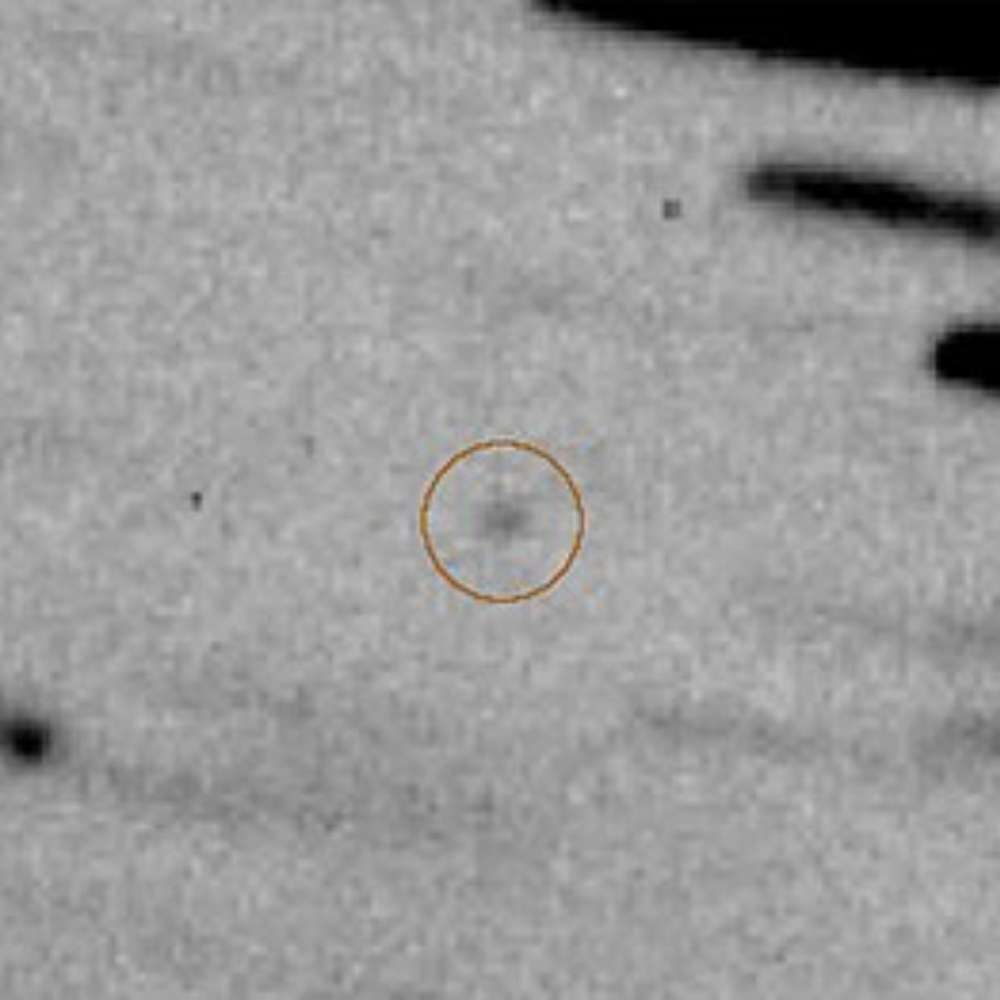
Quick Reader
| Attribute | Details |
|---|---|
| Official Designation | 2020 XL₅ |
| Object Type | Near-Earth Asteroid (Earth Trojan) |
| Discovery Year | 2020 |
| Discoverer | Pan-STARRS survey |
| Orbital Relationship | Earth Trojan (L₄ region) |
| Lagrange Point | Sun–Earth L₄ |
| Orbital Period | ~1 Earth year |
| Estimated Diameter | ~1–2 km |
| Orbital Stability | Thousands to tens of thousands of years |
| Inclination | Moderate (~13°) |
| Significance | Second confirmed Earth Trojan |
Why 2020 XL₅ Is Special (Quick Context)
2020 XL₅ is only the second confirmed Trojan asteroid of Earth, following the discovery of 2010 TK₇. Its detection demonstrated that Earth’s Lagrange points are not merely theoretical constructs but can host long-lived natural companions.
Key Insight Snapshot
- Second known Earth Trojan ever confirmed
- Occupies the Sun–Earth L₄ region
- Larger than Earth’s first known Trojan, 2010 TK₇
- More dynamically stable than previously expected
- Expands understanding of Earth’s gravitational neighborhood
Introduction — Earth Does Have Trojans
For decades, astronomers knew that giant planets like Jupiter host thousands of Trojan asteroids.
Earth, by contrast, was long believed to be Trojan-poor.
The discovery of 2020 XL₅ changed that assumption.
Hidden in the glare near the Sun, this asteroid quietly shares Earth’s orbit, maintaining a delicate gravitational balance at one of the Solar System’s most subtle stability points.
Its existence confirms that Earth is not orbiting the Sun alone.
What Is an Earth Trojan? (Clear Concept)
An Earth Trojan is an asteroid that:
Orbits the Sun
Shares Earth’s orbital period
Resides near a Sun–Earth Lagrange point (L₄ or L₅)
Is not gravitationally bound to Earth like a moon
At these Lagrange points, gravitational forces and orbital motion balance in a way that allows objects to remain nearby for long periods.
2020 XL₅ resides near L₄, about 60° ahead of Earth in its orbit.
Discovery — Found Where We Rarely Look
2020 XL₅ was discovered by the Pan-STARRS survey in December 2020.
Why it took so long to find:
Earth Trojans appear close to the Sun in the sky
Observations are limited to twilight hours
Objects are faint and move slowly relative to Earth
Only modern wide-field surveys with advanced motion-detection algorithms made such discoveries possible.
2020 XL₅ was not hiding because it was rare—but because it was hard to see.
Orbital Dynamics — Why L₄ Is Special
The Sun–Earth L₄ point is one of the system’s most stable gravitational regions.
Objects near L₄:
Remain roughly 60° ahead of Earth
Trace small oscillations (“tadpole orbits”)
Avoid close encounters with Earth
Numerical simulations show that 2020 XL₅’s orbit is:
More stable than Earth’s first Trojan
Likely persistent for thousands of years
Resistant to rapid planetary perturbations
This makes it one of Earth’s most durable natural companions.
How 2020 XL₅ Differs from 2010 TK₇
Earth’s first known Trojan, 2010 TK₇, surprised astronomers—but it is dynamically unstable.
2020 XL₅ is different.
Key contrasts:
Larger size
Lower orbital eccentricity
Greater long-term stability
Deeper residence within the L₄ region
Together, these differences suggest that multiple dynamical classes of Earth Trojans may exist.
Physical Nature — What Kind of Asteroid Is It?
Based on observations, 2020 XL₅ is likely:
Rocky (S-type)
Kilometer-scale in size
Irregular in shape
Airless and ancient
Its size alone makes it significant—larger than most known near-Earth objects occupying similar resonant states.
Why 2020 XL₅ Matters Scientifically
2020 XL₅ is important because it:
Confirms Earth can host stable Trojans
Expands the known population beyond a single object
Tests models of near-Earth orbital stability
Provides clues to early Solar System dynamics
It also raises a key question:
How many more Earth Trojans remain undiscovered?
A Hidden Population Near Earth
Models suggest Earth’s L₄ and L₅ regions could host:
Dozens of small Trojans
A few kilometer-scale objects
Transient companions moving in and out
2020 XL₅ may be the largest and most stable of a largely unseen population.
2020 XL₅ in the Bigger Picture
This asteroid connects several major themes:
Lagrange point dynamics
Near-Earth asteroid populations
Planetary orbital resonances
Earth’s extended gravitational environment
It shows that even close to home, the Solar System still holds surprises.
Long-Term Orbital Stability — How Secure Is 2020 XL₅?
After discovery, astronomers ran extensive numerical simulations to test whether 2020 XL₅ was a temporary visitor or a long-term resident of Earth’s L₄ region.
The results were unexpectedly encouraging.
Simulations indicate that:
2020 XL₅ remains trapped near L₄ for thousands to tens of thousands of years
Its orbit oscillates gently around the Lagrange point
Close encounters with Earth are naturally avoided
Perturbations from Venus and Mars are relatively weak
While not permanent on billion-year timescales, 2020 XL₅ is far more stable than 2010 TK₇, making it Earth’s most secure known Trojan to date.
Why Earth Trojans Are Harder to Keep Than Jupiter Trojans
Jupiter’s Trojan swarms are famously stable, containing thousands of objects.
Earth’s situation is very different.
Key reasons include:
Earth’s much smaller mass
Strong gravitational influence from Venus and Mars
The Moon’s additional perturbations
Greater sensitivity to secular resonances
As a result, Earth Trojans tend to be:
Fewer in number
More dynamically delicate
Often temporary rather than primordial
The fact that 2020 XL₅ survives as long as it does makes it dynamically remarkable.
Comparison with Trojans of Other Planets
Earth Trojans occupy the same fundamental gravitational niches as Trojan asteroids of other planets, but their long-term behavior differs significantly depending on the planet’s mass and orbital environment.
| Planet | Trojan Population | Typical Stability |
|---|---|---|
| Jupiter | Thousands | Billions of years |
| Neptune | Dozens known | Very long-lived |
| Mars | A few | Moderately stable |
| Earth | Two confirmed | Short-to-moderate |
| Venus | None confirmed | Highly unstable |
Interpretation
Earth resides in a dynamically crowded region of the Solar System, where gravitational perturbations from nearby planets significantly limit long-term orbital stability.
Stable Trojan orbits around Earth do exist—but only within narrow corridors of orbital phase space.
2020 XL₅ happens to occupy one of these rare, dynamically protected corridors, explaining its unusual persistence compared with most Earth-co-orbital objects.
Possible Origins — Where Did 2020 XL₅ Come From?
The origin of 2020 XL₅ is still debated.
Leading hypotheses include:
Captured Near-Earth Asteroid
Object formed elsewhere in the inner Solar System
Later captured into Earth’s 1:1 resonance
Gradually settled near L₄
Primordial Survivor (Less Likely)
Object formed during early Solar System history
Survived planetary migration and chaos
Retained a Trojan-like orbit near Earth
Current evidence favors capture, not primordial origin, given the instability of Earth’s Trojan regions over billions of years.
Does 2020 XL₅ Pose Any Risk to Earth?
No.
Despite sharing Earth’s orbit, 2020 XL₅:
Does not cross Earth’s path
Remains gravitationally separated by resonance
Avoids close approaches naturally
Trojan motion is protective, not threatening.
In fact, Earth Trojans are among the least dangerous near-Earth objects, dynamically speaking.
Why 2020 XL₅ Is Easier to Study Than Earlier Candidates
Earlier suspected Earth Trojans were often:
Poorly observed
Unstable on short timescales
Difficult to recover observationally
2020 XL₅ stands out because:
It is relatively large and bright
Its orbit is well constrained
It remains observable over multiple apparitions
This makes it a benchmark object for studying Earth Trojan dynamics.
Implications for Future Searches
The discovery of 2020 XL₅ suggests that Earth’s L₄ and L₅ regions are underexplored, not empty.
Improved detection methods may reveal:
Additional kilometer-scale Earth Trojans
Smaller transient companions
Objects transitioning between Trojan and near-Earth states
Future twilight surveys and space-based infrared observatories could dramatically expand this population.
Scientific Value Beyond Dynamics
2020 XL₅ is not only interesting dynamically.
It could also:
Preserve ancient material from the inner Solar System
Provide clues about early planetary accretion
Serve as a potential target for future robotic missions
Earth Trojans occupy stable, low-energy-access regions—making them scientifically and logistically attractive.
The Ultimate Fate of 2020 XL₅ — A Long Companion, Not a Permanent One
2020 XL₅ is stable—but not eternal.
Numerical simulations suggest that while it can remain near Earth’s L₄ point for thousands to tens of thousands of years, gravitational perturbations will eventually alter its orbit.
Possible long-term outcomes include:
Gradual escape from the L₄ region
Transition into a horseshoe orbit
Evolution into a standard near-Earth asteroid
Rarely, close planetary encounters altering its trajectory
This behavior reflects the inherently fragile nature of Earth Trojan stability, especially compared to the Trojan swarms of giant planets.
Why Earth Trojans Matter in Planetary Science
Earth Trojans are scientifically valuable because they:
Occupy a unique gravitational niche
Experience minimal thermal and collisional evolution
Preserve ancient inner Solar System material
Test models of resonance capture and loss
Objects like 2020 XL₅ act as natural experiments, showing how small bodies behave near a terrestrial planet over long periods.
Could Earth Trojans Be Targets for Future Missions?
Yes—potentially.
Earth Trojans offer several advantages:
Relatively low energy requirements for spacecraft access
Long-term orbital predictability
Proximity compared to main-belt asteroids
Possible mission goals could include:
Surface composition analysis
Sample-return missions
In-situ study of Trojan dynamics
Such missions would provide unprecedented insight into near-Earth resonant populations.
Frequently Asked Questions (Expanded)
Is 2020 XL₅ a moon of Earth?
No. It is not gravitationally bound to Earth. It orbits the Sun while sharing Earth’s orbital period.
How is it different from Kamoʻoalewa?
Kamoʻoalewa is a quasi-moon, while 2020 XL₅ is a true Earth Trojan occupying the L₄ region.
Can Earth have more Trojans?
Yes. Models suggest additional Earth Trojans likely exist but remain undetected due to observational challenges.
Is 2020 XL₅ dangerous?
No. Its Trojan orbit prevents close encounters with Earth.
Why wasn’t it discovered earlier?
Because Earth Trojans appear close to the Sun in the sky, making them difficult to observe with traditional surveys.
Will it stay with Earth forever?
No. Its association with Earth is long-lived but temporary on cosmic timescales.
What 2020 XL₅ Reveals About Earth’s Neighborhood
The discovery of 2020 XL₅ reinforces an important idea:
Earth’s orbital environment is more complex than it appears.
Beyond the Moon and near-Earth asteroids, Earth’s gravitational influence extends into subtle resonant structures that can host companions for surprisingly long periods.
These structures are easy to overlook—but dynamically significant.
2020 XL₅ in the Universe Map Context
Within Universe Map, 2020 XL₅ connects directly to:
Lagrange point dynamics
Trojan asteroids
Near-Earth object populations
Earth–Sun orbital mechanics
Resonant celestial companions
Together, these topics reveal how orbital resonance shapes planetary systems, even close to home.
Final Perspective
2020 XL₅ is not dramatic.
It does not approach Earth.
It does not threaten our planet.
It does not shine brightly in the night sky.
Yet its importance lies precisely in that subtlety.
By quietly sharing Earth’s orbit from a stable gravitational refuge, 2020 XL₅ proves that even in Earth’s immediate neighborhood, the Solar System still holds hidden structure and long-lived companions.
It reminds us that planetary systems are not defined only by planets and moons—but by resonances, balance points, and delicate gravitational choreography.