








Pallas
The High-Inclination Survivor of the Asteroid Belt
Quick Reader
| Attribute | Details |
|---|---|
| Object Name | 2 Pallas |
| Object Type | Large asteroid / Protoplanet candidate |
| Location | Main Asteroid Belt |
| Discovery | 1802 |
| Discoverer | Heinrich Wilhelm Olbers |
| Mean Diameter | ~512 km |
| Rank by Size | 3rd largest asteroid (after Ceres, Vesta) |
| Shape | Irregular, slightly elongated |
| Orbital Period | ~4.62 Earth years |
| Rotation Period | ~7.8 hours |
| Inclination | ~34.8° (extremely high) |
| Composition | Carbonaceous (B-type) |
| Differentiation | Partial or uncertain |
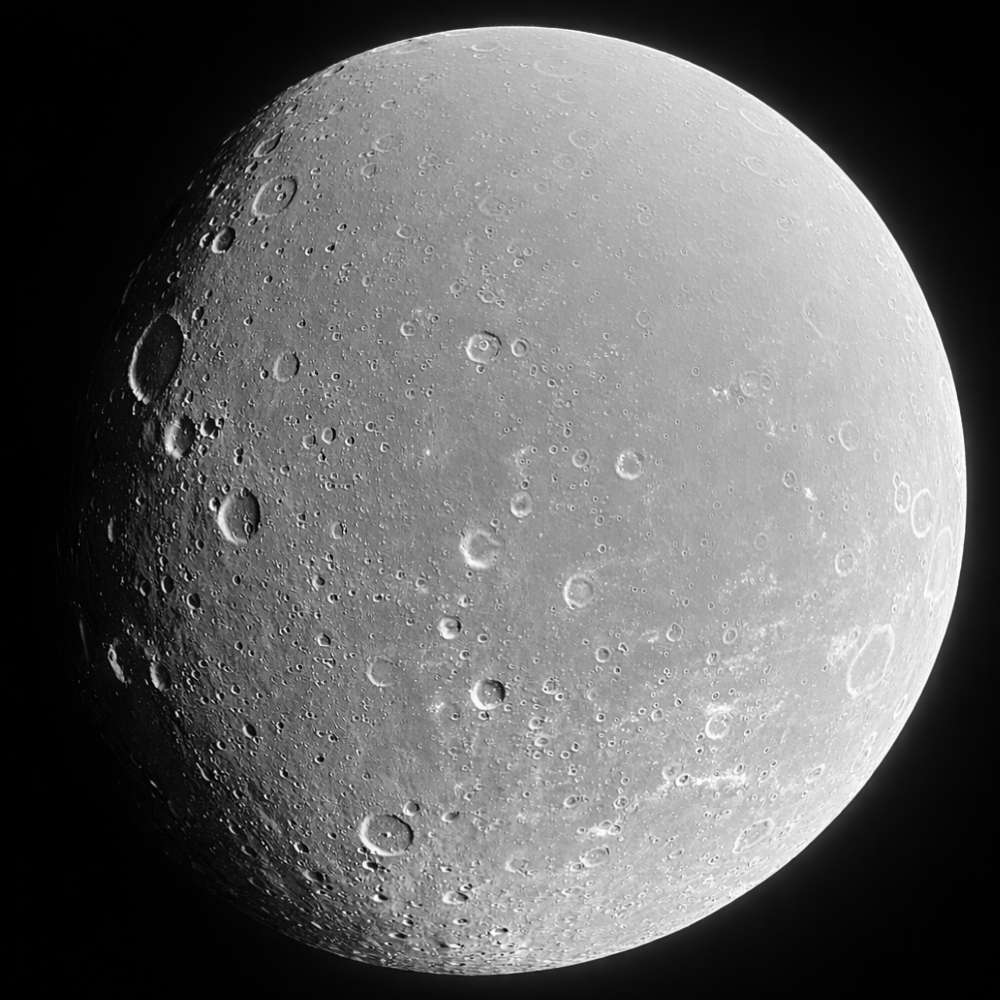
| Surface | Heavily cratered, primitive |
| Notable Feature | Highly tilted orbit |
Key Highlights
- Pallas has one of the most inclined orbits in the Solar System
- It follows a tilted, dynamically unusual path through the asteroid belt
- Composition is primitive and carbon-rich, unlike Vesta
- May represent a different evolutionary branch of early protoplanets
- Its orbit prevented frequent collisions and major growth
Introduction – The Asteroid That Refused to Stay Flat
Most objects in the Solar System orbit close to a single plane—the plane defined by the planets.
Pallas does not.
With an orbital inclination of nearly 35 degrees, Pallas cuts through the asteroid belt on a steeply tilted path, avoiding the crowded regions where collisions and accretion were common.
This single fact changed its destiny.
While other large bodies collided, melted, or differentiated, Pallas remained isolated, primitive, and dynamically strange—a survivor of an early Solar System that never fully settled.
What Is Pallas?
Pallas is one of the earliest discovered asteroids and remains one of the most enigmatic.
It is:
Large enough to be planet-like in scale
Old enough to record primordial Solar System conditions
Primitive enough to preserve early material
Unlike Vesta, Pallas did not become volcanic.
Unlike Ceres, it did not evolve into a dwarf planet.
Pallas represents a third path—large, ancient, but evolutionarily restrained.
Size and Mass – Big Enough to Matter
At over 500 km in diameter, Pallas sits just below Vesta in size.
However, size alone did not determine its fate.
Despite being comparable in scale:
Pallas did not fully differentiate
Internal melting was limited or incomplete
Its structure remains uncertain
This suggests that environment and orbit, not size, controlled its evolution.
The Extreme Orbit – Pallas’s Defining Trait
Pallas’s orbit is its most important feature.
Key characteristics:
Inclination far higher than most asteroids
Highly tilted relative to the ecliptic plane
Fewer encounters with other large bodies
Because of this orbit:
Pallas avoided frequent high-energy collisions
Accretion slowed early
Growth stalled before planetary evolution could begin
Pallas was not shattered—but it was starved.
Composition – A Primitive Carbon-Rich World
Pallas belongs to the B-type asteroid class, a subset of carbonaceous asteroids.
This implies:
High abundance of primitive material
Possible presence of hydrated minerals
Very little thermal alteration
Unlike Vesta’s basaltic surface, Pallas’s surface reflects:
Early Solar System chemistry
Material close to original solar nebula composition
Pallas may contain some of the least processed material of any large asteroid.
Surface Characteristics – Ancient and Unreworked
Observations suggest that Pallas’s surface is:
Heavily cratered
Dark and relatively uniform
Lacking clear signs of resurfacing
This indicates:
No major volcanism
No large-scale tectonics
No global melting
Once again, Pallas resembles a frozen record, not an evolving world.
Pallas vs Vesta – First Comparison
| Feature | Pallas | Vesta |
|---|---|---|
| Composition | Carbon-rich | Basaltic |
| Differentiation | Partial / unclear | Full |
| Volcanism | None detected | Ancient |
| Orbit Inclination | Very high | Low |
| Evolution Path | Primitive | Planet-like |
This comparison highlights how orbital dynamics can override size in determining planetary fate.
Why Pallas Matters
Pallas matters because it:
Represents a non-standard growth path
Preserves early Solar System material
Shows how tilted orbits limit planetary evolution
Complements Vesta and Ceres in understanding asteroid diversity
Without Pallas, our picture of early planetary embryos would be incomplete.
Why Ganymede Matters
Ganymede matters because it:
Blurs the line between moons and planets
Demonstrates planetary-scale processes in a moon
Hosts a long-lived subsurface ocean
Expands the definition of potentially habitable environments
It is one of the most complex non-planetary bodies ever discovered.
Formation Environment – Born in an Unstable Zone
Pallas likely formed very early in the Solar System’s history, at roughly the same time as Vesta and Ceres. However, the environment in which it formed was dynamically different.
Key conditions shaping Pallas’s early evolution:
Strong gravitational perturbations in the early asteroid belt
Rapid excitation of orbital inclinations
Increasing influence of Jupiter as it grew
As Jupiter formed and migrated, the asteroid belt became dynamically “heated.”
Pallas appears to have been scattered into a high-inclination orbit early, removing it from the dense, collision-rich plane where planetary growth was possible.
This early displacement shaped everything that followed.
Why Pallas Never Fully Differentiated
Differentiation requires sustained internal heat.
Pallas likely failed to reach this threshold because:
Accretion slowed too early
Radioactive heating was insufficient
Impacts were less frequent due to orbital tilt
As a result:
Any internal melting was limited
Rock and volatile-rich material remained mixed
A layered planetary structure never fully developed
Pallas sits near the boundary between differentiated and primitive bodies, making it a key test case for planetary formation models.
The Role of Orbital Inclination in Planetary Failure
Pallas’s extreme inclination was not just unusual—it was decisive.
High-inclination orbits lead to:
Fewer low-velocity collisions
Reduced accretion efficiency
Higher chances of isolation
In the flat disk of the early Solar System, growth depended on frequent, gentle impacts.
Pallas’s tilted path removed it from this process.
Instead of growing, Pallas survived.
The Pallas Asteroid Family
Despite its isolation, Pallas is associated with a distinct asteroid family.
This family likely formed when:
A major impact struck Pallas
Debris was ejected along similar high-inclination paths
Characteristics of the Pallas family:
High orbital inclinations
Similar spectral properties
Carbon-rich composition
Unlike many asteroid families, Pallas-family members remain dynamically separated from the main belt, reinforcing the importance of orbital geometry.
Pallas Compared to Ceres – Two Primitive Giants
Although similar in size, Pallas and Ceres followed different evolutionary paths.
| Feature | Pallas | Ceres |
|---|---|---|
| Orbital Inclination | Very high | Low |
| Composition | Carbon-rich (B-type) | Ice-rich |
| Differentiation | Limited | Partial |
| Volatiles | Moderate | High |
| Planetary Status | Asteroid | Dwarf planet |
Ceres remained in the disk and evolved internally.
Pallas escaped early and remained primitive.
Jupiter’s Indirect Influence on Pallas
Jupiter likely shaped Pallas without ever encountering it directly.
Its growing mass:
Excited orbital inclinations in the asteroid belt
Created long-term resonances
Disrupted orderly accretion
Pallas’s current orbit may be a fossil record of Jupiter’s early chaos, preserved because it avoided later collisions and reshaping.
Why Pallas Is Difficult to Study
Compared to Vesta or Ceres, Pallas remains poorly explored.
Challenges include:
Highly inclined orbit
Limited spacecraft missions
Fainter surface features
As a result:
Internal structure remains uncertain
Surface composition is inferred remotely
Many questions remain open
This makes Pallas one of the least understood major bodies in the asteroid belt.
What Pallas Teaches Us So Far
Pallas demonstrates that:
Planetary growth is fragile
Orbital dynamics can override size
Survival does not imply evolution
It represents a pathway where avoidance, not activity, determined fate.
The Long-Term Future of Pallas
Pallas is dynamically stable on long timescales.
Because of its highly inclined orbit, it spends much of its time above and below the main asteroid belt, reducing the probability of major collisions. This isolation, which limited its growth in the past, now protects it.
Over the next billions of years, Pallas is expected to:
Remain on a high-inclination orbit
Experience only minor impacts
Preserve its ancient surface and internal structure
In contrast to bodies that evolve through activity, Pallas evolves through persistence.
Can Pallas Ever Become Geologically Active?
The answer is almost certainly no.
Pallas lacks:
Internal heat sources
Tidal interactions
Sufficient mass to retain warmth
While impacts can locally alter the surface, they cannot restart differentiation or internal melting. Any geological evolution Pallas experienced ended very early in Solar System history.
Pallas is not dormant—it is thermally finished.
Why Pallas Remains Scientifically Important
Pallas is valuable precisely because it did not evolve.
It allows scientists to:
Study primitive material at large-body scales
Understand the limits of planetary differentiation
Test models of early orbital excitation
Compare multiple “failed planet” pathways
Where Vesta shows what happens when differentiation succeeds, Pallas shows what happens when it never fully begins.
Frequently Asked Questions (FAQ)
Is Pallas a dwarf planet?
No. Pallas is not massive enough to be in hydrostatic equilibrium and does not dominate its orbital zone.
Why is Pallas’s orbit so tilted?
Its inclination likely resulted from early gravitational disturbances in the asteroid belt, possibly linked to Jupiter’s rapid growth and migration.
Is Pallas similar to carbonaceous meteorites?
Yes. Its composition is consistent with primitive, carbon-rich material similar to some meteorite classes, though no direct samples are confirmed.
Why hasn’t Pallas been visited by a spacecraft?
Its high-inclination orbit makes missions more complex and costly compared to targets like Vesta and Ceres.
Does Pallas have water or ice?
Hydrated minerals are possible, but large quantities of surface ice are unlikely.
Pallas in the Context of Universe Map
Pallas connects several major themes within Universe Map:
Early Solar System dynamics
Orbital inclination and planetary fate
Primitive material preservation
Jupiter’s indirect gravitational influence
Related Universe Map topics include:
Vesta
Ceres
Asteroid Belt
Protoplanets
Jupiter
Together, these bodies explain why planetary formation produced multiple outcomes, not a single pathway.
Final Perspective
Pallas is a world shaped by avoidance rather than action.
By leaving the crowded plane of the Solar System early, it escaped the collisions and heating that drove planetary evolution elsewhere. What it lost in growth, it gained in preservation.
Pallas reminds us that not all survivors are winners—and not all unfinished worlds are failures.
Sometimes, the most valuable objects are the ones that stayed out of the way and kept the past intact.