







2015 TB₁₄₅
The Halloween Asteroid That Refined Planetary Defense
Quick Reader
| Attribute | Details |
|---|---|
| Official Designation | 2015 TB₁₄₅ |
| Nickname | Halloween Asteroid |
| Object Type | Near-Earth Asteroid (NEA) |
| Asteroid Class | Apollo-type |
| Discovery Date | 10 October 2015 |
| Discoverer | Pan-STARRS 1 |
| Estimated Diameter | ~600–700 meters |
| Closest Earth Approach | 31 October 2015 |
| Miss Distance | ~486,000 km (~1.3 lunar distances) |
| Rotation Period | ~5 hours |
| Composition | Likely carbon-rich, comet-like |
| Impact Threat | None (well-constrained orbit) |
Scientific Role
2015 TB₁₄₅ became a benchmark object for radar-based asteroid characterization, orbital refinement, and public-facing planetary defense communication.
Why It Matters
This asteroid demonstrated how modern detection, tracking, and radar imaging can quickly transform a potentially alarming object into a well-understood, non-threatening body.
Introduction – Why 2015 TB₁₄₅ Drew Global Attention
In late October 2015, headlines around the world warned of a large asteroid making a close pass by Earth—on Halloween night.
The object was real.
The risk was not.
2015 TB₁₄₅ passed closer than many near-Earth asteroids of comparable size, yet it posed no danger. What made it extraordinary was not the threat, but how precisely scientists were able to track, image, and understand it in real time.
This event marked a public demonstration of how far planetary defense capabilities had advanced.
Discovery and Rapid Follow-Up
2015 TB₁₄₅ was discovered only weeks before its closest approach, a scenario that once would have caused significant uncertainty.
Instead:
Its orbit was rapidly calculated
Impact risk was ruled out within days
Global observatories coordinated follow-up observations
This rapid response showcased the maturity of modern near-Earth object monitoring systems.
Orbital Characteristics – An Apollo-Type Asteroid
2015 TB₁₄₅ belongs to the Apollo group, meaning:
Its orbit crosses Earth’s orbital path
It spends most of its time beyond Earth’s orbit
Close approaches are possible but predictable
Key Orbital Traits
Earth-crossing trajectory
High relative velocity during flybys
Strong gravitational sensitivity to planetary encounters
Despite crossing Earth’s orbit, precise modeling showed no impact scenarios for the foreseeable future.
Size and Shape – A Substantial Near-Earth Object
With an estimated diameter of up to 700 meters, 2015 TB₁₄₅ is:
Large enough to cause regional devastation if it ever impacted
Small enough to be difficult to characterize without radar
Its size placed it in a critical category for planetary defense:
Objects too small to destroy civilization, but too large to ignore.
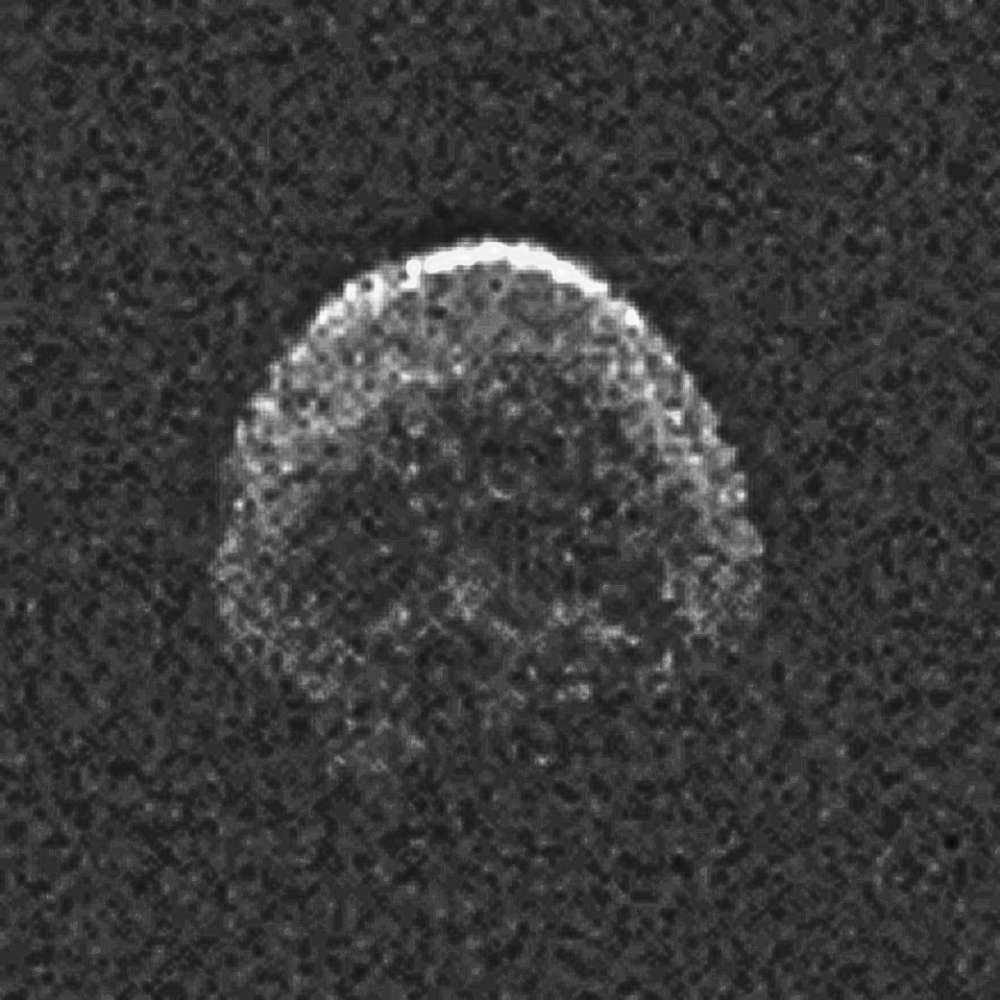
Radar Observations – Seeing an Asteroid in Detail
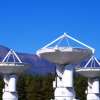
During its close approach, 2015 TB₁₄₅ was observed using powerful radar systems, including Arecibo.
Radar imaging revealed:
A roughly spheroidal, irregular shape
Surface features such as ridges and depressions
A slow, stable rotation
These observations allowed scientists to:
Measure size accurately
Refine the orbit to extreme precision
Eliminate long-term impact uncertainties
Radar turned a point of light into a measured physical object.
A Comet-Like Nature Without a Tail
Spectral and radar characteristics suggested that 2015 TB₁₄₅:
Is very dark
May be rich in carbonaceous material
Resembles dormant comet nuclei
However:
No gas or dust activity was observed
The object behaved dynamically like an asteroid
This places it in a growing category of transition objects between asteroids and comets.
Why 2015 TB₁₄₅ Matters Scientifically
This asteroid matters because it:
Tested rapid-response observation networks
Validated radar as a core defense tool
Improved size and composition estimation methods
Served as a public case study in risk communication
It became a textbook example of how modern planetary defense works when it works well.
Radar-Derived Physical Properties – Turning Echoes into Knowledge
The close approach of 2015 TB₁₄₅ allowed radar astronomers to extract an unusual level of physical detail.
Radar data made it possible to determine:
Overall size and shape with high confidence
Rotation rate and spin stability
Surface roughness at decameter scales
This was critical because optical brightness alone can be misleading, especially for very dark objects like 2015 TB₁₄₅.
Rotation and Spin State – A Calm, Predictable Object
Radar observations showed that 2015 TB₁₄₅ has a moderate and stable rotation, with a period of roughly five hours.
This matters because:
Extremely fast rotators may be monolithic
Extremely slow or chaotic rotators may be rubble piles
2015 TB₁₄₅ sits in between:
Stable spin
No evidence of tumbling
No signs of rotational breakup
This made it an ideal target for precise modeling and long-term orbital prediction.
Surface Texture – What Radar Reflections Revealed
Radar echoes indicated that the surface of 2015 TB₁₄₅ is:
Rough at meter-to-decameter scales
Lacking large smooth plains
Structurally complex
These properties are consistent with:
A heavily processed surface
Long exposure to space weathering
Possible cometary heritage
Surface roughness affects:
Thermal behavior
Yarkovsky drift over long timescales
Future trajectory evolution
Density and Internal Structure – What We Can Infer
While radar cannot directly measure density, combining radar size with dynamical models allows indirect inference.
For 2015 TB₁₄₅:
Density estimates favor a porous interior
Internal strength appears moderate
A rubble-rich or fractured structure is likely
This reinforces the idea that many large near-Earth asteroids are not solid rocks, but aggregates shaped by ancient collisions.
2015 TB₁₄₅ vs Other Close-Approach Asteroids
| Feature | 2015 TB₁₄₅ | Typical NEA Flyby |
|---|---|---|
| Size | Very large (~600–700 m) | Often <200 m |
| Radar Coverage | Extensive | Limited or none |
| Orbit Certainty | Extremely high | Often moderate |
| Public Attention | Global | Usually minimal |
| Defense Value | Reference-level | Case-specific |
This comparison highlights why 2015 TB₁₄₅ became a benchmark object rather than just another flyby.
Why This Flyby Was So Important for Planetary Defense
Before 2015 TB₁₄₅, many public discussions of asteroid threats were driven by uncertainty.
This event showed that:
Large NEAs can be characterized quickly
Radar dramatically reduces orbital uncertainty
Panic is unnecessary when data is available
For planetary defense professionals, 2015 TB₁₄₅ validated:
Rapid coordination between observatories
The effectiveness of current detection pipelines
The importance of maintaining radar capabilities
Public Communication – Science Under the Spotlight
The “Halloween asteroid” nickname brought intense media coverage.
This created a real-world test of:
How scientists communicate risk
How uncertainty is explained to the public
How misinformation can be corrected
The outcome was largely positive:
No impact fear escalated into panic
Accurate information dominated major outlets
Trust in monitoring institutions was reinforced
In this sense, 2015 TB₁₄₅ was as much a communication success as a scientific one.
Why 2015 TB₁₄₅ Became a Reference Object
This asteroid is frequently cited because it:
Represents a worst-case-sized non-impacting flyby
Was observed under ideal radar geometry
Has a well-constrained orbit far into the future
It now serves as:
A training example for planetary defense modeling
A comparison standard for future close approaches
Long-Term Orbit Predictions – Why 2015 TB₁₄₅ Is Not a Threat
After the 2015 flyby, astronomers extended orbital calculations far into the future.
The results were decisive:
No Earth impact trajectories were identified
Future close approaches remain well outside danger thresholds
Orbital uncertainty has been reduced to negligible levels
Radar ranging was critical here. Even tiny uncertainties in distance measurements, when removed, can eliminate entire classes of hypothetical impact scenarios.
2015 TB₁₄₅ became one of the best-constrained large near-Earth asteroids ever observed.
What This Event Changed in Impact-Risk Assessment
2015 TB₁₄₅ reshaped how scientists evaluate asteroid threats.
Before:
Size estimates were often highly uncertain
Brightness-based assumptions dominated
Public fear could escalate before data arrived
After:
Radar-based characterization became central
Uncertainty was rapidly reduced
Risk communication became more data-driven
This event proved that uncertainty, not proximity, drives perceived danger.
Planetary Defense Lessons from 2015 TB₁₄₅
The flyby reinforced several key principles:
Early detection matters more than dramatic headlines
Radar observation is irreplaceable for large NEAs
International coordination works when time is short
Clear communication prevents unnecessary panic
These lessons now shape planetary defense protocols worldwide.
Frequently Asked Questions (FAQ)
Was 2015 TB₁₄₅ ever on a collision course with Earth?
No. Impact risk was ruled out shortly after discovery.
Why did it receive so much media attention?
Its size, close approach, and timing near Halloween created dramatic headlines.
How close did it actually come to Earth?
Approximately 486,000 km, safely beyond the Moon’s orbit.
Could a similar asteroid be dangerous in the future?
Yes, but only if its orbit were different. Continuous monitoring reduces this risk.
Is 2015 TB₁₄₅ a comet?
It shows comet-like properties but no active behavior, placing it in a transitional category.
Why is radar so important for asteroid tracking?
Radar provides precise distance and motion data that optical observations alone cannot.
2015 TB₁₄₅ in the Broader Context of Earth Safety
This asteroid demonstrated that:
Large near-Earth objects can approach without danger
Modern systems can rapidly assess real risk
Planetary defense is an operational science, not science fiction
It served as a live demonstration of Earth’s growing ability to detect, analyze, and understand potential cosmic hazards.
What We Would Not Know Without 2015 TB₁₄₅
Without this event:
Confidence in rapid-response radar campaigns would be lower
Public trust in asteroid monitoring would be weaker
Risk communication strategies would be less tested
2015 TB₁₄₅ provided a stress test for planetary defense—and the system passed.
Related Topics for Universe Map
Near-Earth Asteroids (NEAs)
Apollo Asteroids
Planetary Defense
Radar Astronomy
Potentially Hazardous Asteroids (PHAs)
Yarkovsky Effect
Together, these topics explain how Earth monitors and manages asteroid risk.
Final Perspective
2015 TB₁₄₅ was never a threat—but it was a warning of sorts.
Not a warning of impending disaster, but a reminder that knowledge is the difference between fear and safety.
By transforming a dramatic close approach into a controlled scientific event, astronomers demonstrated that planetary defense is no longer hypothetical. It is measurable, testable, and increasingly reliable.
The Halloween asteroid did not scare Earth—it proved that Earth is paying attention.