






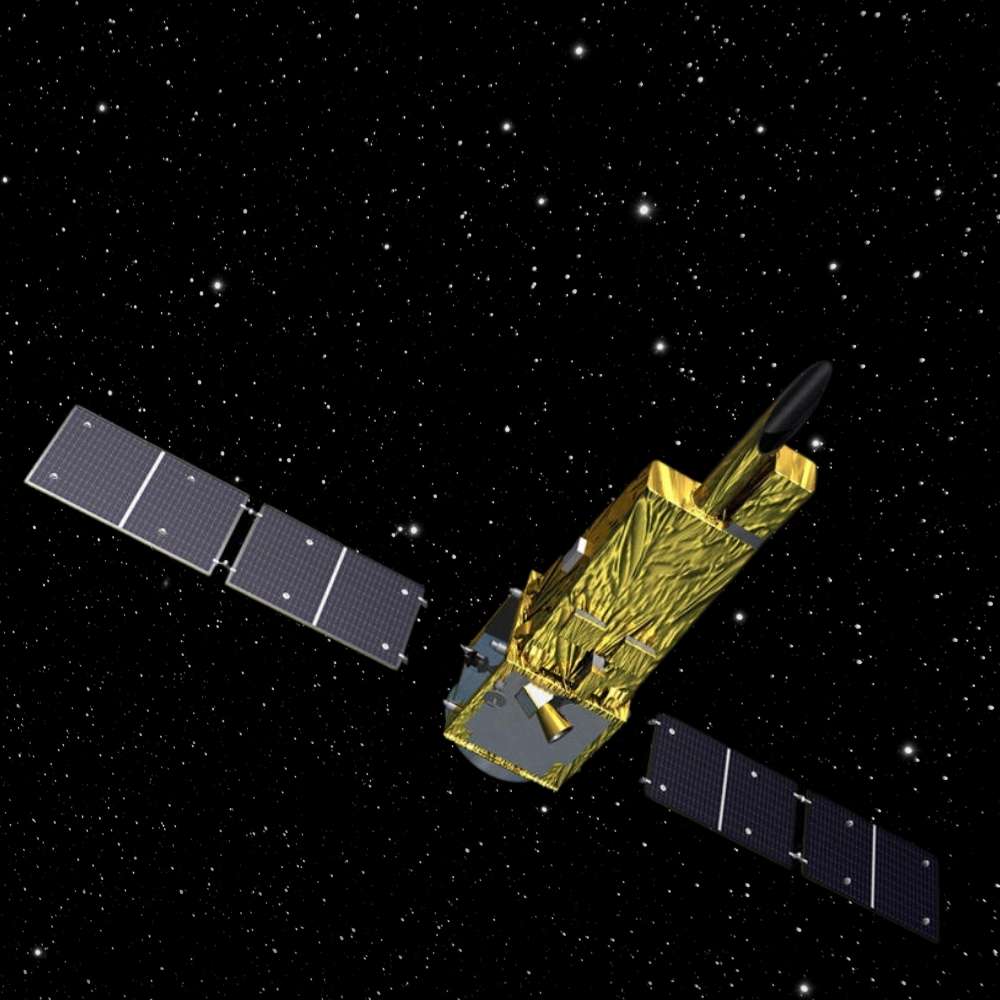
Hisaki
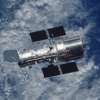
Japan’s First Space Telescope Dedicated to Planetary Atmospheres
Quick Reader
| Attribute | Details |
|---|---|
| Mission Name | Hisaki |
| Alternative Name | SPRINT-A |
| Space Agency | JAXA (Japan Aerospace Exploration Agency) |
| Mission Type | Extreme Ultraviolet (EUV) space telescope |
| Launch Date | 14 September 2013 |
| Launch Vehicle | Epsilon |
| Orbit Type | Earth orbit |
| Primary Wavelength | Extreme Ultraviolet (EUV) |
| Main Targets | Planetary atmospheres |
| Key Bodies Studied | Jupiter, Venus, Mars, Mercury |
| Mission Status | Operational (science phase completed, legacy data active) |
In two sentences
Hisaki is Japan’s first space telescope dedicated entirely to observing planetary atmospheres in extreme ultraviolet light. It revealed how planets interact with solar wind and space weather in real time.
Key takeaway
Hisaki showed that planetary atmospheres are dynamic systems, constantly shaped by the Sun.
Best for
Planetary science, space weather studies, atmospheric escape research, and Solar System physics.
Introduction – Watching Planets Breathe Under Solar Pressure
Planets do not exist in isolation.
They are immersed in a continuous stream of solar radiation and charged particles.
Hisaki was built to observe this interaction directly—by watching how planetary atmospheres glow, expand, and change under solar influence. Instead of taking snapshots, Hisaki monitored planets continuously, revealing atmospheric behavior over time rather than moments.
This made Hisaki a pioneer in time-domain planetary atmosphere science.
What Is Hisaki (SPRINT-A)?
Hisaki is an extreme ultraviolet space telescope designed to study:
Upper atmospheres of planets
Atmospheric escape processes
Interaction with solar wind
Magnetospheric activity
EUV light is completely absorbed by Earth’s atmosphere, so observing it requires space-based instruments.
Hisaki was the first mission ever dedicated solely to planetary EUV observation.
Why Extreme Ultraviolet (EUV) Matters
EUV wavelengths originate from:
Hot, ionized gases
Upper atmospheric layers
Magnetospheric interactions
In planetary science, EUV observations reveal:
Atmospheric heating
Ionization processes
Gas escape into space
These processes determine long-term atmospheric evolution, especially for planets without strong magnetic protection.
Mission Design – Small Satellite, Focused Science
Hisaki was a compact mission with a very specific goal.
Design highlights:
Single EUV spectrograph
Optimized for long-duration monitoring
Highly stable pointing system
Efficient, low-cost mission architecture
This showed that targeted small missions can deliver breakthrough science.
Primary Observation Strategy
Unlike flyby missions, Hisaki observed planets:
From Earth orbit
Over long continuous periods
Across multiple solar conditions
This allowed scientists to correlate:
Solar activity changes
Planetary atmospheric response
Magnetospheric dynamics
Such continuous monitoring was previously impossible.
Key Planetary Targets
Jupiter
Auroral emissions
Plasma interactions from Io
Magnetosphere–atmosphere coupling
Venus
Atmospheric escape
Solar wind interaction
Upper atmosphere variability
Mars
Loss of atmospheric gases
Solar storm response
Mercury
Exosphere dynamics
Surface–space interaction
Each target revealed a different mode of atmospheric behavior.
Why Hisaki Was Scientifically Unique
Hisaki differed from other missions because it:
Focused on time variation, not snapshots
Observed multiple planets with one instrument
Linked planetary science with space weather
Filled the gap between flyby missions
It turned planetary atmospheres into living systems, not static shells.
Why Hisaki Matters Today
Hisaki’s importance lies in its legacy:
First continuous EUV monitoring of planets
Benchmark data for atmospheric escape models
Foundation for future space weather–planet interaction studies
Its data remains critical for understanding how planets lose atmospheres over time.
Cyclone Tracking – Saving Lives Through Early Warning
One of Kalpana-1’s most critical contributions was real-time cyclone monitoring over the Indian Ocean.
From geostationary orbit, the satellite enabled meteorologists to:
Track cyclone formation from its earliest stages
Monitor storm movement, size, and structure
Estimate cyclone intensity using cloud patterns and infrared data
Issue earlier and more accurate warnings
This capability significantly improved India’s disaster preparedness, especially for coastal regions vulnerable to cyclones.
Jupiter – A Planet That Glows From Within
One of Hisaki’s most important contributions was the long-term observation of Jupiter’s upper atmosphere and auroras.
Hisaki revealed that Jupiter’s auroral emissions are not constant. Instead, they vary in response to:
Solar wind pressure changes
Jupiter’s rapid rotation
Plasma supplied by Io’s volcanic activity
This showed that Jupiter’s atmosphere is driven by both external (solar) and internal (magnetospheric) energy sources.
Io–Jupiter Interaction – A Unique Atmospheric System
Hisaki provided clear evidence of how Io’s volcanic gases feed Jupiter’s magnetosphere.
Key findings include:
Enhanced EUV emissions linked to Io’s orbital position
Plasma injection into Jupiter’s magnetic field
Time-variable auroral brightness
This confirmed that Jupiter’s atmosphere is partially powered by material from its own moon, a phenomenon unique in the Solar System.
Venus – Atmospheric Escape Without a Magnetic Shield
Venus lacks a global magnetic field, making it highly vulnerable to solar wind erosion.
Hisaki observations showed:
Strong EUV-driven atmospheric heating
Variable escape rates of oxygen and hydrogen
Direct solar wind interaction with the upper atmosphere
These results helped explain how Venus lost much of its original water and evolved into its present extreme state.
Mars – A Case Study in Atmospheric Loss
Mars provided a contrasting example to Venus.
Hisaki detected:
EUV emissions from the Martian exosphere
Increased atmospheric loss during solar activity
Sensitivity of Mars’ thin atmosphere to space weather
These findings complemented in-situ missions like MAVEN, providing a global context for atmospheric escape processes.
Mercury – The Boundary Between Surface and Space
Mercury’s exosphere is extremely thin and directly linked to its surface.
Hisaki observed:
EUV signatures of sodium and other elements
Rapid variability tied to solar radiation
Strong effects from Mercury’s proximity to the Sun
This demonstrated that Mercury’s “atmosphere” behaves more like a surface–space interface than a traditional atmosphere.
Why Continuous Observation Changed Everything
Before Hisaki, planetary EUV data came from:
Brief flybys
Short-duration orbital missions
Limited snapshots in time
Hisaki changed this by offering:
Continuous monitoring over weeks and months
Correlation with solar activity cycles
Time-resolved atmospheric behavior
This allowed scientists to treat planetary atmospheres as dynamic systems, not static layers.
Hisaki and Space Weather Science
Hisaki bridged two scientific domains:
Planetary science
Space weather physics
By observing how solar storms affect planetary atmospheres, Hisaki demonstrated that space weather is a universal planetary process, not just an Earth concern.
Comparison with Other Planetary Missions
| Mission | Observation Style | Strength |
|---|---|---|
| Hisaki | Remote, continuous EUV | Time-domain atmospheric dynamics |
| MAVEN | In-situ at Mars | Local plasma measurements |
| Juno | In-situ at Jupiter | Deep magnetospheric physics |
| BepiColombo | Flyby/orbital | Mercury surface–space interaction |
Hisaki’s strength was global context over time, complementing detailed local measurements.
Why Hisaki’s Discoveries Matter
Hisaki showed that:
Atmospheric escape is ongoing, not ancient
Solar activity directly shapes planetary evolution
Magnetospheres profoundly affect atmospheric survival
These insights apply not only to our Solar System, but also to exoplanets exposed to intense stellar radiation.
Mission Legacy – Why Hisaki Was a Breakthrough
Hisaki fundamentally changed how planetary atmospheres are studied.
Before Hisaki:
Atmospheric data came from short mission windows
Planetary response to solar activity was poorly tracked
After Hisaki:
Continuous EUV monitoring became possible
Planetary atmospheres were understood as time-variable systems
Solar wind–atmosphere coupling became observable
Hisaki proved that small, focused missions can redefine entire research fields.
Scientific Impact Beyond the Solar System
Hisaki’s discoveries apply directly to exoplanet science.
Many exoplanets orbit close to their stars and experience intense stellar radiation. Hisaki showed:
How atmospheres heat and expand under EUV radiation
How atmospheric escape progresses in real time
How magnetic fields protect or fail to protect atmospheres
These principles help scientists assess habitability beyond Earth.
Why Hisaki’s Data Will Remain Important
Even after the primary mission phase, Hisaki’s data remains valuable because:
Atmospheric evolution requires long time baselines
Solar cycles repeat, allowing comparative studies
No other mission has replicated its continuous EUV coverage
Hisaki created a dataset that future missions will reference, not replace.
Hisaki’s Influence on Future Missions
Hisaki’s success influenced:
JAXA’s small-satellite science strategy
Design philosophy for focused space telescopes
Planning for future planetary atmosphere missions
It demonstrated that targeted science goals can outperform general-purpose designs.
Frequently Asked Questions (FAQ)
What made Hisaki different from other space telescopes?
Hisaki was the first mission dedicated entirely to observing planetary atmospheres in extreme ultraviolet light with continuous monitoring over long periods.
Why couldn’t Hisaki’s observations be done from Earth?
Extreme ultraviolet radiation is completely absorbed by Earth’s atmosphere, requiring space-based telescopes to observe it.
Which planets did Hisaki study?
Hisaki observed Jupiter, Venus, Mars, and Mercury, focusing on their upper atmospheres and interactions with solar radiation.
Is Hisaki still operational today?
Hisaki completed its primary science mission, but its data remains actively used for research and model validation.
What did Hisaki reveal about atmospheric escape?
Hisaki showed that atmospheric loss is ongoing and strongly influenced by solar activity, especially for planets without strong magnetic fields.
How did Hisaki contribute to space weather science?
By observing planetary responses to solar storms, Hisaki demonstrated that space weather affects all planetary atmospheres, not just Earth’s.
Why is Hisaki important for Universe Map readers?
Hisaki connects planetary science, space weather, and atmospheric evolution into a single framework that explains how planets change over time.
Hisaki in the Context of Planetary Evolution
Hisaki revealed a core truth:
Planets are not static worlds.
Their atmospheres are constantly shaped by radiation, plasma, and magnetic fields.
Understanding these processes is essential for explaining:
Why Earth retained its atmosphere
Why Mars lost much of its air
Why Venus evolved so differently
Hisaki helped make these comparisons possible.
Related Topics for Universe Map
Planetary Atmospheres
Space Weather
Atmospheric Escape
Jupiter’s Magnetosphere
Venus and Mars Evolution
Exoplanet Habitability
Together, these topics explain how atmospheres survive—or disappear.
Final Perspective
Hisaki did not take dramatic images of planets.
It did something more subtle—and more powerful.
By watching planets breathe under the Sun’s influence, Hisaki revealed the invisible forces that shape worlds over billions of years. Its legacy is not a single discovery, but a new way of understanding planetary atmospheres as living, changing systems.
Hisaki stands as proof that small missions can deliver big science.