

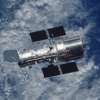


Fermi Gamma-ray Space Telescope
Mapping the Most Extreme Energy in the Universe
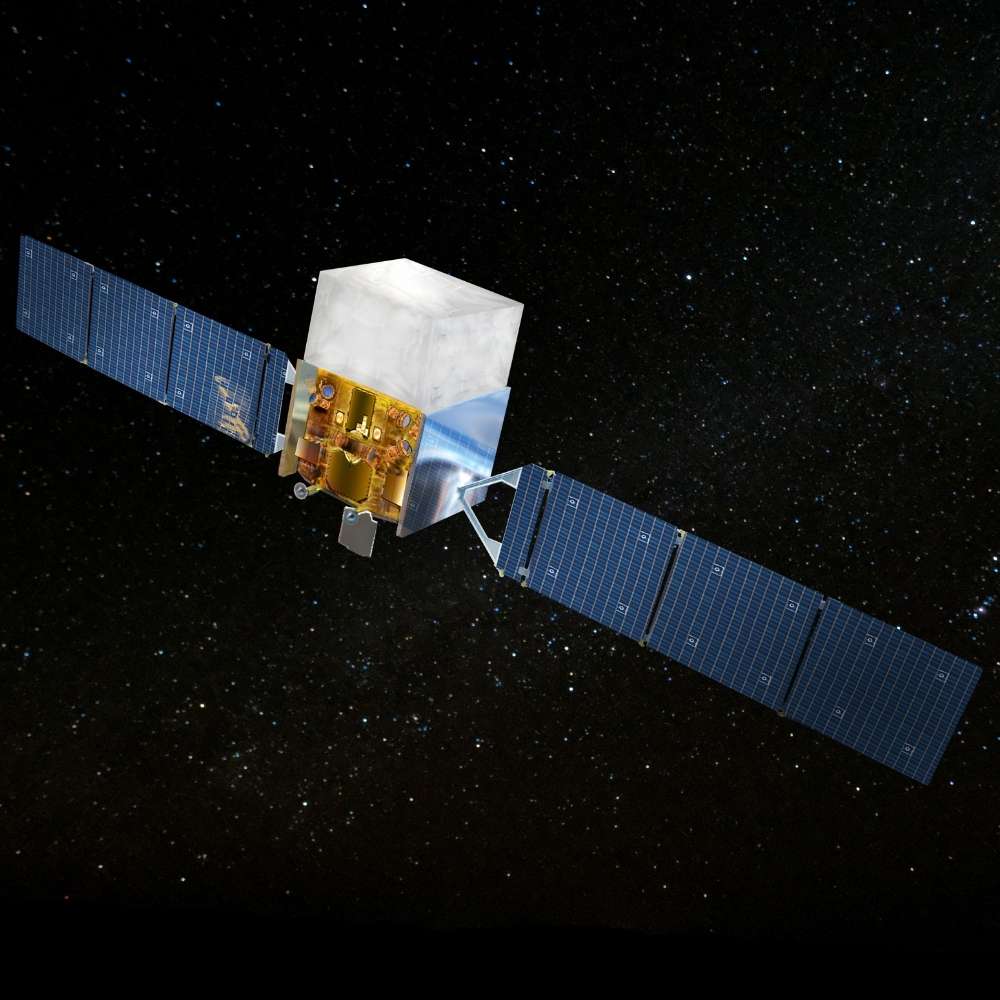
Quick Reader
| Attribute | Details |
|---|---|
| Mission Name | Fermi Gamma-ray Space Telescope |
| Former Name | GLAST (Gamma-ray Large Area Space Telescope) |
| Space Agency | NASA |
| International Partners | DOE (USA), France, Germany, Italy, Japan, Sweden |
| Mission Type | Gamma-ray space observatory |
| Launch Date | 11 June 2008 |
| Launch Vehicle | Delta II |
| Orbit Type | Low Earth Orbit (~565 km) |
| Primary Wavelength | Gamma rays |
| Main Instruments | LAT, GBM |
| Mission Status | Operational |
| Design Lifetime | 5 years (greatly exceeded) |
In two sentences
The Fermi Gamma-ray Space Telescope is NASA’s flagship mission for observing the universe at the highest electromagnetic energies. It reveals cosmic events so violent that they cannot be studied in any other wavelength.
Key takeaway
If the universe explodes, collapses, or accelerates particles to near light speed, Fermi sees it first.
Best for
High-energy astrophysics, gamma-ray bursts, black holes, pulsars, dark matter searches, and cosmic particle acceleration.
Introduction – The Universe at Its Most Violent
Most astronomical objects shine gently.
Some erupt with energies that defy intuition.
Gamma rays represent the most energetic form of light, produced only in extreme environments—supernova explosions, black hole jets, neutron star collisions, and matter–antimatter annihilation. These photons cannot penetrate Earth’s atmosphere, making space-based observatories essential.
Fermi was built to explore this violent, invisible universe, where physics operates at its absolute limits.
What Is the Fermi Gamma-ray Space Telescope?
Fermi is a space-based observatory designed to:
Detect gamma rays across a wide energy range
Monitor the entire sky continuously
Capture short-lived, unpredictable cosmic explosions
Unlike optical telescopes that focus on structure, Fermi focuses on energy flow—where and how the universe releases its most extreme power.
Why Gamma-Ray Astronomy Is Unique
Gamma rays originate from processes such as:
Particle acceleration near black holes
Nuclear reactions in stellar explosions
Matter–antimatter interactions
Relativistic jets traveling near light speed
Studying gamma rays allows scientists to probe:
Extreme gravity
Relativistic physics
High-energy particle processes
Fermi connects astronomy directly to fundamental physics.
Mission Design – Watching the Entire Sky
Fermi was designed for all-sky monitoring.
Key design features include:
Wide field of view
Rapid sky-scanning strategy
Ability to detect transient events
Fermi scans the entire sky every three hours, ensuring that no major gamma-ray event goes unnoticed.
Fermi’s Two Core Instruments
LAT – Large Area Telescope
Detects high-energy gamma rays
Provides precise source localization
Maps persistent and variable gamma-ray sources
LAT is responsible for most of Fermi’s deep-sky discoveries.
GBM – Gamma-ray Burst Monitor
Detects sudden gamma-ray bursts
Covers nearly the entire sky
Triggers rapid alerts to the global astronomy community
GBM ensures that short-lived cosmic explosions are never missed.
What Fermi Observes Best
Fermi excels at observing:
Gamma-ray bursts (GRBs)
Pulsars and neutron stars
Active galactic nuclei (AGN)
Supernova remnants
Cosmic-ray acceleration sites
These sources represent the highest-energy laboratories in nature.
Gamma-Ray Bursts – Fermi’s Signature Target
Gamma-ray bursts are the most energetic explosions since the Big Bang.
Fermi has:
Detected thousands of GRBs
Measured their energy spectra
Tracked their evolution over milliseconds to minutes
These observations have reshaped our understanding of how stars collapse and how jets form in extreme gravity.
Why Fermi Is Still Essential Today
Despite launching in 2008, Fermi remains critical because:
Gamma-ray skies change rapidly
Long-term monitoring reveals rare events
No other mission combines its coverage and sensitivity
Fermi provides the baseline for modern gamma-ray astronomy.
Fermi in the Context of Space Observatories
Fermi complements other missions:
Chandra and XMM-Newton observe X-rays
Hubble and JWST observe optical and infrared
Ground-based detectors observe cosmic rays and neutrinos
Together, they form a multi-messenger view of the extreme universe.
Fermi’s Greatest Discoveries
Since launch, Fermi has transformed high-energy astrophysics.
Among its most influential discoveries:
Thousands of previously unknown gamma-ray sources
New classes of gamma-ray pulsars
Detailed spectra of gamma-ray bursts
High-energy emission from active galactic nuclei
Extended gamma-ray emission from the Milky Way
These findings revealed that the gamma-ray sky is dynamic, crowded, and constantly changing.
Gamma-Ray Bursts – Nature’s Brightest Explosions
Gamma-ray bursts (GRBs) are brief but extraordinarily powerful.
Fermi has shown that:
GRBs emit photons with energies billions of times higher than visible light
Emission evolves rapidly over milliseconds to seconds
Some bursts produce gamma rays long after the initial explosion
These observations helped clarify the physics of stellar collapse and neutron star mergers.
Short vs Long Gamma-Ray Bursts
Fermi helped refine the classification of GRBs.
| Type | Origin | Duration |
|---|---|---|
| Long GRBs | Massive star collapse | > 2 seconds |
| Short GRBs | Neutron star mergers | < 2 seconds |
Fermi detected gamma rays associated with gravitational-wave events, linking gamma-ray astronomy with multi-messenger astrophysics.
Pulsars – Nature’s Precision Accelerators
Pulsars are rapidly spinning neutron stars emitting beams of radiation.
Fermi has:
Discovered dozens of gamma-ray-only pulsars
Shown that particle acceleration occurs far from the neutron star surface
Revealed unexpected emission geometries
These results reshaped theoretical models of pulsar magnetospheres.
Supernova Remnants and Cosmic Rays
One of astrophysics’ long-standing questions is the origin of cosmic rays.
Fermi observations of supernova remnants showed:
Gamma-ray emission from particle collisions
Evidence for proton acceleration
Confirmation that supernova remnants contribute to cosmic rays
This connected stellar explosions directly to high-energy particle physics.
The Fermi Bubbles – A Galactic Mystery
Fermi discovered giant gamma-ray structures above and below the Milky Way’s center.
Known as the Fermi Bubbles, they:
Extend ~25,000 light-years
Emit hard gamma radiation
Likely originate from past activity of the central black hole or intense star formation
Their discovery revealed that the Milky Way has experienced violent energetic episodes in its past.
Active Galactic Nuclei – Black Holes as Particle Accelerators
Fermi showed that many active galaxies emit strong gamma rays.
Key insights include:
Relativistic jets produce high-energy emission
Variability occurs on very short timescales
Gamma-ray output tracks jet activity
These observations linked black hole physics to cosmic particle acceleration.
Fermi and Dark Matter Searches
Fermi plays an indirect role in dark matter research.
It searches for:
Unexplained gamma-ray excesses
Signals from dwarf galaxies
Annihilation or decay signatures
While no confirmed detection exists, Fermi has placed strong constraints on dark matter models.
Why Fermi Changed High-Energy Astronomy
Fermi demonstrated that:
High-energy phenomena are widespread
Continuous sky monitoring is essential
Multi-wavelength and multi-messenger coordination is critical
It moved gamma-ray astronomy from isolated detections to systematic sky mapping.
Fermi’s Long-Term Legacy
Fermi fundamentally reshaped our view of the high-energy universe.
Its enduring contributions include:
The first true all-sky gamma-ray map
A comprehensive catalog of gamma-ray sources
Continuous monitoring of transient cosmic events
Integration of gamma-ray astronomy into multi-messenger science
Fermi turned gamma-ray observations from rare detections into a continuous, global dataset.
How Long Will Fermi Keep Operating?
Although designed for a five-year mission, Fermi has far exceeded expectations.
Reasons for its longevity:
Robust spacecraft design
Redundant systems
Efficient orbital operations
As long as its instruments remain healthy and funding continues, Fermi can keep operating—providing unique data no successor currently replaces.
Fermi and Multi-Messenger Astronomy
Fermi plays a key role in coordinating observations across different cosmic messengers.
It works alongside:
Gravitational-wave detectors
Neutrino observatories
Optical, X-ray, and radio telescopes
When an extreme event occurs, Fermi helps identify whether gamma rays are involved, completing the astrophysical picture.
Frequently Asked Questions (FAQ)
What makes Fermi different from other space telescopes?
Fermi observes the universe in gamma rays, the highest-energy form of light, revealing extreme physical processes invisible at lower energies.
Can Fermi see black holes directly?
No.
Fermi detects gamma rays produced by matter accelerated near black holes, especially in relativistic jets.
Why can’t gamma rays be observed from Earth?
Earth’s atmosphere absorbs gamma rays completely, protecting life but making space-based observatories essential.
Has Fermi detected dark matter?
No confirmed detection exists, but Fermi has placed strong limits on dark matter properties by ruling out many theoretical models.
What are the Fermi Bubbles?
They are enormous gamma-ray-emitting structures extending from the Milky Way’s center, likely produced by past energetic activity.
Does Fermi still discover new sources?
Yes.
Fermi continues to detect new gamma-ray sources and transient events as the sky evolves.
Why is Fermi important for Universe Map readers?
Fermi connects astronomy, particle physics, and cosmology by showing how the universe releases energy at its most extreme.
Fermi in the Context of Modern Astrophysics
Fermi revealed a universe where:
Black holes act as particle accelerators
Neutron stars generate precision gamma beams
Galaxies experience energetic outbursts
Fundamental physics unfolds on cosmic scales
It showed that energy—not just structure—is a defining feature of the cosmos.
Related Topics for Universe Map
Gamma-Ray Astronomy
Gamma-Ray Bursts (GRBs)
Pulsars and Neutron Stars
Active Galactic Nuclei
Dark Matter Searches
Multi-Messenger Astronomy
Together, these topics explain the universe’s most extreme environments.
Final Perspective
Fermi did not merely extend astronomy to higher energies.
It revealed an entirely different universe—one defined by explosions, acceleration, and extremes beyond human intuition.
By mapping gamma rays across the entire sky, Fermi exposed the cosmic engines that shape galaxies, stars, and matter itself.
Fermi’s greatest legacy is not a single discovery, but a new way of seeing the universe at its most powerful.