



Meteor
The Brief Flash That Reveals Cosmic Debris
Quick Reader
| Attribute | Details |
|---|---|
| Phenomenon Name | Meteor |
| Common Names | Shooting star, falling star |
| Origin | Meteoroids entering Earth’s atmosphere |
| Typical Speed | ~11–72 km/s |
| Visible Altitude | ~120–80 km |
| Duration | Fraction of a second to a few seconds |
| Light Source | Atmospheric ionization and heating |
| Related Terms | Meteoroid (space), Meteorite (ground) |
| Scientific Fields | Planetary science, atmospheric physics |
Scientific Role
Meteors are the visible signatures of small Solar System debris interacting with Earth’s atmosphere, providing clues about asteroids, comets, and atmospheric processes.
Why It Matters
Meteors help scientists trace the composition, origin, and distribution of small bodies in the Solar System and assess impact risk.
Introduction – What a Meteor Really Is
A meteor is not a star, and it is not falling from space intact.
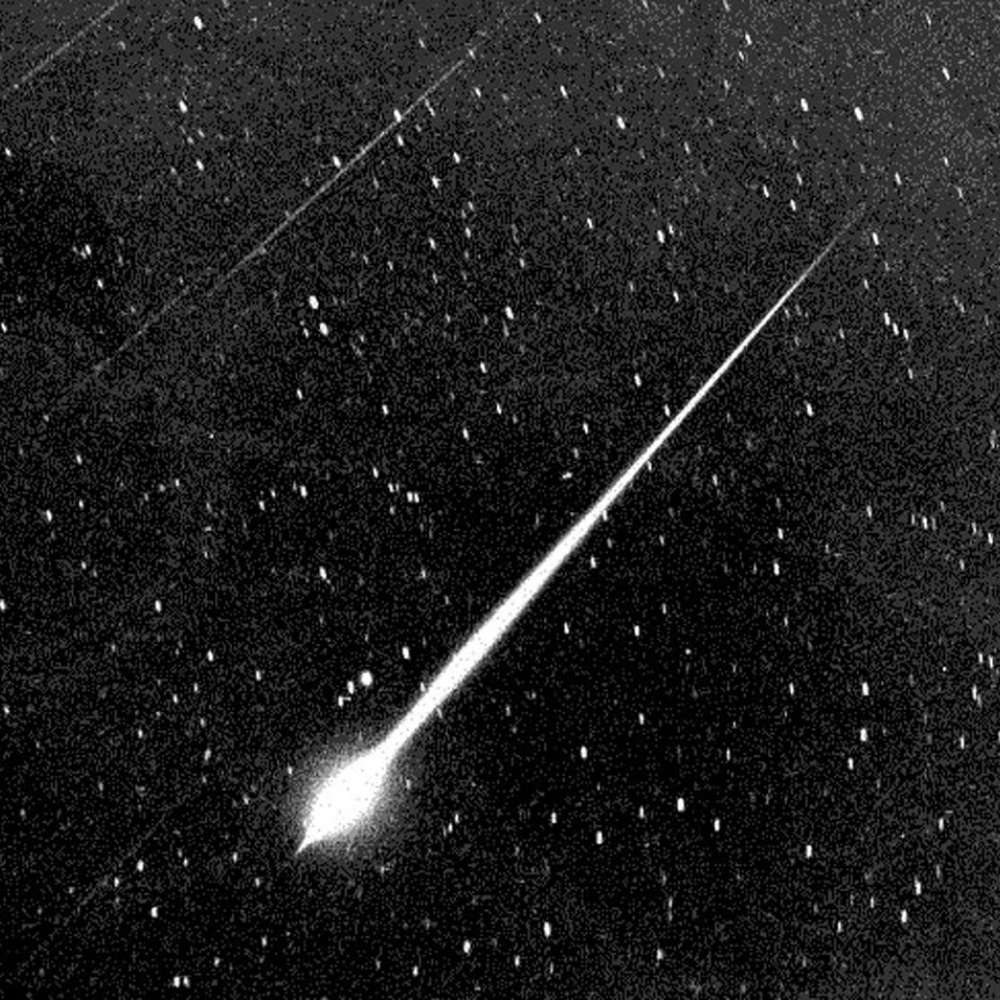
A meteor is the flash of light produced when a tiny piece of cosmic debris—called a meteoroid—enters Earth’s atmosphere at extreme speed. The air in front of the object compresses and heats rapidly, causing the surrounding gases to glow.
What we see is light from excited air, not the burning of rock.
From Meteoroid to Meteor to Meteorite
These three terms describe different stages of the same object:
Meteoroid – The object while it is still in space
Meteor – The visible streak as it enters the atmosphere
Meteorite – Any surviving fragment that reaches the ground
Most meteoroids are:
Smaller than grains of sand
Completely vaporized before reaching the surface
Only larger, stronger objects produce meteorites.
Why Meteors Glow
Meteors glow because of:
Extreme velocity
Atmospheric compression
Ionization of air molecules
Key processes include:
Rapid heating of surrounding air
Excitation of oxygen and nitrogen
Formation of glowing plasma along the path
Friction plays a role, but compression heating is the dominant effect.
Meteor Speeds – Faster Than Any Aircraft
Meteor speeds are extraordinary.
Typical ranges:
Minimum: ~11 km/s (Earth’s escape velocity)
Maximum: ~72 km/s (head-on solar orbit encounters)
At these speeds:
Kinetic energy is enormous
Even tiny particles produce bright flashes
Atmospheric interaction is violent and brief
This is why meteors appear suddenly and vanish just as fast.
Meteor Colors – What the Light Tells Us
Different colors reveal physical information.
Green – Excited oxygen or nickel
Yellow-orange – Sodium
Red – Oxygen at higher altitudes or nitrogen
Blue-violet – Ionized nitrogen
Color depends on:
Meteoroid composition
Speed
Atmospheric altitude
Meteors are therefore natural spectroscopic events.
Sporadic Meteors – Random Visitors
Most meteors are sporadic, meaning:
They are not part of a known stream
They appear randomly across the sky
They originate from asteroid debris
Sporadic meteors dominate:
Daily meteor counts
Background night-sky activity
Even on a quiet night, several sporadic meteors may be visible per hour under dark skies.
Meteor Showers – Predictable Displays
Some meteors occur in bursts called meteor showers.
They happen when Earth passes through:
Dust trails left by comets
Concentrated streams of debris
Well-known showers include:
Perseids
Geminids
Leonids
During a shower:
Meteors appear to radiate from a single point
Rates can increase dramatically
Predictability improves observation planning
Why Meteors Matter Scientifically
Meteors matter because they:
Sample primitive Solar System material
Reveal comet and asteroid debris dynamics
Trace Earth’s interaction with interplanetary matter
Help calibrate atmospheric models
They connect planetary science, astronomy, and atmospheric physics.
Fireballs and Bolides – When Meteors Become Unforgettable
Most meteors are faint. Some are not.
Fireballs
A fireball is an exceptionally bright meteor, often:
Brighter than Venus
Visible even in twilight or urban skies
Capable of casting shadows
Fireballs are usually produced by:
Larger meteoroids
Higher entry energy
Slower atmospheric breakup
Bolides
A bolide is an extreme fireball that:
Explodes violently in the atmosphere
Produces shock waves
May fragment into meteorites
Famous example:
Chelyabinsk (2013) – A bolide that injured people due to shock waves, not impact
Bolides demonstrate that airbursts can be hazardous even without ground impact.
Meteor Showers – Streams with a Schedule
Meteor showers occur when Earth intersects dense debris trails.
How Meteor Showers Form
Comets shed dust along their orbits
Dust spreads into streams
Earth crosses these streams annually
Each shower:
Occurs at the same time every year
Appears to radiate from a fixed constellation
Has predictable peak activity
Major Meteor Showers and Their Origins
| Shower | Peak Month | Parent Body |
|---|---|---|
| Perseids | August | Comet Swift–Tuttle |
| Geminids | December | Asteroid 3200 Phaethon |
| Leonids | November | Comet Tempel–Tuttle |
| Quadrantids | January | Asteroid 2003 EH₁ |
Interpretation
Not all meteor showers come from comets—some originate from active or extinct asteroids.
Why Radiant Points Exist
During a meteor shower:
Meteors appear to originate from one point
This is a perspective effect
Just like:
Parallel railroad tracks seem to meet in the distance
The radiant:
Helps identify the meteor shower
Confirms stream membership
Reveals orbital geometry
Meteorites – When Space Reaches the Ground
Only a small fraction of meteoroids survive atmospheric entry.
Meteorites:
Slow dramatically due to air resistance
Cool before reaching the ground
Fall at terminal velocity, not cosmic speed
Main Meteorite Types
Stony (chondrites) – Most common
Iron – Dense and durable
Stony-iron – Rare hybrids
Meteorites provide direct samples of Solar System history.
How Scientists Track and Study Meteors
Modern meteor science uses:
All-sky camera networks
Radar systems
Infrasound detectors
Satellite observations
These tools allow scientists to:
Reconstruct entry trajectories
Estimate original orbits
Predict meteorite fall zones
Meteor tracking has become data-driven and global.
Meteor Rates – How Often Do They Occur?
Globally:
Millions of meteoroids enter Earth’s atmosphere daily
Most are microscopic
Only a few produce visible meteors
Large bolide events:
Occur every few years
Are statistically predictable
Rarely cause direct damage
Earth’s atmosphere acts as a powerful protective shield.
Meteors and Impact Risk
Meteors represent the small end of the impact spectrum.
They help scientists:
Understand impact frequency
Calibrate asteroid hazard models
Assess airburst risks
By studying meteors, scientists improve preparedness for larger near-Earth objects.
Observing Meteors – How and When to Watch
Watching meteors requires patience, not equipment.
Best Practices
Choose a dark location away from city lights
Allow 20–30 minutes for your eyes to adapt
Use the naked eye (telescopes limit field of view)
Look away from the Moon if it is bright
Best Times
After midnight to early morning
During known meteor shower peaks
Under clear, moonless skies
Meteors reward wide-field attention, not focused staring.
Why Meteors Are More Common Before Dawn
After midnight:
Your location faces the direction of Earth’s orbital motion
Meteoroids encounter Earth head-on
Relative speeds increase
This is why:
Meteor rates rise after midnight
Brighter meteors are more frequent
Fireballs are more likely near dawn
Earth itself helps sweep meteoroids into view.
Common Myths About Meteors
“Meteors are stars falling.”
No. Stars are massive and distant. Meteors are tiny debris particles.
“Meteors are rare.”
They are extremely common; visibility depends on conditions.
“Meteorites fall blazing hot.”
No. Meteorites cool before reaching the ground and are usually warm or cool.
“Meteor showers are dangerous.”
Meteor shower particles are tiny and harmless.
Meteors and Planetary Defense
Meteors represent the smallest impactors Earth encounters.
Studying them helps scientists:
Estimate impact frequency
Understand fragmentation behavior
Model atmospheric energy deposition
Improve detection systems for larger objects
Meteors are a natural testing ground for impact physics.
Why Earth Is Safe from Most Meteoroids
Earth’s atmosphere:
Absorbs enormous kinetic energy
Causes most objects to vaporize
Prevents direct surface impacts
Without an atmosphere:
Meteoroids would strike the surface directly
Impact rates would be catastrophic
Meteors remind us that Earth’s atmosphere is a planetary shield.
Frequently Asked Questions (FAQ)
What is the difference between a meteor and a meteorite?
A meteor is the visible streak of light; a meteorite is any fragment that reaches the ground.
Can meteors be seen during the day?
Yes, but only very bright fireballs. Most meteors are too faint for daylight visibility.
Do meteor showers come from asteroids or comets?
Most come from comets, but some—like the Geminids—originate from asteroids.
Are meteors dangerous to people?
Almost never. The atmosphere destroys nearly all meteoroids before they reach the ground.
How often do large meteor events occur?
Bright fireballs occur yearly; damaging airbursts are rare and occur over decades.
Can scientists predict individual meteors?
Individual meteors cannot be predicted, but meteor showers and activity rates can.
Meteors in the Broader Solar System Context
Meteors connect:
Asteroids and comets
Planetary atmospheres
Impact risk assessment
They represent the ongoing exchange of material between space and Earth.
Every meteor is a reminder that Earth moves through a dynamic, debris-filled Solar System.
Related Topics for Universe Map
Meteoroids
Meteor Showers
Meteorites
Fireballs and Bolides
Near-Earth Objects (NEOs)
Planetary Defense
Together, these topics explain how small Solar System bodies interact with Earth.
Final Perspective
A meteor lasts only seconds—but it carries a story billions of years old.
Born from shattered asteroids or crumbling comets, these tiny travelers cross vast distances before meeting Earth’s atmosphere in a final burst of light.
Meteors are not threats.
They are messages—brief, brilliant reminders that Earth exists within a living, moving Solar System.