







High Altitude Balloon
Reaching Near Space Without Rockets
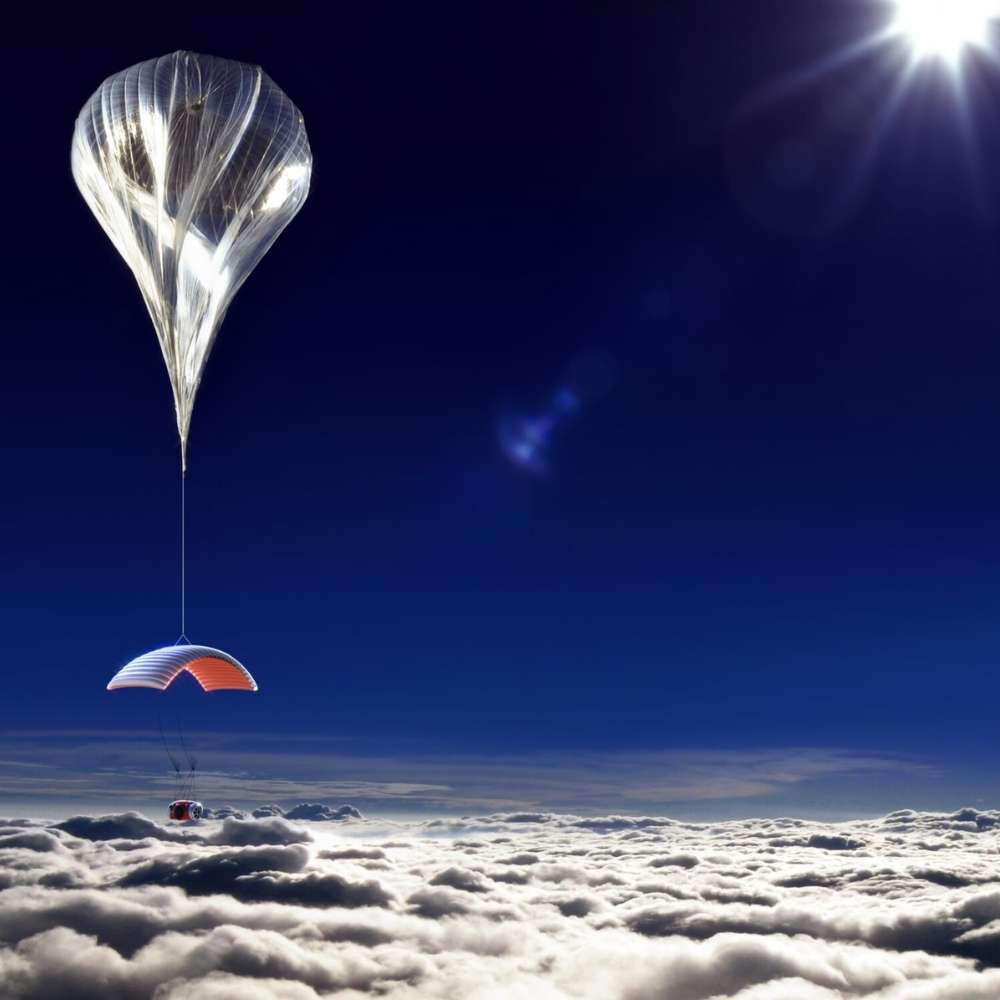
Quick Reader
| Attribute | Details |
|---|---|
| System Name | High Altitude Balloon (HAB) |
| Mission Type | Near-space scientific platform |
| Typical Altitude | 18–40 km (sometimes higher) |
| Environment | Upper stratosphere |
| Lift Mechanism | Helium or hydrogen balloon |
| Payload Type | Cameras, sensors, experiments |
| Recovery | Parachute-assisted landing |
| Cost Level | Low (compared to rockets) |
| Reusability | Payload reusable |
| Users | Scientists, students, space agencies |
| Space Status | Near space (not orbit) |
In two sentences
A High Altitude Balloon is a lightweight scientific platform lifted into the stratosphere to study near-space conditions. It offers access to extreme altitudes at a fraction of the cost of rockets or satellites.
Key takeaway
High Altitude Balloons are the simplest gateway to near space.
Best for
Atmospheric science, space education, Earth observation, astronomy tests, and technology validation.
Introduction – Touching Space Without Leaving Earth
You do not need a rocket to reach near space.
Long before satellites, scientists used balloons to explore the upper atmosphere. Today, High Altitude Balloons (HABs) remain one of the most practical and affordable ways to study conditions just below space—where the sky turns dark, the air thins dramatically, and Earth begins to curve.
HABs operate in a region critical to both atmospheric science and space technology testing.
What Is a High Altitude Balloon?
A High Altitude Balloon is a stratospheric research system consisting of:
A large latex or polyethylene balloon
A lifting gas (helium or hydrogen)
A suspended payload
A parachute for safe descent
Unlike weather balloons used for single measurements, HABs often carry complex experiments and cameras designed for extended observation.
Where Is “Near Space”?
Near space is the region between:
~18 km (top of commercial air traffic)
~100 km (Kármán line, conventional space boundary)
HABs typically operate in the stratosphere, where:
Air density is less than 1% of sea level
Temperatures can drop below −60°C
Skies are dark even at midday
This makes the stratosphere ideal for space-like experiments.
How High Can High Altitude Balloons Go?
Typical HAB flights reach:
18–25 km (basic missions)
30–40 km (advanced scientific flights)
At peak altitude:
The balloon expands to many times its launch size
Eventually bursts due to low external pressure
The payload begins descent under a parachute
Some record-breaking balloons have exceeded 40 km, approaching the edge of space.
Why Use Balloons Instead of Rockets?
High Altitude Balloons offer unique advantages:
Extremely low cost
No propulsion system required
Gentle launch conditions
Payload recovery possible
Compared to rockets, HABs allow iterative testing, where experiments can be flown, recovered, improved, and flown again.
Typical Payloads Carried by HABs
Common payloads include:
High-resolution cameras
GPS trackers
Temperature, pressure, and radiation sensors
Atmospheric sampling equipment
Student-built experiments
Some advanced missions test space hardware components before orbital deployment.
Launch and Flight Profile
A standard HAB mission follows these steps:
Balloon inflation and payload integration
Launch from open ground
Slow ascent over 1–3 hours
Burst at maximum altitude
Controlled descent via parachute
Payload recovery
Flights can travel hundreds of kilometers depending on wind conditions.
Who Uses High Altitude Balloons?
HABs are used by:
National space agencies
Universities and research institutions
Amateur space groups
Student STEM programs
They are one of the most accessible tools for hands-on space science education.
Why High Altitude Balloons Matter Scientifically
HABs enable studies of:
Atmospheric composition and dynamics
Ozone and radiation levels
Cloud formation and weather processes
Earth imaging from near space
They bridge the gap between ground-based observation and satellite missions.
Scientific Experiments in the Stratosphere
High Altitude Balloons provide access to an environment that cannot be replicated on Earth’s surface.
Common scientific investigations include:
Atmospheric temperature and pressure profiling
Ozone concentration measurements
Cosmic ray and radiation monitoring
Aerosol and trace gas sampling
These experiments help scientists understand how Earth’s atmosphere behaves at extreme altitudes.
Near-Space Imaging – Seeing Earth’s Curvature
One of the most striking outcomes of HAB missions is near-space photography.
At stratospheric altitudes:
The sky appears dark blue to black
Earth’s curvature becomes visible
Weather systems and cloud layers are clearly defined
HAB images are often used in education to demonstrate Earth’s shape and atmospheric layering.
HABs in Astronomy and Space Science
High Altitude Balloons are valuable platforms for astronomy-related work.
Applications include:
Testing astronomical instruments above most atmospheric turbulence
Measuring sky brightness and light pollution
Observing the Sun in near-space conditions
By lifting instruments above 99% of the atmosphere, HABs dramatically improve observation quality.
Technology Testing and Validation
Before sending hardware into orbit, engineers often test components on HAB flights.
Examples include:
Thermal performance of electronics
Radiation tolerance of sensors
Power system behavior in low-pressure environments
This reduces risk and cost for future satellite missions.
Education and Student Missions
HABs are widely used in education because they offer:
Hands-on experience with space-like missions
Full mission lifecycle from design to recovery
Affordable access to near space
Many university and school programs use HABs to train the next generation of space scientists and engineers.
Limitations of High Altitude Balloons
Despite their advantages, HABs have constraints:
No orbital capability
Limited flight duration (hours, not months)
Dependence on weather conditions
Restricted payload mass
HABs complement—but do not replace—satellites and rockets.
Safety and Regulations
Launching HABs requires compliance with aviation regulations.
Key considerations include:
Coordination with aviation authorities
Payload tracking and recovery planning
Avoiding flight paths near airports
Safety planning ensures that HAB missions do not interfere with commercial air traffic.
Comparison with Other Near-Space Platforms
| Platform | Altitude | Duration | Cost |
|---|---|---|---|
| High Altitude Balloon | 18–40 km | Hours | Low |
| Sounding Rocket | 50–150 km | Minutes | Medium |
| Orbital Satellite | 400+ km | Years | High |
HABs offer the best balance of cost, altitude, and accessibility.
Why HABs Are Still Relevant Today
In an era of advanced satellites, HABs remain valuable because they:
Enable rapid experimentation
Provide reusable platforms
Support education and outreach
Fill the gap between ground and space
They are tools of practical science, not outdated technology.
The Future of High Altitude Balloon Missions
High Altitude Balloons are evolving alongside modern space technology.
Future developments include:
Long-duration stratospheric balloons lasting weeks or months
Autonomous navigation and station-keeping
Advanced sensors for climate and atmospheric monitoring
Integration with satellite and drone data systems
These advances are expanding HABs from short experiments into persistent near-space platforms.
HABs and Climate Science
The stratosphere plays a crucial role in Earth’s climate.
HABs contribute by:
Measuring greenhouse gases and aerosols
Monitoring ozone layer health
Studying solar radiation absorption
Tracking long-term atmospheric changes
These measurements are essential for accurate climate modeling.
High Altitude Balloons in Space Research
HABs support space science by:
Testing instruments for space missions
Calibrating satellite sensors
Studying radiation environments
They act as a bridge between laboratory testing and orbital deployment.
Frequently Asked Questions (FAQ)
Do High Altitude Balloons reach space?
No.
They operate in near space, typically below the 100 km Kármán line that defines space.
Why do HAB balloons burst at high altitude?
As atmospheric pressure decreases, the lifting gas expands until the balloon material can no longer contain it, causing rupture.
Are HAB payloads recovered?
Yes.
Most missions include parachute-assisted descent and GPS tracking for payload recovery.
How long does a HAB flight last?
Typical flights last a few hours, though advanced designs can remain aloft for days or longer.
Are HABs safe for aviation?
Yes, when properly coordinated with aviation authorities and launched following regulations.
Who can launch a High Altitude Balloon?
Universities, research institutions, space agencies, and even student teams can launch HABs with appropriate planning and permissions.
Why are HABs important for Universe Map readers?
HABs demonstrate how near space can be accessed affordably, supporting science, education, and technology development.
High Altitude Balloons in the Context of Space Exploration
HABs remind us that:
Not all space science requires rockets
Near space offers unique scientific value
Accessibility drives innovation
They democratize access to space-like environments.
Related Topics for Universe Map
Near Space
Atmospheric Science
Stratosphere
Sounding Rockets
Satellite Technology
Climate Monitoring
Together, these topics show how Earth’s upper atmosphere connects ground and space.
Final Perspective
High Altitude Balloons are quiet pioneers of space science.
Without engines, without flames, and without leaving Earth’s gravitational grip, they reach environments once thought inaccessible. They prove that exploration does not always require complexity—only curiosity, precision, and patience.
In the journey from ground to orbit, High Altitude Balloons remain one of humanity’s most elegant scientific tools.