







Chang’e 2
China’s High-Precision Pathfinder Beyond the Moon
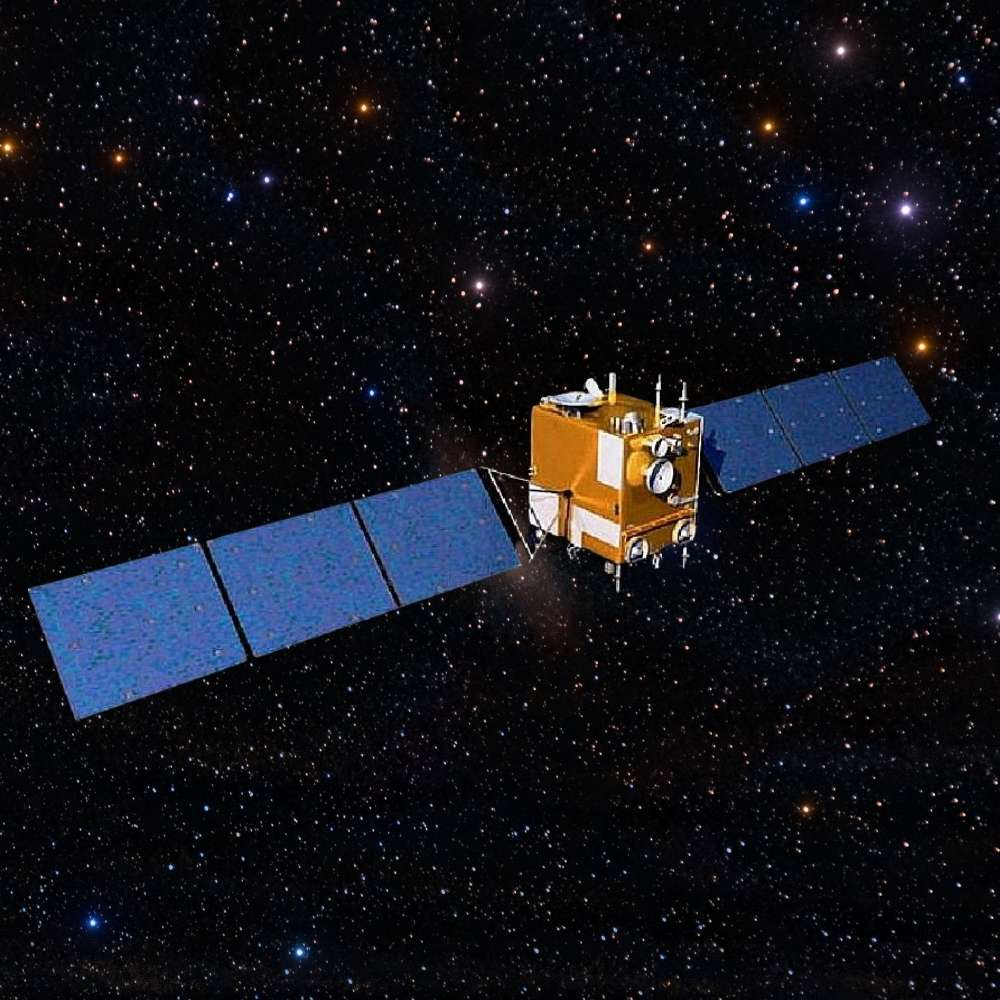
Quick Reader
| Attribute | Details |
|---|---|
| Mission Type | Lunar orbiter → deep-space flyby mission |
| Operating Agency | CNSA (China National Space Administration) |
| Launch Date | 1 October 2010 |
| Primary Target (Planned) | Moon |
| Extended Targets | Earth–Sun L₂, asteroid 4179 Toutatis |
| Primary Role | High-resolution reconnaissance & technology validation |
| Lunar Orbit | ~100 km circular (later lowered) |
| Key Payload | High-resolution CCD camera, laser altimeter |
| Resolution Achieved | ~1–7 meters (regional) |
| Deep-Space Status | First Chinese spacecraft to leave Earth–Moon system |
| Mission Status | Completed (spacecraft later lost contact) |
Key Highlights
- Originally a lunar orbiter, later became a deep-space explorer
- Produced China’s highest-resolution lunar maps at the time
- First Chinese probe to reach Earth–Sun L₂
- First Chinese spacecraft to fly by an asteroid
- Served as a critical pathfinder for Chang’e 3, 4, and beyond
Introduction – More Than a Lunar Orbiter
Chang’e 2 is often described as a backup mission.
That description is misleading.
While Chang’e 1 established China’s first lunar orbit, Chang’e 2 transformed the entire program. It was not just a follow-up—it was a precision upgrade, a mission designed to push navigation, imaging, and deep-space operations far beyond the original plan.
What began as a lunar reconnaissance mission evolved into China’s first true interplanetary-class spacecraft.
Why Chang’e 2 Was Needed
Chang’e 1 proved China could orbit the Moon.
That was not enough.
To land safely, China needed:
Higher-resolution lunar maps
Accurate terrain models
Precision navigation validation
Long-duration spacecraft reliability
Chang’e 2 was designed to answer one question:
Can we land on the Moon with confidence?
Everything about the mission prioritized accuracy over novelty.
Launch and Transit – A Faster, Smarter Trajectory
Chang’e 2 launched on 1 October 2010, China’s National Day—a symbolic choice.
Unlike Chang’e 1, which used a slow Earth-orbit phasing strategy, Chang’e 2:
Used a direct Earth-to-Moon transfer
Reached lunar orbit in ~5 days
Demonstrated improved launch and navigation precision
This faster trajectory was not just efficient—it was a test of deep-space control.
Lunar Orbit – Precision Over Coverage
Once in lunar orbit, Chang’e 2 operated at a lower altitude than its predecessor.
Key orbital characteristics:
Nominal orbit ~100 km
Later lowered for higher-resolution imaging
Stable, near-polar coverage
This allowed:
Extremely detailed surface mapping
Accurate elevation modeling
Identification of safe landing zones
Chang’e 2 was not mapping the Moon for curiosity—it was mapping it for touchdown.
High-Resolution Imaging – A Leap Forward
Chang’e 2 carried an upgraded CCD camera capable of unprecedented detail.
Achievements include:
Meter-scale resolution in targeted regions
Clear identification of boulders, slopes, and craters
Terrain data suitable for autonomous landing algorithms
These images directly supported the selection of the Chang’e 3 landing site, where China would later place its first lunar lander and rover.
Without Chang’e 2, that landing would have been blind.
Laser Altimetry – Measuring the Moon in 3D
In addition to imaging, Chang’e 2 refined lunar topography using laser altimetry.
This provided:
High-precision elevation data
Accurate slope and roughness measurements
Improved gravity-terrain correlation
The result was a navigation-grade lunar model, essential for descent planning.
Chang’e 2 turned the Moon from a picture into a coordinate system.
Mission Philosophy – Test Everything Early
Chang’e 2 followed a philosophy rarely seen so clearly:
“Prove it before you need it.”
Systems tested included:
High-precision navigation
Autonomous fault management
Long-distance telemetry
Deep-space attitude control
This philosophy allowed China to compress risk in later missions.
Chang’e 2 was not flashy—but it was foundational.
The Turning Point – Mission Extension
After completing its primary lunar objectives, Chang’e 2 still had fuel, power, and a healthy spacecraft.
Instead of shutting it down, mission planners made a bold decision:
Leave lunar orbit.
This single choice transformed Chang’e 2 from a lunar mission into a deep-space pathfinder.
Why Chang’e 2 Matters (So Far)
Up to this point, Chang’e 2 had already:
Enabled China’s first lunar landing
Demonstrated precision navigation
Proven spacecraft robustness
Exceeded its original mission scope
And the most ambitious phase was still ahead.
Leaving the Moon – A Strategic Decision
After completing its primary lunar reconnaissance objectives, Chang’e 2 remained in excellent health.
At this point, mission planners faced a choice:
End the mission as planned
Or use the remaining fuel and systems to push farther
They chose the second option.
Chang’e 2 became the first Chinese spacecraft to deliberately exit the Earth–Moon system, marking a major shift from lunar exploration to deep-space operations.
This decision fundamentally redefined the mission’s importance.
Journey to Earth–Sun L₂ – Entering Deep Space
Chang’e 2 was redirected toward the Earth–Sun L₂ Lagrange point, located about 1.5 million kilometers from Earth, opposite the Sun.
Why L₂ matters:
Gravitational balance allows relatively stable positioning
Ideal for deep-space observation and communications
Used by major observatories and future missions
For China, reaching L₂ was not about science—it was about navigation mastery.
What Chang’e 2 Demonstrated at L₂
Long-distance trajectory correction
Deep-space communication reliability
Autonomous attitude control far from Earth
Precise orbit insertion and station-keeping
This phase quietly proved that China could operate spacecraft well beyond lunar distances.
From L₂ to an Asteroid – A Bold Extension
Reaching L₂ was already a success.
But Chang’e 2 still had fuel.
In another bold move, mission planners targeted a near-Earth asteroid:
4179 Toutatis.
This decision turned Chang’e 2 into:
China’s first interplanetary flyby mission
A test of asteroid navigation without dedicated design
A real-world rehearsal for future planetary encounters
No Chinese spacecraft had ever attempted this before.
Asteroid 4179 Toutatis – A Chaotic Target
Toutatis was a challenging choice.
Characteristics include:
Irregular, elongated shape
Complex tumbling (non-principal axis rotation)
Near-Earth orbit with frequent planetary encounters
Navigating a fast flyby of such an object required:
Extremely accurate trajectory prediction
Precise timing
High-speed autonomous imaging
Chang’e 2 was not built for asteroid science—but it rose to the challenge.
The 2012 Flyby – A Historic Moment
On 13 December 2012, Chang’e 2 passed within ~3.2 km of Toutatis.
Achievements of the flyby:
Returned high-resolution images of the asteroid
Revealed its bilobed, contact-binary structure
Confirmed surface boulders and regolith
Provided direct visual context for a potentially hazardous asteroid
This was China’s first close-up look at an asteroid—and it succeeded on the first attempt.
Scientific Value of the Toutatis Flyby
Although brief, the flyby delivered critical insights:
Toutatis is a loosely bound rubble-pile object
Surface features suggest low internal strength
Shape indicates gentle accretion, not violent fusion
These findings aligned with—and strengthened—global understanding of near-Earth asteroids.
Chang’e 2 contributed meaningfully to planetary defense science, despite not being designed for it.
Navigation Precision – The Hidden Achievement
The true triumph of the Toutatis flyby was not imagery.
It was accuracy.
Chang’e 2:
Traveled millions of kilometers
Intercepted a moving, rotating target
Passed within a few kilometers
Using systems never intended for asteroid rendezvous
This demonstrated a level of deep-space guidance and control that only a handful of space agencies had previously achieved.
Why This Phase Changed China’s Space Program
After Chang’e 2:
Deep-space navigation was no longer theoretical
Lagrange point operations were proven
Asteroid flybys were demonstrated feasible
Mission planners gained confidence for complex trajectories
This experience directly influenced later missions, including:
Chang’e 4 (far-side lunar landing)
Tianwen-1 (Mars orbiter, lander, rover)
Chang’e 2 was the bridge between lunar orbiters and planetary missions.
Mission End and Final Status
After the successful flyby of asteroid 4179 Toutatis in December 2012, Chang’e 2 continued on a heliocentric trajectory.
Key points about the mission’s end phase:
No further major targets were planned
Fuel reserves were minimal
The spacecraft gradually moved farther from Earth
Communications eventually ceased as distance increased
Chang’e 2 was not lost due to failure.
It completed every feasible objective and transitioned naturally into silence—an operationally successful conclusion.
Chang’e 2’s Legacy in China’s Space Program
Chang’e 2 fundamentally changed what China’s space program believed was possible.
Before Chang’e 2:
Lunar orbit was the outer limit
Lagrange points were theoretical goals
Asteroid missions were long-term ideas
After Chang’e 2:
Precision deep-space navigation was proven
Multi-target mission extension became credible
Complex gravity-assisted planning was routine
Chang’e 2 was the confidence multiplier.
Direct Influence on Later Missions
Chang’e 2’s technical and operational lessons fed directly into later missions.
Programmatic Impact
Chang’e 3 – First soft landing on the Moon
Chang’e 4 – First far-side lunar landing (relay + precision navigation)
Chang’e 5 – Automated lunar sample return
Tianwen-1 – Mars orbiter, lander, and rover in a single mission
The leap from lunar orbit to Mars orbit in one decade was not accidental.
Chang’e 2 built the bridge.
Why Chang’e 2 Was More Important Than Chang’e 1
Although Chang’e 1 was historic, Chang’e 2 was transformative.
Mission Philosophy Comparison
| Aspect | Chang’e 1 | Chang’e 2 |
|---|---|---|
| Primary Role | First lunar orbit | Precision & validation |
| Risk Level | Conservative | Aggressively extended |
| Navigation Complexity | Moderate | High (L₂ + asteroid) |
| Strategic Value | Proof of access | Proof of capability |
Chang’e 2 shifted the program from demonstration to execution.
Scientific Value Beyond Engineering
Chang’e 2 was not just an engineering testbed.
Its scientific contributions include:
Meter-scale lunar imaging for landing site selection
Improved lunar elevation models
First Chinese asteroid imagery
Direct observation of a complex near-Earth asteroid
This data remains relevant to:
Impact modeling
Rubble-pile asteroid studies
Mission planning for small bodies
Chang’e 2 quietly entered the global planetary science record.
Frequently Asked Questions (FAQ)
Was Chang’e 2 originally designed for asteroid exploration?
No. The asteroid flyby was an extended mission made possible by surplus capability.
Why was Toutatis chosen?
It was a well-characterized near-Earth asteroid with a suitable trajectory and scientific value.
Did Chang’e 2 carry landers or probes?
No. It was strictly an orbiter/flyby spacecraft.
Is Chang’e 2 still transmitting?
No. The mission is considered complete.
Was Chang’e 2 a success?
Yes—scientifically, technically, and strategically.
Chang’e 2 in the Context of Global Space Exploration
Chang’e 2 belongs to a small class of missions that:
Exceeded original objectives by a wide margin
Transitioned from local to deep-space exploration
Redefined what a “secondary mission” could become
Like Akatsuki, its defining feature was adaptation—but Chang’e 2 adapted by expanding outward, not recovering from failure.
Final Perspective
Chang’e 2 was never meant to be famous.
It was meant to be precise.
In achieving that precision, it quietly became one of the most important spacecraft China ever launched. From detailed lunar mapping to Lagrange point operations and an asteroid flyby, Chang’e 2 transformed a national lunar program into a deep-space-capable exploration system.
It proved a simple but powerful idea:
| Mastery of space is not achieved by one giant leap—but by missions that go farther than they were ever meant to.