








Draco Constellation
The Celestial Dragon Winding Through the Northern Sky
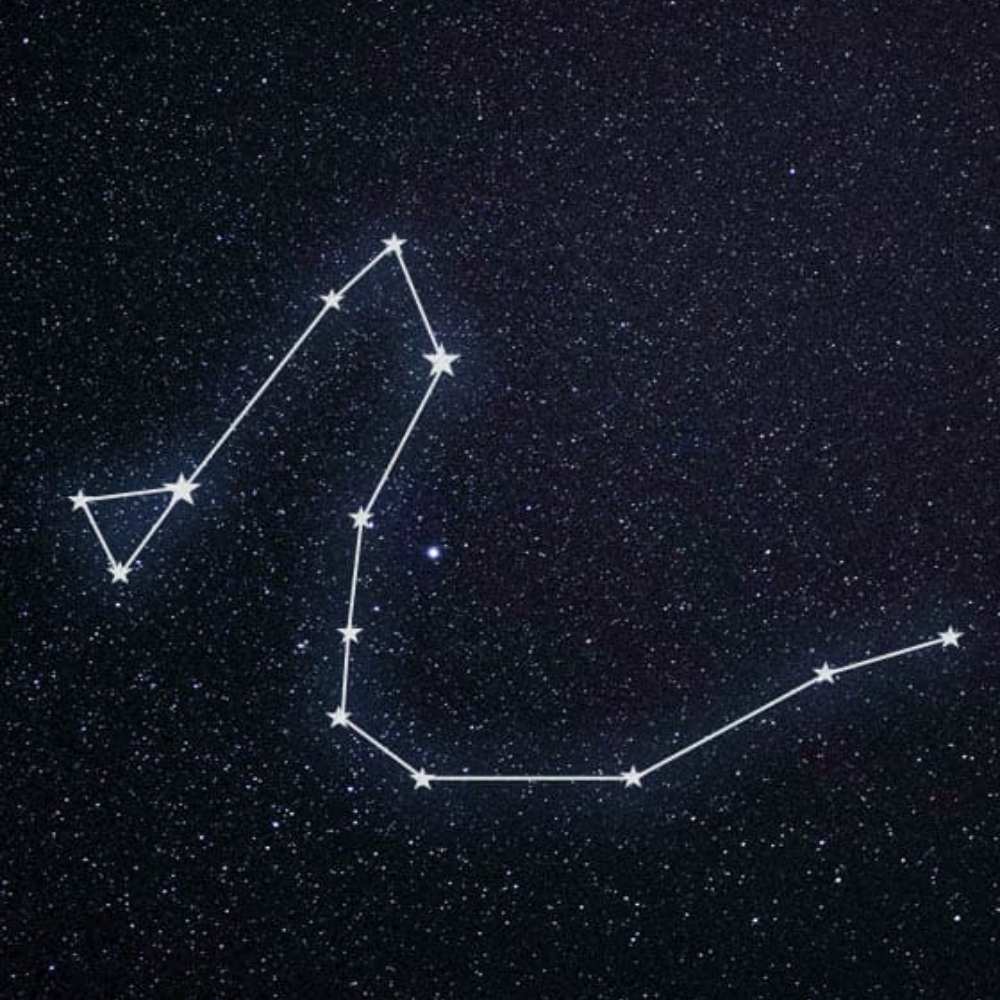
The Draco Constellation
Interactive Dark Matter View
Quick Reader
| Attribute | Details |
|---|---|
| Official Name | Draco |
| Meaning of Name | The Dragon |
| Constellation Type | Large Circumpolar Constellation |
| IAU Recognition | Yes (One of the 88 modern constellations) |
| Location | Northern Celestial Hemisphere |
| Circumpolar Status | Circumpolar for most northern latitudes |
| Visibility Latitude Range | ~+90° to −15° |
| Brightest Star | Etamin (Gamma Draconis), magnitude 2.24 |
| Other Major Stars | Eltanin (Beta Draconis), Thuban (Alpha Draconis), Grumium (Xi Draconis) |
| Number of Main Stars | ~17 prominent stars forming a winding dragon shape |
| Historical Pole Star | Thuban (around 2700 BC) |
| Area | 1,084 square degrees (one of the largest constellations) |
| Neighboring Constellations | Ursa Major, Ursa Minor, Hercules, Lyra, Cygnus |
| Best Viewing Months | June to September (Northern Hemisphere) |
| Best Viewing Time | Evening to late night |
| Notable Deep-Sky Objects | NGC 6543 (Cat’s Eye Nebula), NGC 5866 (Spindle Galaxy), Draco Dwarf Galaxy |
| Scientific Importance | Stellar evolution, planetary nebulae, dark matter studies |
| Cultural Significance | Greek, Chinese, Medieval European sky lore |
In Two Sentences
Draco is a large, ancient constellation winding around the north celestial
pole, visible year-round from much of the Northern Hemisphere.
It bridges mythology and modern astronomy, hosting historically important
stars, planetary nebulae, and a dark matter–rich dwarf galaxy.
Key Takeaway
Draco is not just a mythological dragon in the sky—it is a scientifically valuable region that preserves evidence of stellar death, galactic evolution, and Earth’s shifting celestial orientation over thousands of years.
Best For
- Amateur astronomers seeking year-round circumpolar targets
- Students studying constellations, stellar evolution, and celestial mechanics
- Astrophotographers capturing planetary nebulae and wide-field northern skies
- Researchers interested in dwarf galaxies and dark matter distribution
- Cultural astronomy and ancient sky-mapping studies
Introduction to Draco – The Celestial Dragon
Draco is a prominent, sprawling constellation that snakes its way around the north celestial pole, making it circumpolar and visible all year round to many northern observers.
Its name, meaning “dragon” in Latin, connects it to ancient Greek mythology as the fearsome serpent guarding the golden apples of the Hesperides.
Mythological and Cultural Significance
In Greek mythology, Draco is associated with Ladon, the many-headed dragon slain by Hercules as one of his twelve labors.
Ancient cultures around the world saw Draco as a symbol of protection, wisdom, and danger, often featuring in their sky lore.
Its position near the North Star made it an important fixture in celestial navigation and mythology.
Key Stars and Their Characteristics
Etamin (Gamma Draconis): The brightest star, a yellow giant about 154 light-years away.
Eltanin (Beta Draconis): Another bright giant, visible in many northern skies.
Grumium (Xi Draconis): A binary star system popular with amateur astronomers.
Thuban (Alpha Draconis): Historically significant as the North Star around 2700 BC due to Earth’s axial precession.
Several variable stars and binary systems populate Draco, enriching its stellar diversity.
Notable Deep-Sky Objects
NGC 6543 (Cat’s Eye Nebula): One of the most studied planetary nebulae, famous for its complex structure.
NGC 5866 (Spindle Galaxy): A lenticular galaxy often studied as a prototype for this galaxy type.
Draco Dwarf Galaxy: A nearby satellite galaxy of the Milky Way, offering insight into dark matter and dwarf galaxy evolution.
Other Star Clusters and Nebulae: Draco hosts several faint open clusters and nebulae ideal for deep-sky observation.
Observing Draco – Best Practices
Visibility: Circumpolar for most northern latitudes, visible year-round.
Best Viewing Times: Late spring through early autumn.
Equipment:
Naked eye can trace the dragon’s long winding shape.
Small to medium telescopes reveal planetary nebulae and binary stars.
Astrophotography captures the intricate nebulae and dwarf galaxies.
In-Depth Look at Draco’s Planetary Nebulae and Dwarf Galaxies
1. NGC 6543 (Cat’s Eye Nebula)
One of the most spectacular and studied planetary nebulae in the sky.
Located about 3,300 light-years away, it shows complex structures like concentric shells, jets, and knots.
Helps astronomers understand the late stages of stellar evolution for stars like our Sun.
Visible through small telescopes as a faint, bluish-green object.
2. Draco Dwarf Galaxy
A satellite galaxy of the Milky Way, approximately 260,000 light-years distant.
A faint and diffuse dwarf spheroidal galaxy, important for studying dark matter distribution and galaxy formation in small systems.
Its stars are old and metal-poor, giving clues about the early universe.
3. NGC 5866 (Spindle Galaxy)
A lenticular galaxy about 44 million light-years away.
Shows properties intermediate between elliptical and spiral galaxies.
Studied extensively to understand galaxy morphology and evolution.
The Astronomical History of Thuban and the Precession of the Equinoxes
Thuban (Alpha Draconis) was the North Star approximately 4,700 years ago, during the era of the ancient Egyptians.
This is due to the precession of Earth’s rotational axis, a slow wobble over ~26,000 years.
Thuban’s role as a pole star is a remarkable example of how celestial coordinates change over millennia.
Today, it is no longer the pole star but remains a key star in Draco.
Draco in Cultural Astronomy Worldwide
Greek Mythology: Draco represents Ladon, the dragon guarding the golden apples of the Hesperides.
Chinese Astronomy: Draco contains parts of several constellations; its stars have unique cultural significance.
Medieval Europe: Draco was often depicted in star charts as a dragon coiled around the North Pole.
Native American Lore: Some tribes interpreted Draco’s stars as animals or spirits linked to their stories.
Observing Tips and Astrophotography Guides
Best Viewing Months: June through September.
Locate Thuban: A good reference for tracing Draco’s long winding shape.
Telescopes:
Use a medium aperture telescope to observe planetary nebulae and galaxies.
Binaries like Grumium are excellent targets for small telescopes.
Astrophotography:
Long exposures highlight the complex structure of NGC 6543.
Wide-field images capture Draco’s winding form and nearby clusters.
Stellar Populations and Variability in Draco
Draco hosts a rich variety of variable stars, including Cepheids, RR Lyrae, and eclipsing binaries.
These variables are vital standard candles for measuring cosmic distances.
The constellation’s stars range from young blue giants to old red giants, reflecting diverse stellar evolution stages.
Modern Scientific Research on Draco’s Dwarf Galaxies
The Draco Dwarf Galaxy is a key target in dark matter studies due to its high mass-to-light ratio, implying a large dark matter content.
Research on Draco and similar dwarf spheroidals informs theories of galaxy formation, dark matter distribution, and the structure of the Milky Way’s halo.
Ongoing spectroscopic surveys aim to refine the kinematics and chemical composition of these stars.
Summary of Draco’s Role in Astronomy and Culture
Draco’s stars have been guides for navigation and markers of celestial cycles.
It embodies myths of dragons and guardianship across cultures.
Scientifically, Draco offers insights into stellar evolution, galactic dynamics, and dark matter.
Frequently Asked Questions — Draco Constellation
Final Observing Tips and References
Use a star chart or app to trace Draco’s winding shape around the north celestial pole.
Plan observations during summer months for optimal visibility.
For astrophotographers, capture NGC 6543 and the Draco Dwarf Galaxy using long-exposure and narrowband filters.
Consult catalogs like the Messier Catalog and NGC for deep-sky objects within Draco.