



Gaia
The Mission That Is Mapping the Milky Way in Unprecedented Detail
Quick Reader
| Attribute | Details |
|---|---|
| Mission Name | Gaia |
| Mission Type | Astrometric space observatory |
| Space Agency | ESA (European Space Agency) |
| Launch Date | 19 December 2013 |
| Operating Location | Sun–Earth L2 |
| Primary Target | Milky Way stars |
| Number of Objects | ~2 billion stars |
| Core Measurements | Position, distance, motion, brightness |
| Precision | Microarcsecond-level astrometry |
| Mission Status | Active (extended mission) |
| Historic First | First full 6D map of the Galaxy |
Key Insights
- Gaia is creating the most precise 3D map of the Milky Way ever made
- It measures stellar positions and motions with extraordinary accuracy
- The mission is revolutionizing nearly every field of astronomy
- Gaia turns the Galaxy into a measurable, dynamic system
Introduction – Why Mapping the Galaxy Was So Hard
For centuries, astronomers studied the Milky Way from inside it.
This creates a fundamental challenge:
We cannot step outside the Galaxy to see its full shape
Distances to stars were uncertain and often guessed
Motions were measured only approximately
As a result, the Milky Way was long understood as a static picture, not a living system.
Gaia was designed to change that — by measuring where stars are, how far away they are, and how they move, all at once.
What Is Gaia?
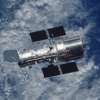
Gaia is a space-based astrometry mission dedicated to measuring the geometry and motion of the Galaxy.
It focuses on three core quantities:
Position – where a star appears on the sky
Parallax – how far away it truly is
Proper motion – how it moves across the sky
Combined with radial velocity data, Gaia provides a six-dimensional map of stellar phase space: position and velocity.
No previous mission has attempted this at such scale or precision.
Why Astrometry Matters
Astrometry is one of the oldest branches of astronomy — and one of the hardest.
Tiny measurement errors translate into massive distance uncertainties.
Gaia achieves breakthroughs by:
Operating above Earth’s atmosphere
Using ultra-stable optics
Repeating measurements over years
Cross-calibrating billions of observations
This allows Gaia to measure stellar motions smaller than the width of a human hair seen from thousands of kilometers away.
Why Gaia Operates at Sun–Earth L₂
Gaia orbits around the Sun–Earth L₂ point.
This location offers:
A stable thermal environment
Continuous sky scanning
Minimal Earth shadowing
Excellent pointing stability
These conditions are essential for microarcsecond precision.
Orbital Mechanics — How 2002 VE₆₈ “Orbits” Venus
2002 VE₆₈ does not orbit Venus directly.
Instead:
It orbits the Sun
Its orbital period nearly matches Venus’s
Venus’s gravity reshapes its path without binding it
From Venus’s perspective, the asteroid traces looping paths around the planet. From the Sun’s perspective, the motion is smooth and continuous.
This duality—appearance versus reality—is central to understanding quasi-satellites.
How Gaia Observes the Sky
Gaia does not point at individual stars.
Instead, it:
Slowly spins
Sweeps its field of view across the sky
Repeats this scan many times over years
Each star is observed dozens to hundreds of times, allowing tiny positional shifts to be measured with extreme accuracy.
The Scale of Gaia’s Survey
Gaia observes:
Stars of all types and ages
Brown dwarfs
White dwarfs
Star clusters
Variable stars
Asteroids and Solar System objects
By the end of the mission, Gaia will have cataloged around 2 billion stars, roughly 1–2% of all stars in the Milky Way.
What Makes Gaia Different from Earlier Surveys
Earlier sky surveys measured:
Brightness
Color
Rough positions
Gaia measures:
True distances
Three-dimensional motion
Stellar variability
Binary and multiple systems
It turns the Galaxy from a photograph into a time-resolved dynamical map.
Why Gaia Is a Turning Point in Astronomy
With Gaia, astronomers can:
Reconstruct the Milky Way’s formation history
Identify past galaxy mergers
Map dark matter through stellar motion
Refine stellar evolution models
Improve distance measurements across astronomy
Gaia is not a specialized mission — it is a foundational reference for modern astrophysics.
Universe Map Context – Why Gaia Is Central
For Universe Map, Gaia is a cornerstone mission.
It connects:
Stars
Star clusters
Galactic structure
Stellar streams
Dark matter distribution
Almost every Milky Way–related topic now depends on Gaia data.
Gaia’s Instruments – Precision Built into Every Component
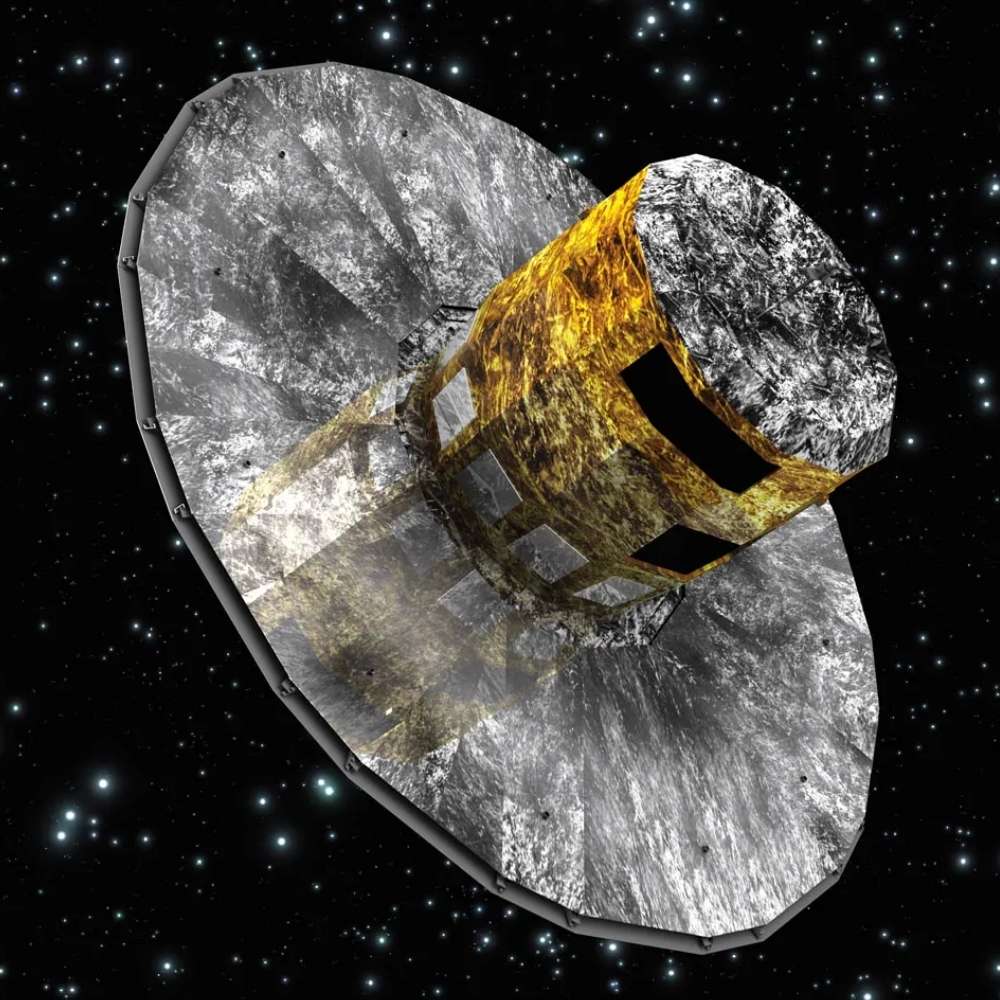
Gaia’s scientific power comes from an instrument design optimized for repeatability, stability, and calibration, rather than raw light-gathering.
At its core, Gaia carries:
Two identical telescopes with a fixed basic angle
A single, enormous focal plane shared by both telescopes
Ultra-stable optics and thermal control
This configuration allows Gaia to measure tiny angular shifts with extraordinary consistency over time.
The Dual-Telescope Design – Measuring Angles, Not Images
Gaia’s two telescopes observe different parts of the sky simultaneously.
Why this matters:
The fixed angle between the telescopes acts as a ruler
As Gaia rotates, stars pass through both fields of view
Repeated crossings allow precise angle comparison
Astrometry is fundamentally about angles, not pictures — and Gaia is optimized for that task.
The Focal Plane – One of the Largest Ever Flown
Gaia’s focal plane contains over 100 CCD detectors, making it one of the largest space-based camera systems ever built.
These CCDs perform multiple functions:
Position measurement (astrometry)
Brightness measurement (photometry)
Spectral measurement (radial velocity)
Each star triggers a carefully timed sequence of measurements as it crosses the detectors.
Radial Velocity and the Sixth Dimension
Positions and proper motions give only part of a star’s motion.
Gaia adds radial velocity, the motion toward or away from us, using a dedicated spectrometer.
This allows Gaia to measure:
Full 3D velocity vectors
Stellar orbits within the Galaxy
Dynamical signatures of past interactions
With this, Gaia produces a six-dimensional phase-space map of the Milky Way.
Gaia Data Releases – Building the Galactic Map in Stages
Because of the mission’s scale, Gaia data is released in stages.
Each release improves precision and adds new parameters.
Major Data Releases
DR1 (2016) – First positions and parallaxes
DR2 (2018) – Massive leap in distances, motions, and astrophysical data
EDR3 / DR3 (2020–2022) – Improved astrometry, variability, binaries, spectra
Each release reshaped research across astronomy.
Key Discoveries Enabled by Gaia
Gaia has already transformed our understanding of the Milky Way.
Galactic Structure and History
Using Gaia data, astronomers discovered:
Stellar streams from past galaxy mergers
Evidence of a major ancient merger (Gaia–Enceladus / Sausage)
Complex disk warping and vertical oscillations
The Milky Way is now understood as a dynamic, accretion-built galaxy, not a quiet spiral.
Star Clusters and Stellar Evolution
Gaia clarified:
True membership of star clusters
Precise cluster ages and distances
How stars migrate within the Galaxy
This dramatically improved models of stellar evolution.
Dark Matter Mapping
Gaia does not see dark matter directly, but it reveals its influence.
By tracking stellar motions, Gaia allows astronomers to:
Infer the Galaxy’s gravitational potential
Map dark matter distribution
Constrain the Milky Way’s total mass
This connects visible stars to invisible structure.
Gaia and Solar System Science
Although focused on stars, Gaia also observes:
Asteroids
Near-Earth objects
Planetary satellites
Its precise tracking improves:
Asteroid orbit predictions
Impact risk assessment
Solar System dynamics
Gaia contributes quietly but significantly to planetary defense.
Why Gaia Changed Astronomy’s Baseline
Before Gaia:
Distance errors propagated through many fields
Galactic models relied on assumptions
Stellar populations were blurred by uncertainty
After Gaia:
Distances are measured, not inferred
Motions reveal history directly
Models are constrained by data, not guesses
Gaia reset astronomy’s coordinate system.
Universe Map Perspective – Turning the Galaxy into Data
Gaia represents a shift from descriptive astronomy to measured galactic physics.
It shows that:
The Milky Way has structure, motion, and memory
Past events are encoded in stellar trajectories
Galactic archaeology is now a data-driven science
Gaia’s Long-Term Scientific Legacy
Gaia’s greatest contribution is not a single discovery, but a permanent transformation of astronomy’s foundation.
For decades to come, Gaia will serve as:
The primary astrometric reference for the Milky Way
The distance ladder anchor for stellar and galactic studies
The motion baseline for understanding Galactic evolution
Future missions will not replace Gaia — they will build on it.
From Static Star Maps to Galactic Archaeology
Before Gaia, the Milky Way was studied largely as a static structure.
Gaia revealed that the Galaxy has a memory.
Stellar motions encode:
Ancient merger events
Disk heating and warping
Spiral arm evolution
Ongoing gravitational interactions
This has given rise to galactic archaeology — reconstructing the Galaxy’s history by reading stellar trajectories.
Gaia and the Discovery of the Milky Way’s Violent Past
One of Gaia’s most important outcomes was the identification of Gaia–Enceladus, a massive ancient merger.
This discovery showed that:
The Milky Way grew through major collisions
The stellar halo is largely accreted
Disk structure was shaped by early impacts
Gaia replaced speculation with direct dynamical evidence.
Limitations and What Gaia Cannot Do
Despite its power, Gaia has limits.
Understanding these is important.
Gaia is less effective for:
Extremely faint or highly obscured stars
Dense regions like the Galactic center core
Very distant galaxies
Dust extinction and crowding impose natural boundaries.
This is why Gaia works best in synergy with infrared missions.
Gaia as a Foundation for Future Missions
Gaia’s dataset is already guiding mission design.
Future observatories will:
Target Gaia-identified stellar streams
Use Gaia distances to calibrate spectroscopy
Extend Gaia’s reach to fainter or redder populations
Missions such as Roman Space Telescope and future infrared astrometry concepts depend directly on Gaia’s framework.
Frequently Asked Questions (Expanded)
Is Gaia a telescope like Hubble or James Webb?
No.
Gaia is an astrometry mission. Its primary goal is precise measurement of positions and motions, not high-resolution imaging.
Why can Gaia measure distances so accurately?
By observing stellar parallax repeatedly over years from space, Gaia measures tiny shifts without atmospheric distortion, achieving microarcsecond precision.
Can Gaia detect exoplanets?
Indirectly, yes.
Gaia can detect the tiny wobble of stars caused by massive exoplanets, especially those in wide orbits.
Does Gaia observe the entire sky?
Yes.
Gaia scans the entire sky multiple times, building uniform coverage across all directions.
How long will Gaia’s data remain useful?
For decades.
Its astrometric catalog will remain the reference standard well into the mid-21st century.
Will there be a Gaia successor?
Possibly, but not yet approved.
Any successor would likely extend Gaia’s work rather than replace it.
Why Gaia Matters for Universe Map
For Universe Map, Gaia is not just a mission — it is an infrastructure of knowledge.
It underpins:
Star distances and motions
Cluster membership
Stellar streams
Galactic structure pages
Almost every Milky Way-related entry becomes more accurate because Gaia exists.
Related Topics for Universe Map
Milky Way structure
Stellar parallax
Proper motion
Dark matter in galaxies
Stellar streams
Galactic archaeology
Together, these topics form a coherent picture of a Galaxy that is dynamic, evolving, and measurable.