



Salacia
The Quiet Giant of the Kuiper Belt
Quick Reader
| Attribute | Details |
|---|---|
| Official Name | 120347 Salacia |
| Provisional Designation | 2004 SB₆₀ |
| Type | Trans-Neptunian Object (TNO) |
| Classification | Classical Kuiper Belt Object |
| Possible Status | Likely dwarf planet candidate |
| Discovery Date | 22 September 2004 |
| Discoverers | Michael Brown, Chad Trujillo, David Rabinowitz |
| Discovery Location | Palomar Observatory |
| Distance from Sun | ~41 AU (average) |
| Orbital Period | ~275 years |
| Orbital Eccentricity | Low (near-circular orbit) |
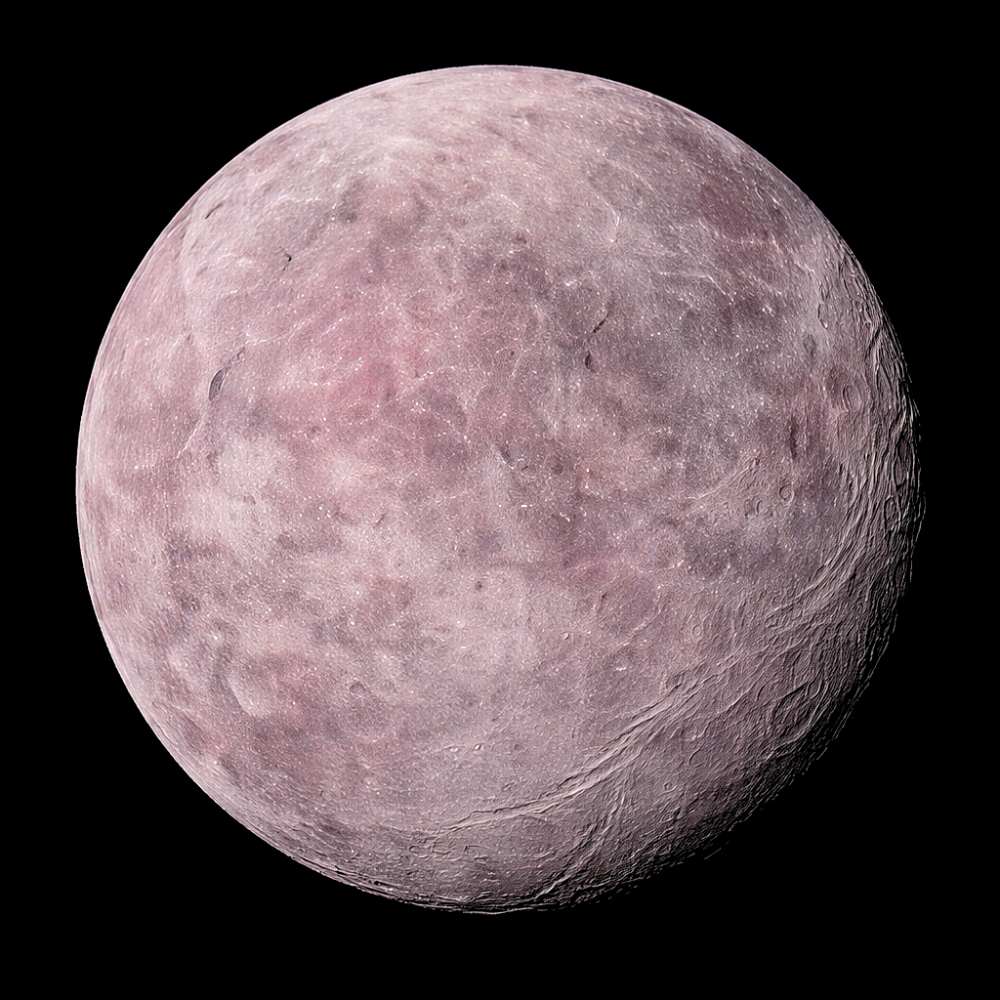
| Diameter | ~850–900 km (estimated) |
| Shape | Likely spherical |
| Surface Composition | Water ice, dark organic materials |
| Surface Color | Dark, neutral to slightly reddish |
| Average Temperature | ~−220°C |
| Known Moon | Actaea |
| Naming Origin | Roman goddess of the deep sea |
Introduction to Salacia – A Massive but Overlooked World
Among the many large bodies orbiting beyond Neptune, Salacia stands out not for dramatic features or extreme orbits, but for its quiet consistency. It is one of the largest known objects in the Kuiper Belt that follows a stable, nearly circular path, making it a representative example of the classical Kuiper Belt population.
Discovered in 2004, Salacia quickly proved to be far more massive than its dark appearance suggested. Despite being one of the largest known trans-Neptunian objects, it reflects very little sunlight, causing it to remain relatively obscure compared to brighter dwarf planets like Pluto or Eris.
Salacia represents a category of worlds that are common, massive, and scientifically crucial — yet easy to overlook.
Discovery of Salacia
Salacia was discovered during systematic surveys aimed at finding distant Solar System bodies beyond Neptune. At the time, it was cataloged as 2004 SB₆₀, with little indication of its true size.
Key discovery points:
Detected through optical observations at Palomar Observatory
Initially assumed to be smaller due to low brightness
Later infrared observations revealed a much larger diameter
Its discovery highlighted an important lesson: dark objects can be just as large as bright ones.
Why Salacia Is So Dark
Salacia has one of the lowest albedos among large Kuiper Belt objects.
This darkness is likely caused by:
A surface rich in dark organic compounds
Long-term radiation processing of surface ices
Lack of recent resurfacing events
Unlike Pluto or Eris, Salacia does not undergo frequent atmospheric freezing cycles that would refresh its surface with bright ice.
Size and Dwarf Planet Candidacy
With an estimated diameter close to 900 km, Salacia is large enough that gravity likely forces it into a near-spherical shape.
Indicators supporting dwarf planet status:
Sufficient size for hydrostatic equilibrium
Presence of a satellite (Actaea)
Significant mass for a classical Kuiper Belt object
Although the IAU has not formally classified Salacia as a dwarf planet, many astronomers consider it a strong candidate.
Orbit – A Model Classical Kuiper Belt Object
Salacia’s orbit is unusually calm compared to many large trans-Neptunian objects.
Orbital characteristics include:
Low eccentricity
Moderate inclination
Minimal interaction with Neptune
This places Salacia firmly in the classical Kuiper Belt, sometimes referred to as the “cold population,” which preserves the original architecture of the Solar System’s outer disk.
Surface Composition
Spectroscopic studies suggest Salacia’s surface is composed of:
Water ice
Dark, carbon-rich compounds
Possibly ammonia-bearing materials
The lack of bright volatile ices suggests Salacia has not experienced significant surface renewal for billions of years.
Actaea – The Moon That Revealed Salacia’s Mass
The discovery of Salacia’s moon Actaea was crucial in understanding the system.
Actaea allows astronomers to:
Measure Salacia’s mass
Estimate its density
Constrain internal structure models
Without Actaea, Salacia’s true scale would remain uncertain.
Why Salacia Matters
Salacia is scientifically important because it:
Represents large classical Kuiper Belt objects
Demonstrates that size does not equal brightness
Helps define the lower size limit of dwarf planets
Preserves early Solar System conditions
It serves as a benchmark for understanding the quiet majority of large Kuiper Belt worlds.
Actaea – The Companion That Unlocked Salacia’s Secrets
Salacia’s scientific importance increased dramatically with the discovery of its small moon Actaea. Although Actaea is faint and difficult to observe, its presence transformed Salacia from a poorly constrained object into a well-characterized system.
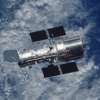
Actaea was discovered in 2006 using the Hubble Space Telescope, whose resolution was necessary to separate the moon from its dark primary.
Why Actaea Is So Important
The orbit of Actaea allows astronomers to directly measure Salacia’s mass, something impossible through brightness measurements alone.
From Actaea’s motion, scientists determined that:
Salacia is unexpectedly massive for its size
Its density is relatively high for a classical Kuiper Belt object
It likely contains a significant rocky component
This discovery showed that Salacia is not a loose, fluffy ice body, but a compact and dense world.
Density and Internal Structure of Salacia
Salacia’s density is estimated to be around 1.4–1.6 g/cm³, higher than many similar-sized Kuiper Belt objects.
This suggests:
A mixed composition of ice and rock
A partially differentiated interior
A more complex formation history than smaller KBOs
Salacia may contain a rocky core surrounded by an icy mantle, making it structurally closer to dwarf planets than to small icy fragments.
Salacia vs Other Large Kuiper Belt Objects
Salacia is often compared to other large, non-Pluto Kuiper Belt bodies.
| Object | Diameter (km) | Albedo | Moon | Orbit Type |
|---|---|---|---|---|
| Salacia | ~850–900 | Very low | Actaea | Classical |
| Quaoar | ~1,110 | Moderate | Yes | Classical |
| Orcus | ~910 | Moderate | Yes | Resonant |
| Pluto | ~2,377 | High | Yes | Resonant |
Salacia stands out as large but extremely dark, demonstrating how misleading brightness alone can be.
Why Salacia Has Avoided Dramatic Evolution
Unlike Pluto, Haumea, or Eris, Salacia shows no evidence of:
Large-scale collisions
Rapid rotation
Atmospheric cycles
Its stable orbit and lack of resurfacing suggest Salacia has spent most of its existence in relative isolation, quietly preserving its original surface.
This makes Salacia an excellent reference object for studying long-term surface aging in the Kuiper Belt.
Orbital Stability and Long-Term Behavior
Salacia’s orbit is one of the most stable among large Kuiper Belt objects.
Key features:
No strong resonances with Neptune
Low eccentricity
Minimal long-term orbital chaos
This stability supports the idea that Salacia formed close to its current location and has remained there since the Solar System’s early history.
What Salacia Reveals About Kuiper Belt Diversity
Salacia demonstrates that the Kuiper Belt contains:
Bright, volatile-rich worlds
Dark, radiation-aged giants
Both dynamically active and dynamically quiet bodies
This diversity cannot be explained by size alone. Orbital history, composition, and early collisions all play critical roles.
Scientific Importance of the Salacia–Actaea System
Together, Salacia and Actaea:
Help define the mass distribution of classical KBOs
Constrain models of binary formation
Provide insight into satellite formation around non-resonant objects
They represent a system that evolved slowly and steadily rather than violently.
The Long-Term Fate of Salacia
Salacia follows one of the most stable orbits known among large Kuiper Belt objects. Its low eccentricity and lack of strong resonances with Neptune mean that its path has likely changed very little since the early Solar System.
Over billions of years:
Salacia will remain dynamically stable
Its orbit will be only weakly affected by galactic tides
Close encounters with other large bodies are extremely unlikely
This long-term stability allows Salacia to preserve an ancient, unaltered surface, making it a valuable time capsule of the early outer Solar System.
Could Salacia Ever Be Explored by a Spacecraft?
At present, there are no plans to send a spacecraft to Salacia. Its distance and relatively “quiet” nature make it a low-priority target compared to more active or unusual worlds.
Key challenges include:
Travel times of several decades
Limited power availability far from the Sun
Modest scientific return compared to cost
However, Salacia would be an excellent target for future missions designed to survey multiple Kuiper Belt objects, especially those aimed at understanding surface aging and internal structure in stable environments.
What Salacia Tells Us About Dwarf Planet Formation
Salacia occupies a critical position near the lower boundary of dwarf planet size.
Its properties suggest that:
Large Kuiper Belt objects formed across a wide range of environments
Not all massive bodies experienced dramatic collisions or resurfacing
Some worlds evolved quietly, preserving their original character
Salacia helps define the transition between small icy bodies and fully developed dwarf planets.
Salacia and the “Invisible Majority” of the Kuiper Belt
One of Salacia’s most important lessons is statistical.
Its discovery implies:
Many large Kuiper Belt objects may be dark and difficult to detect
Bright objects like Pluto are not representative of the whole population
Current surveys may still be missing numerous Salacia-sized worlds
Salacia represents the quiet majority rather than the spectacular minority.
Frequently Asked Questions (FAQ)
What is Salacia?
Salacia is a large trans-Neptunian object located in the classical Kuiper Belt. It is considered a strong dwarf planet candidate due to its size, mass, and likely spherical shape.
Is Salacia officially classified as a dwarf planet?
No formal IAU classification has been issued, but many astronomers regard Salacia as a likely dwarf planet based on its physical properties.
Why is Salacia so dark?
Salacia has a very low albedo due to a surface rich in dark organic compounds and long-term radiation processing. Unlike Pluto or Eris, it does not experience frequent surface renewal.
What is Actaea?
Actaea is Salacia’s only known moon. Its orbit allows astronomers to measure Salacia’s mass and estimate its density and internal structure.
How big is Salacia compared to Pluto?
Salacia is much smaller than Pluto. Pluto has a diameter of about 2,377 km, while Salacia is estimated to be around 850–900 km across.
Does Salacia have an atmosphere?
No. Salacia is too small and too cold to sustain any atmosphere.
Where is Salacia located?
Salacia orbits the Sun beyond Neptune in the classical Kuiper Belt, following a stable, near-circular orbit.
Why is Salacia important to astronomy?
Salacia helps astronomers understand the population of large, dark Kuiper Belt objects and defines the lower boundary of dwarf planet formation.
Salacia’s Place in the Universe Map
Within the Universe Map framework, Salacia represents:
A benchmark classical Kuiper Belt object
A stable, long-lived outer Solar System world
Evidence that size does not correlate with brightness
It provides balance to the narrative dominated by more extreme objects like Pluto, Eris, and Haumea.
Final Thoughts
Salacia may not redefine planets or host dramatic surface features, but its importance lies in its quietness. It shows that the outer Solar System is not only shaped by chaos and collision, but also by long-term stability and slow evolution.
In the frozen darkness beyond Neptune, Salacia continues its steady orbit — a silent witness to the Solar System’s earliest era.