









Tau Ceti
The Sun’s Quiet Twin in the Cosmic Neighborhood
Quick Reader
| Attribute | Details |
|---|---|
| Name | Tau Ceti |
| Star Type | G8 V (Yellow Dwarf, slightly cooler than the Sun) |
| Constellation | Cetus |
| Distance from Earth | ~11.9 light-years |
| Apparent Magnitude | +3.50 (visible with naked eye under dark skies) |
| Absolute Magnitude | +5.68 |
| Luminosity | ~0.52× the Sun |
| Mass | ~0.78× the Sun |
| Radius | ~0.79× the Sun |
| Temperature | ~5,340 K |
| Age | Possibly 5–8 billion years (older than the Sun) |
| Metallicity | Very low (about 45% of the Sun) |
| Planetary System | Multiple candidate super-Earths (including possible habitable-zone worlds) |
| Notable Feature | One of the closest Sun-like stars; exceptionally quiet and stable |
| Best Viewing Season | December–January (Northern Hemisphere) |
Introduction – A Nearby Sun-Like Star with Big Possibilities
Tau Ceti, a quiet yellow dwarf star located just 11.9 light-years away, has long been a focal point for astronomers and exoplanet researchers. As one of the closest Sun-like stars in the galaxy, Tau Ceti represents a natural target for the search for Earth-like planets, biosignatures, and future interstellar mission concepts.
Although slightly smaller and dimmer than the Sun, Tau Ceti shares many of the same basic physical characteristics. Its stable luminosity, low magnetic activity, and long lifespan make it a potentially excellent host for habitable planets. Intriguingly, several super-Earth candidates have been detected around Tau Ceti, including at least one that may orbit within the habitable zone.
Tau Ceti is visible to the naked eye in dark skies, shining as a modest yellow point in the constellation Cetus, the Sea Monster. While not as bright as Vega or Arcturus, Tau Ceti’s significance lies not in its brightness but in its resemblance to our Sun and its closeness to Earth.
In the search for life-bearing exoplanets, Tau Ceti is one of the most promising nearby stars.
Physical Characteristics of Tau Ceti
A Smaller, Quieter Version of the Sun
Tau Ceti belongs to the spectral class G8 V, making it:
Slightly cooler
Slightly smaller
Slightly less luminous
Lower in metals
compared to the Sun.
Its surface temperature (~5,340 K) gives it a warm yellow tone when observed through telescopes, similar but subtly deeper in color compared to the Sun’s ~5,780 K.
Mass and Radius
Mass: ~0.78 M☉
Radius: ~0.79 R☉
These values place Tau Ceti firmly within the category of Sun-like stars, though it is toward the cooler, lower-mass end of the main sequence.
Luminosity and Brightness
Tau Ceti emits:
About half the luminosity of the Sun
Appears dimmer because it is less energetic and also farther away
Its modest brightness is balanced by its exceptional stability, making it an ideal comparison star for long-term stellar studies.
Metallicity – A Star Low in Heavy Elements
One of the most defining characteristics of Tau Ceti is its very low metallicity, meaning it contains far fewer heavy elements than the Sun.
Why Metallicity Matters
Higher metallicity is often associated with:
Greater planet formation efficiency
Larger numbers of rocky planets
Potential for complex planetary systems
Tau Ceti has about 45% of the Sun’s metallicity, which raises interesting questions:
How did it form planets at all?
What are the planets made of?
Could a low-metallicity system still host habitable worlds?
Despite this limitation, Tau Ceti appears to host several planetary candidates, challenging older models that linked planet formation strictly to metallicity.
Age and Stellar Stability
Tau Ceti may be older than the Sun, with age estimates ranging from:
~5 billion years
Up to possibly 8 billion years
This older age contributes to:
Very low magnetic activity
Minimal stellar flares
A remarkably calm stellar surface
A stable luminosity curve over long timescales
In fact, Tau Ceti is one of the least active Sun-like stars known, a valuable attribute when considering planetary habitability.
Planets orbiting Tau Ceti would receive extremely stable light conditions—excellent for climate stability and potential biological evolution.
The Planetary System of Tau Ceti
Tau Ceti is believed to host multiple super-Earth candidate planets, discovered through precise radial velocity measurements.
The Current Candidate Planet List
Most models suggest 4–5 super-Earths, with two lying near or within the habitable zone:
| Planet Name | Minimum Mass | Orbital Distance | Notes |
|---|---|---|---|
| Tau Ceti e | ~4.3 Earth masses | ~0.55 AU | Inner edge of habitable zone |
| Tau Ceti f | ~6.6 Earth masses | ~1.35 AU | Outer edge of habitable zone |
| Tau Ceti c | ~3.1 Earth masses | ~0.12 AU | Too hot |
| Tau Ceti b | ~2 Earth masses | ~0.10 AU | Too hot |
| Tau Ceti g (candidate) | ~? | ~0.5–1.0 AU | Debated |
These planets are super-Earths, meaning:
- Larger than Earth
- Not gas giants
- May or may not have atmospheres
The existence of planets e and f is particularly exciting because:
- Both could theoretically support surface liquid water
- Their star has a stable energy output
- Their ages allow for long-term climate cycles
Challenges for Habitability
However, Tau Ceti also hosts a significant debris disk, similar to a dense asteroid belt. This increases:
- Impact frequency
- Atmospheric stripping risks
- Long-term habitability challenges
A habitable planet here might experience frequent “asteroid seasons.”
Tau Ceti’s Debris Disk – A Busy System
Tau Ceti has one of the most massive and complex debris disks discovered around a Sun-like star.
Structure of the Disk
The disk includes:
Warm inner dust
Cool outer belts
Thick zones of rocky bodies
It resembles a scaled-up version of our Kuiper Belt but with far more activity.
Scientific Importance
The disk suggests:
Intense asteroid and comet collisions
Early planetary instability
Ongoing clearing by existing planets
This chaotic environment might resemble the early Solar System’s Late Heavy Bombardment—an era that shaped Earth’s geological and biological future.
The Cooling Process of a White Dwarf
Van Maanen’s Star is a textbook example of how white dwarfs cool over time. After a star becomes a white dwarf, it no longer produces energy through nuclear fusion. Instead, it radiates away stored thermal energy from its earlier evolutionary phases.
In the case of Van Maanen’s Star:
Its current temperature of ~6,200 K
Its low luminosity (~0.00017 L☉)
Its cooling age of around 3 billion years
…indicate that it has spent a long time fading from its much hotter origin. Newly formed white dwarfs begin at temperatures above 100,000 K, then cool steadily over billions of years. Van Maanen’s Star is already well along this cooling pathway.
Ultimately, in trillions of years, it will cool so much that it becomes a black dwarf—a hypothetical stage that has not yet occurred anywhere in the universe because the universe is not old enough.
Tau Ceti as a Benchmark Star for Research
Tau Ceti is one of the most valuable stars for astronomers studying Sun-like stellar behavior.
Why It’s a Benchmark Star
Close proximity (~12 ly)
Sun-like mass and temperature
Extremely low activity
Well-defined age
Stable brightness
It is often used in:
Radial velocity system testing
Stellar model comparisons
Exoplanet habitability simulations
Spectral analysis calibration
Tau Ceti remains one of the most stable stars in the solar neighborhood, making it a cornerstone reference in stellar astrophysics.
Tau Ceti in Culture and Science Fiction
Tau Ceti frequently appears in:
Science fiction novels
Movies
Video games
Interstellar mission proposals
Reasons for its popularity:
It is close
It is Sun-like
It hosts possible habitable-zone planets
It is quiet and stable
Many fictional stories imagine Tau Ceti as humanity’s first interstellar destination.
Internal Structure and Fusion Processes of Tau Ceti
Tau Ceti is a main-sequence star powered by hydrogen fusion in its core, similar to the Sun. However, subtle differences in mass, temperature, and metallicity significantly affect its internal behavior and long-term evolution.
Hydrogen Burning in the Core
Tau Ceti uses the proton–proton (PP) chain as its primary fusion mechanism, converting hydrogen into helium. Because it is slightly less massive than the Sun:
Core temperatures are slightly lower
Fusion proceeds more slowly
The star has a longer main-sequence lifetime
This slower burning rate is one reason Tau Ceti, despite being older than the Sun, has not yet evolved into a giant.
Radiative and Convective Zones
Tau Ceti’s internal structure includes:
Radiative core region → transports energy outward from fusion
Thin convective outer layer → responsible for surface granulation
Very small convection zone compared to the Sun
This thin convective layer affects:
Magnetic field strength
Surface activity
Stellar wind generation
Tau Ceti’s quiet behavior is largely due to this low convection efficiency.
Magnetic Activity and Stellar Stability
One of Tau Ceti’s defining features is its extraordinary stability. It is one of the least magnetically active Sun-like stars known.
Low Magnetic Field Strength
Tau Ceti has:
Weak magnetic fields
Very few active regions
Minimal chromospheric activity
This is surprising, given its age. Usually, older stars show less activity, but Tau Ceti’s stability is extreme even for its age.
Quiet Surface Behavior
Tau Ceti exhibits:
Very low flare frequency
Weak stellar winds
Smooth brightness curves without strong cycles
Almost no starspot-driven variability
In comparison:
The Sun’s activity cycle varies over 11 years
Tau Ceti may have a much weaker or longer-period cycle
This ultra-quiescent behavior greatly improves long-term habitability prospects for its planets.
Planetary Dynamics and Orbital Architecture
Tau Ceti is believed to host multiple super-Earth candidates. Although none are officially confirmed through multiple detection methods, their signals are compelling.
Overview of Candidate Planets
Current data suggests:
At least four super-Earths
Possibly five
Orbital periods ranging from days to hundreds of days
Planetary masses between 2 and 7 Earth masses
Their arrangement resembles a compact inner system like TRAPPIST-1 or Kepler-11 but scaled to a Sun-like star.
Habitable Zone Planets
Two planets—Tau Ceti e and Tau Ceti f—receive the most attention.
Tau Ceti e
Minimum mass: ~4.3 Earth masses
Semi-major axis: ~0.55 AU
Receives more energy than Earth
Possibly on the inner edge of habitable conditions
Potential conditions:
Could host a thick atmosphere
Might experience runaway greenhouse tendencies
Water oceans possible only with moderated greenhouse gases
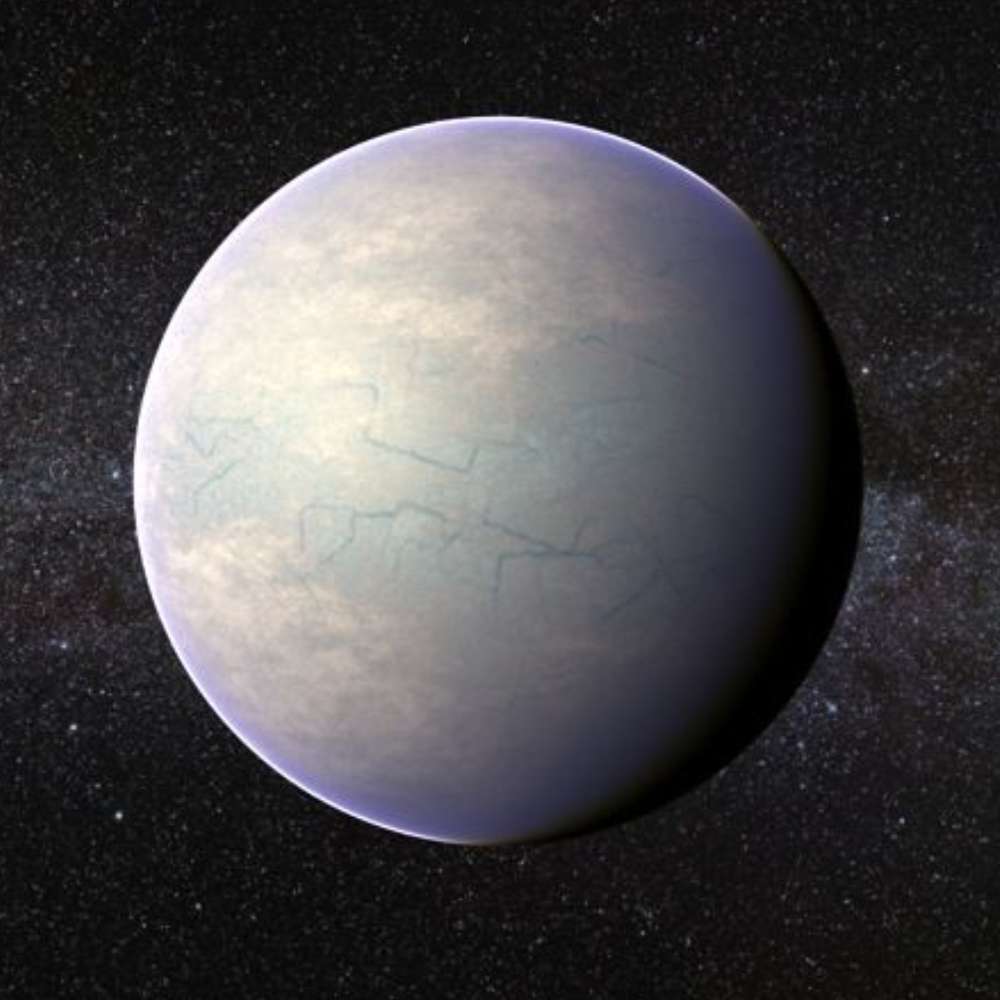
Tau Ceti f
Minimum mass: ~6.6 Earth masses
Semi-major axis: ~1.35 AU
Receives less energy than Earth
Could be on the outer edge of the habitable zone
Potential conditions:
May host colder climates
Could resemble an early “snowball Earth”
Greenhouse gases or internal heating may permit habitability
Tau Ceti f is often seen as the more promising candidate for Earth-like life.
How Van Maanen’s Star Was Discovered
Van Maanen’s Star was identified in 1917 by Adriaan van Maanen, a Dutch-American astronomer known for his precision astrometry. While studying photographic plates, he noticed a faint star moving unusually fast across the sky. Its high proper motion immediately suggested it was nearby.
At the time, astronomers knew very little about white dwarfs. Yet Van Maanen’s discovery became historically significant because:
It was the first isolated white dwarf ever found (not part of a binary system)
It provided early evidence that some stars could fade into extremely dense remnants
It hinted at the existence of a group of very faint stars close to the Sun
This discovery helped expand the understanding of stellar evolution and opened the door to detailed white dwarf research in the 20th century.
The Challenges of a Debris-Rich Planetary System
Tau Ceti’s large debris disk poses significant habitability challenges:
High Impact Risk
The star’s debris system likely includes:
Large asteroid-like bodies
Cometary fragments
Dense belts of dusty material
This results in:
A high frequency of meteor impacts
Potential atmospheric stripping
Long-term surface instability on planets
Such impacts may either inhibit or stimulate biological development, depending on timing and intensity.
Evidence of Past Instability
The dust appears to be continually replenished through:
Collisions
Gravitational scattering
Tidal interactions
A young planetary system experiencing Late-Heavy-Bombardment-like events could face repeated sterilizing impacts.
Understanding this environment helps evaluate planetary habitability around low-metallicity stars.
Habitability Models for Tau Ceti’s Planets
The potential habitability of Tau Ceti’s planets depends on several factors.
Key Factors Supporting Habitability
Stellar Stability
Low UV radiation and minimal flaring help retain atmospheres.Long Stellar Lifetime
Tau Ceti will remain stable for billions of years more.Suitable Habitable Zone
Tau Ceti e and f lie near ideal orbital distances.Moderate Luminosity
Allows stable surface temperatures with the right atmosphere.
Factors Working Against Habitability
Debris Disk Collisions
Higher impact risk compared to Earth.Low Metallicity
Might limit the formation of iron-rich planets.Super-Earth Mass
Thick atmospheres may produce high pressure.Tidal Locking Possibility
Inner planets may experience synchronous rotation.
Best Candidate for Life: Tau Ceti f
Of all Tau Ceti’s planetary candidates, planet f is the most likely to support Earth-like conditions, depending on:
Atmospheric composition
Geological activity
Water availability
Comparison with Other Nearby Sun-Like Stars
Tau Ceti is often compared with several key stars when evaluating habitability potential.
Tau Ceti vs. Alpha Centauri A/B
| Feature | Tau Ceti | Alpha Centauri A/B |
|---|---|---|
| Distance | 11.9 ly | 4.37 ly |
| Metallicity | Low | High |
| Stability | Higher | Moderate |
| Planet Detection | Super-Earth candidates | Possible Earth-mass planets |
| System Complexity | Debris-rich | Multiple stellar components |
Alpha Centauri is closer, but its binary nature complicates habitability.
Tau Ceti vs. Epsilon Eridani
- Epsilon Eridani is younger and very active
- Strong stellar winds and flares reduce habitability
- Tau Ceti is far more stable
Tau Ceti vs. the Sun
Tau Ceti is:
- Smaller
- Cooler
- Less luminous
- Older
- More stable
Making it a unique comparison for modeling stellar evolution and long-term climate stability.
The Role of Tau Ceti in SETI and Interstellar Concepts
Tau Ceti has been a target for:
Radio SETI searches
Optical SETI experiments
Interstellar exploration proposals (Breakthrough Starshot concepts)
Reasons include:
Nearness
Sun-like characteristics
Possible Earth-like planets
Long physical stability
Although no artificial signals have been detected, Tau Ceti remains a top candidate for future SETI priorities.
Unresolved Mysteries and Open Scientific Questions
Despite Tau Ceti being one of the most thoroughly examined Sun-like stars in the solar neighborhood, it still presents several important unanswered questions. These gaps in our understanding make Tau Ceti one of the most intriguing targets for exoplanet and stellar evolution research.
How Many Planets Does Tau Ceti Really Have?
Radial velocity signals around Tau Ceti are subtle because:
The star is extremely stable
Stellar noise is exceptionally low
The signals from small planets blend with measurement limits
Some analyses suggest four planets, while others point toward five or even six candidates. The true number remains uncertain due to:
Instrument sensitivity limitations
Overlapping periodic signals
Interference from debris disk dust clouds
Future telescopes like ELT, TMT, or the Habitable Worlds Observatory may confirm the exact planetary architecture.
What Are the Planets Made Of?
Because Tau Ceti is metal-poor, it is unclear how planetary formation proceeded:
Are Tau Ceti’s rocky planets iron-poor?
Do they have higher silicate content than Earth?
Do their atmospheres differ from typical Earth-like compositions?
Low metallicity challenges traditional models of rocky planet formation, making Tau Ceti’s planets valuable test cases.
Why Is Tau Ceti So Quiet?
Tau Ceti’s magnetic activity is far below that of typical Sun-like stars. Questions remain:
Is this due to its age alone?
Does its thin convection zone suppress magnetic cycles?
Has the star always been this stable?
Understanding Tau Ceti’s quietness helps refine models of stellar magnetism and habitability conditions.
Could Life Survive Heavy Asteroid Bombardment?
Even if Tau Ceti e or f lie within the habitable zone, the massive debris disk suggests:
Frequent asteroid/comet impacts
Possible atmospheric erosion
Long-term climate disruption
On Earth, heavy bombardment played a role in early evolution. The same may be true—or destructive—around Tau Ceti.
Long-Term Evolution of Tau Ceti
Tau Ceti’s future evolution mirrors the Sun’s path but at a slower, more extended pace.
Remaining Main-Sequence Lifetime
Tau Ceti will remain stable for:
At least 20–30 billion years more
This is extraordinary because:
The Sun will only last 5 billion more years
Tau Ceti could outlive many stars in its local region
Future Red Giant Phase
When its hydrogen supply depletes:
Tau Ceti will expand into a red giant
Its inner planets may be engulfed
Habitable worlds would need to migrate outward or perish
Final Stage: White Dwarf
Eventually, Tau Ceti will:
Shed its outer layers
Surround itself with a planetary nebula
Collapse into a long-lived white dwarf
This future ensures Tau Ceti remains a stable and observable object for tens of billions of years.
Observing Tau Ceti from Earth
Tau Ceti is bright enough to see without special equipment if you know where to look.
Naked-Eye Visibility
Apparent magnitude: +3.5
Visible in dark rural skies
Appears yellow-white, similar to the Sun’s tone
Located in the constellation Cetus, not far from Diphda (Beta Ceti)
Binocular Viewing
Binoculars reveal:
A crisp, warm star
Nearby field stars forming simple patterns
Useful for identifying the region of the sky during exoplanet transits (if detected)
Telescope Observation
Even through small telescopes:
Tau Ceti remains a point of light
Its color contrast becomes more apparent
No disk or planetary feature can be directly observed (yet)
However, modern telescopes use spectrographs and radial velocity techniques to detect subtle planetary influences.
Astrophotography
Tau Ceti can be used as:
A photometric calibration star
A white point reference
A field anchor for Cetus deep-sky imaging
Long exposures may also capture background galaxies near the line of sight.
Frequently Asked Questions (FAQ)
Is Tau Ceti the closest Sun-like star?
It is one of the closest true Sun analogs, but Alpha Centauri A is closer and more similar in composition.
Can Tau Ceti support habitable planets?
Possibly. Tau Ceti e and Tau Ceti f lie near the habitable zone, but debris collisions and atmospheric conditions remain uncertain.
Why is Tau Ceti important for exoplanet science?
Because it is:
Very close
Sun-like
Extremely stable
A likely host of super-Earths
A benchmark for radial velocity tests
Tau Ceti is among the best stars to study Earth-like planet formation.
Could humans ever travel to Tau Ceti?
At 11.9 light-years, it is within range of future technologies such as:
Fusion drives
Laser sail propulsion
Interstellar probes
It is one of the top candidates for future interstellar missions.
Is Tau Ceti older than the Sun?
Yes. It may be 6–8 billion years old, making it significantly older and more evolved.
What is the biggest threat to habitability in the system?
The dense debris disk, which increases asteroid/comet impact frequency.
Final Scientific Overview
Tau Ceti stands as one of the most compelling stars in the local neighborhood—a quiet, Sun-like dwarf with a stable luminosity, a long lifespan, and multiple potential super-Earth planets. Its proximity and similarity to the Sun have made it a cornerstone of habitability studies, stellar evolution benchmarking, and interstellar mission planning.
Key highlights:
It is older, quieter, and more stable than the Sun.
It hosts a large debris disk that impacts long-term planetary habitability.
It has multiple candidate planets, including potential habitable-zone worlds.
It is an ideal target for studying how planetary systems evolve around metal-poor stars.
Its proximity makes it a prime goal for the next generation of exoplanet imaging missions.c