




Interactive 3D exoplanet map
Proxima Centauri b 3D Map
Navigate the closest known exoplanet to our Solar System in an interactive 3D map, then explore verified orbital data, habitability evidence, discovery history, and the questions astronomers still cannot answer.
Interactive 3D map of Proxima Centauri b
Drag to orbit · Scroll or pinch to zoom · Select any object for verified dataVisual sizes and orbit spacing are enhanced for readability.
Proxima Centauri b at a glance
Proxima b is a confirmed, roughly Earth-mass planet orbiting the red dwarf Proxima Centauri. It is the nearest known exoplanet, but it has not been directly imaged and its atmosphere, surface, and exact radius remain uncertain.
- Minimum mass
- 1.055 × Earth
- Estimated radius
- 1.02 × Earth
- Orbital radius
- 0.04848 AU
- Orbital period
- 11.18465 days
- Host star
- Proxima Centauri · M-type red dwarf
- Equilibrium temperature
- About 218 K · model dependent
- Detection method
- Radial velocity
- Status
- Confirmed planet
Values use the current NASA Exoplanet Catalog and NASA Exoplanet Archive solutions. “Minimum mass” reflects the unknown orbital inclination; the true mass could be higher.
In the habitable zone. Not proven habitable.
This distinction matters. The orbit receives an amount of stellar energy compatible with liquid surface water under some atmospheric conditions. It does not tell us whether water or a protective atmosphere actually exists.
An Earth-mass world at the right orbital distance
Proxima b orbits within the classical habitable-zone region of its cool red dwarf. Its measured minimum mass is close to Earth’s, making a rocky composition plausible, though not yet demonstrated by a radius measurement.
Flares may reshape or remove an atmosphere
Proxima Centauri is magnetically active. Frequent ultraviolet and X-ray events could erode an atmosphere and expose the surface to intense space weather. Habitability therefore depends heavily on atmospheric retention, magnetic shielding, water inventory, and climate circulation.
How astronomers found a planet they cannot yet see
The Pale Red Dot campaign detected a repeating 11.2-day Doppler shift in Proxima Centauri’s spectrum. The star moves slightly toward and away from us as the unseen planet’s gravity tugs on it—an effect measured with precision spectrographs.
Close in astronomy. Far beyond today’s spacecraft.
Proxima Centauri is about 4.25 light-years away—roughly 40 trillion kilometres. Light crosses that gap in 4.25 years; a Voyager-speed spacecraft would need on the order of 75,000 years if it could travel directly at constant speed.
Orbital relationships, not literal screen scale
The model preserves the order and character of the system while enlarging planets and separating orbits so they remain visible. A physically true-scale view would make the planets nearly impossible to see beside the star.
No confirmed surface image or atmosphere
The planet texture is an evidence-informed visualization, not a photograph. Scientists still need stronger constraints on inclination, true mass, radius, atmosphere, surface pressure, water, magnetic field, and climate.
Continue your journey in 3D
Move outward by scale—from our planetary neighborhood to the galaxy and nearby galaxies. Each Universe Map experience is built for spatial exploration rather than a static topic gallery.
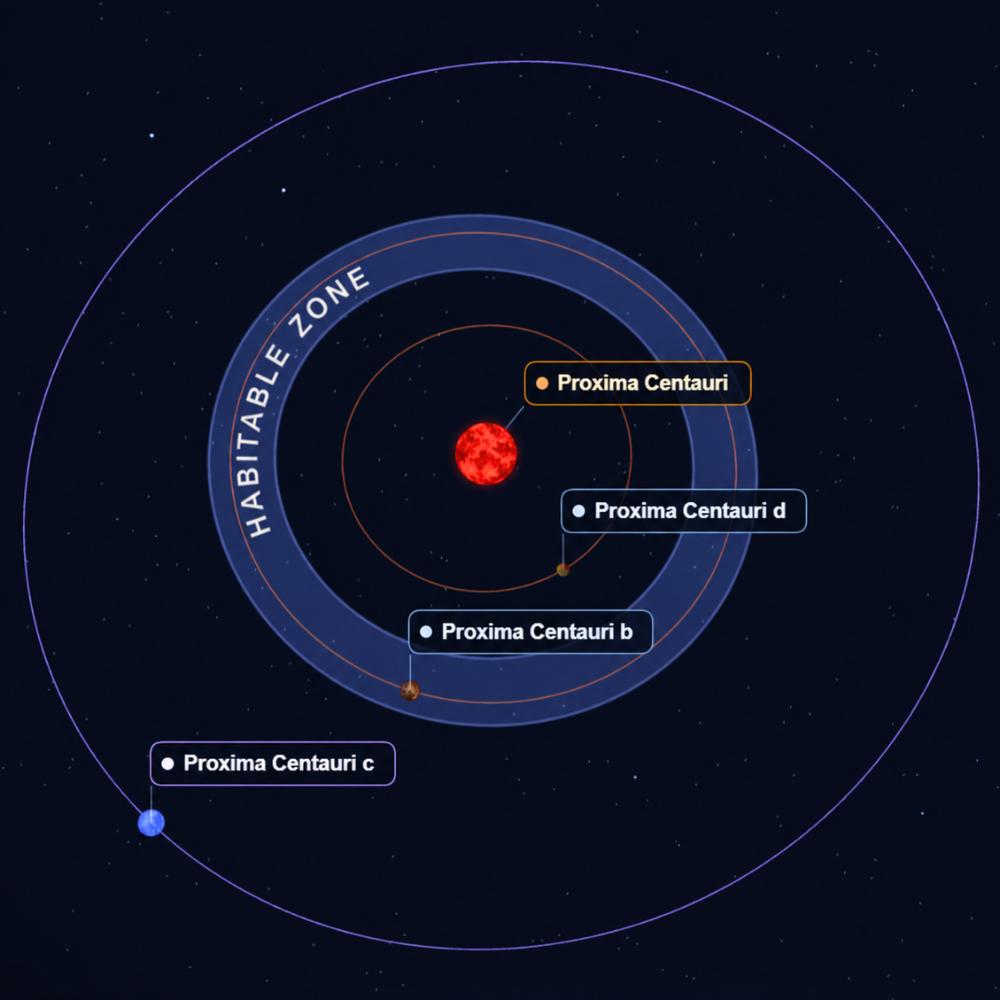 Nearest star system
Proxima Centauri System Map
Zoom back from planet b to compare the complete planetary architecture around our nearest stellar neighbor.
Open interactive map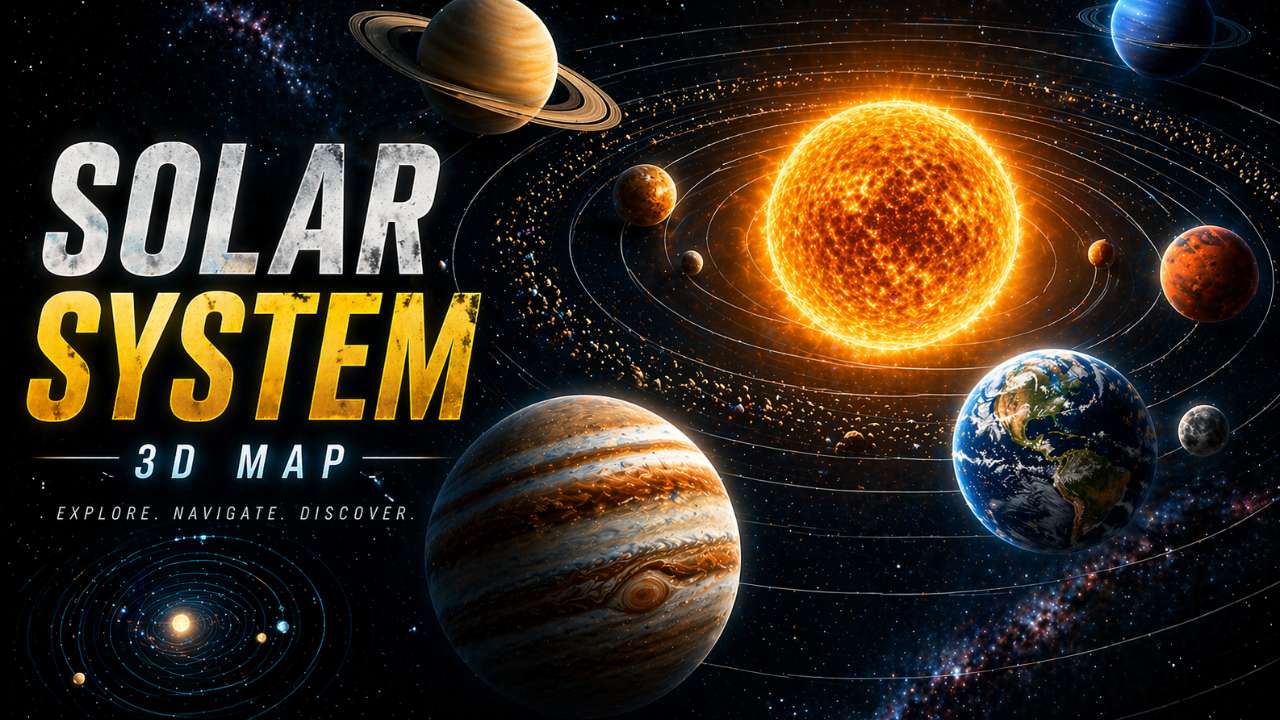 Planetary system
Solar System 3D Map
Compare our familiar eight-planet system with the compact orbits around Proxima Centauri.
Open interactive map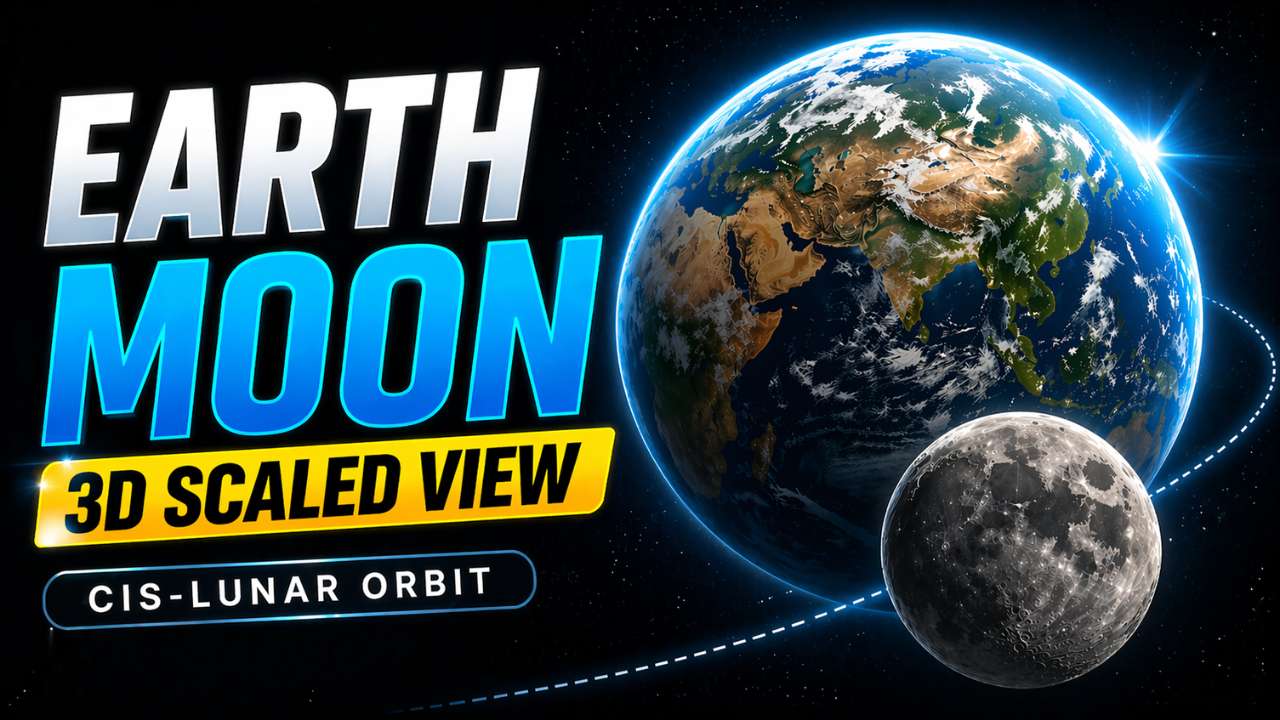 True-scale comparison
Earth–Moon 3D Scale Map
See real size ratios, orbital spacing, and synchronous rotation in our own cis-lunar system.
Open interactive map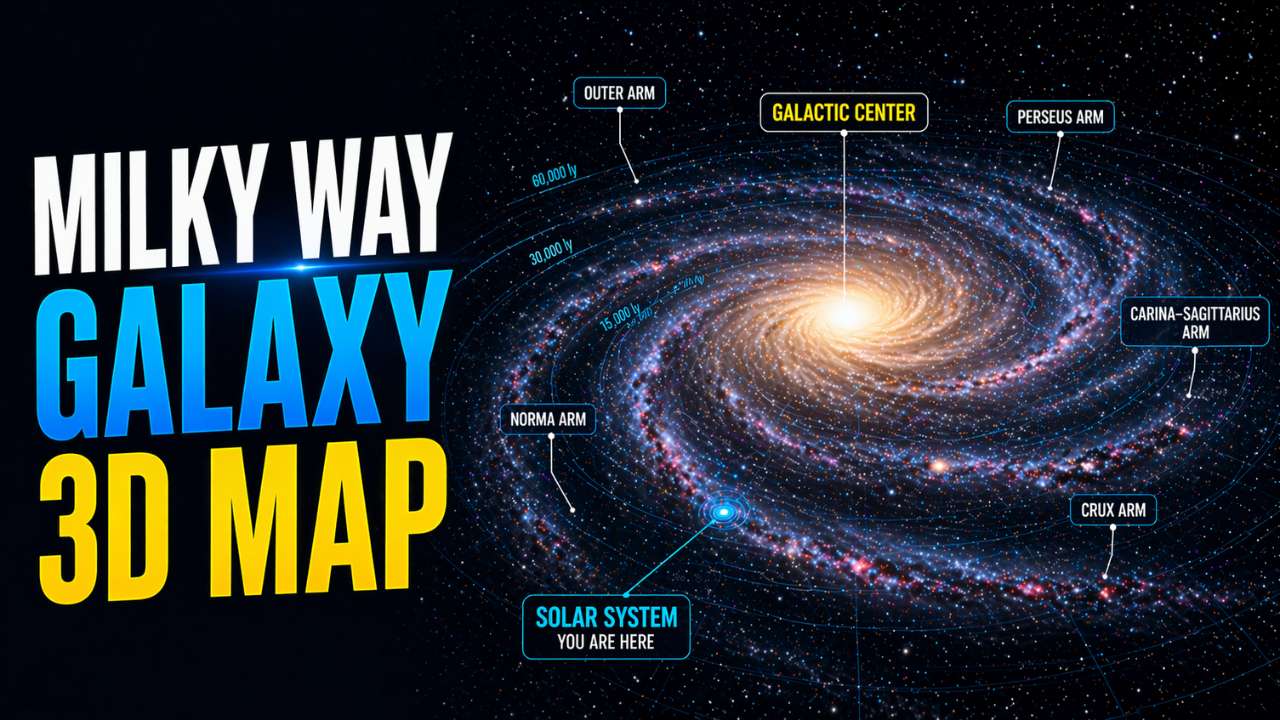 Galactic scale
Milky Way Galaxy 3D Map
Locate the Solar neighborhood inside the barred spiral structure of our home galaxy.
Open interactive map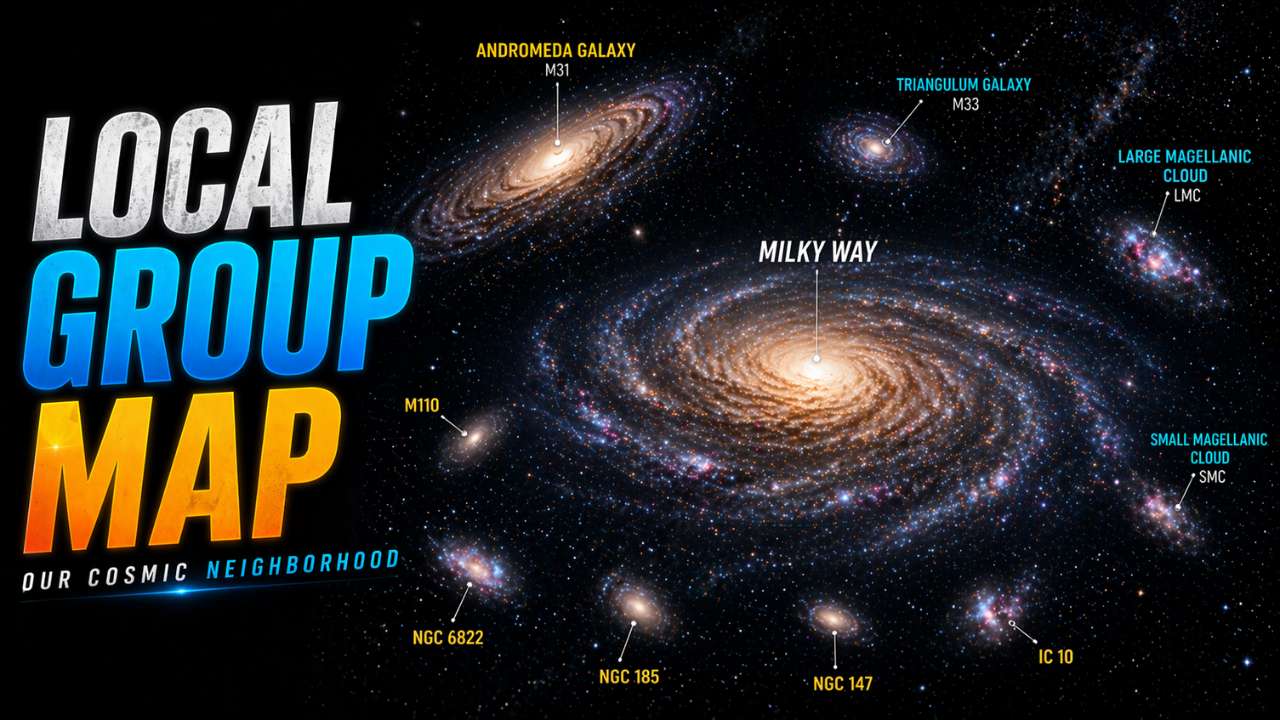 Nearby universe
Local Group Map
Travel from the Milky Way to Andromeda, Triangulum, and the nearby dwarf galaxies.
Open interactive map Full atlas
Explore Every 3D Map
Browse planetary systems, galaxies, black holes, voids, dark matter, and large-scale cosmic structure.
Browse the collectionProxima Centauri b FAQ
Direct answers to the questions most often asked about the nearest known exoplanet.
Is Proxima Centauri b habitable?
It is in its star’s habitable-zone region, but habitability is not confirmed. We do not yet know whether it has liquid water, a surface atmosphere, a magnetic field, or a climate able to withstand Proxima Centauri’s intense stellar activity.
How far away is Proxima Centauri b?
The Proxima Centauri system is about 4.25 light-years from Earth, or roughly 40 trillion kilometres. It is the closest known exoplanet system to the Solar System.
How long is a year on Proxima b?
One orbit takes about 11.2 Earth days. The planet circles only about 0.0485 AU from its cool red-dwarf host star.
Is Proxima b bigger than Earth?
Its minimum mass is about 1.055 Earth masses. NASA lists an estimated radius near 1.02 Earth radii, but Proxima b is not known to transit its star, so its radius and density have not been directly measured.
Can we see Proxima Centauri b?
Not as a resolved planet in an ordinary image. It was detected through radial velocity—the small repeating wobble its gravity causes in the host star. The surface shown in this map is a scientific visualization.
How long would it take to travel there?
At light speed the journey would take about 4.25 years from Earth’s frame. At a speed comparable to Voyager 1, a direct trip would take roughly 75,000 years; no current spacecraft can make a practical interstellar journey.
Could Proxima b be tidally locked?
It may be in synchronous or another spin-orbit state because it orbits so close to its star, but its rotation has not been directly measured. The map’s tidal-lock behavior is therefore a plausible model, not an observed fact.
Scientific sources
Catalog values and scientific context are tied to primary or authoritative sources so readers can distinguish measurement from visualization.
- NASA Science — Proxima Centauri b catalog
- NASA Exoplanet Archive — Proxima Centauri system parameters
- European Southern Observatory — 2016 discovery announcement
- Nature — A terrestrial planet candidate in a temperate orbit around Proxima Centauri
- NASA Science — Proxima b habitability and radiation context