







Interactive 3D exoplanet map
Proxima Centauri d 3D Map
Explore the innermost confirmed world around our nearest stellar neighbour: a sub-Earth planet with a five-day year, detected through a stellar wobble of only about 40 centimetres per second.
Interactive 3D map of Proxima Centauri d
Drag to orbit · Scroll or pinch to zoom · Select any object for verified dataVisual sizes and orbit spacing are enhanced for readability.
Proxima Centauri d at a glance
Proxima d is the innermost confirmed planet around Proxima Centauri. Its measured minimum mass is only about twice that of Mars, placing it among the lightest worlds ever detected with the radial-velocity method.
- Minimum mass
- 0.260 ± 0.038 × Earth
- Estimated radius
- 0.692 × Earth · not measured
- Orbital radius
- 0.02881 ± 0.00017 AU
- Orbital period
- 5.12338 ± 0.00035 days
- Host star
- Proxima Centauri · M-type red dwarf
- Equilibrium temperature
- 282 ± 23 K · model dependent
- Stellar energy received
- 1.814 ± 0.098 × Earth
- Detection method
- Radial velocity
- Catalog status
- Confirmed planet · 2025
Values use the 2025 NIRPS confirmation solution adopted by the NASA Exoplanet Archive. “Minimum mass” reflects the unknown orbital inclination; the true mass could be higher. Radius is a catalog estimate because no transit radius has been measured.
Warm on paper. Interior to the habitable zone.
Proxima d circles between its star and the classical habitable zone. Its quoted 282 K equilibrium temperature is a simplified radiation-balance estimate—not a measured surface temperature and not evidence of liquid water.
About 1.8 times Earth’s stellar energy
The planet orbits only about 4.31 million kilometres from Proxima Centauri—roughly one-thirteenth of Mercury’s distance from the Sun. The 2025 solution gives an incident flux of 1.814 ± 0.098 times Earth’s.
No measured radius, atmosphere, or surface
Proxima d has not been directly imaged and no transit radius is known. Its composition, density, atmosphere, albedo, surface pressure, water inventory, magnetic field, and actual climate all remain unconstrained.
A 40-centimetre-per-second wobble
Proxima d was found through radial velocity: astronomers measured tiny, repeating Doppler shifts in the star’s spectrum. The planet’s pull changes Proxima Centauri’s line-of-sight speed by only about 0.39 metres per second—slower than an ordinary walking pace.
Close in astronomy. Far beyond today’s spacecraft.
Proxima Centauri is about 4.25 light-years away—roughly 40 trillion kilometres. Light crosses that gap in 4.25 years; a Voyager-speed spacecraft would need on the order of 75,000 years if it could travel directly at constant speed.
The system’s tight inner architecture
Proxima d orbits inside Proxima b and well inside the habitable-zone band. Planet sizes and orbital gaps are enlarged so the system remains legible; a literal scale view would reduce the planets to nearly invisible points beside the star.
A symbolic world, not a photograph
The rocky texture is an evidence-informed visualization. Because the orbital inclination is unknown, even the planet’s true mass may exceed the radial-velocity minimum; its likely synchronous rotation is also modeled rather than observed.
Continue your journey in 3D
Move outward by scale—from our planetary neighborhood to the galaxy and nearby galaxies. Each Universe Map experience is built for spatial exploration rather than a static topic gallery.
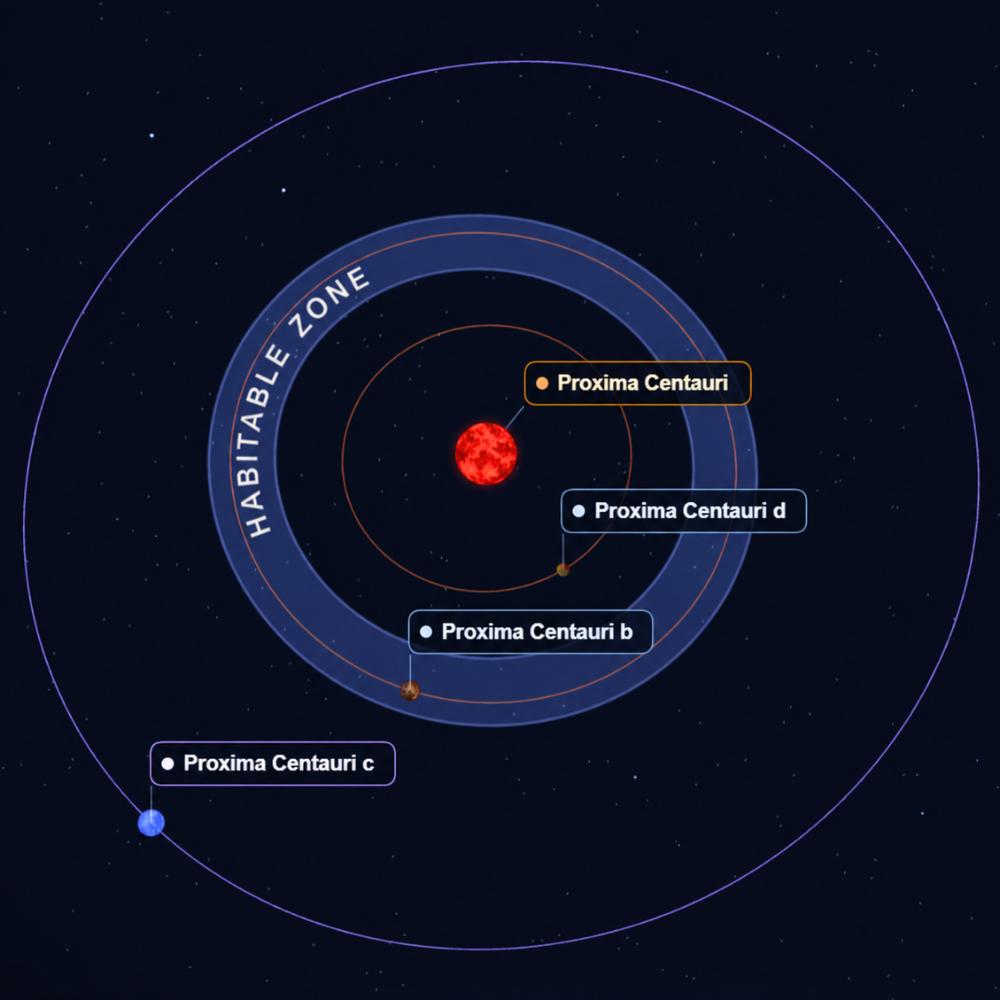 Nearest star system
Proxima Centauri System Map
Zoom back from planet d to compare the confirmed inner worlds with the disputed outer candidate Proxima c.
Open interactive map Planetary system
Solar System 3D Map
Compare our familiar eight-planet system with the compact orbits around Proxima Centauri.
Open interactive map True-scale comparison
Earth–Moon 3D Scale Map
See real size ratios, orbital spacing, and synchronous rotation in our own cis-lunar system.
Open interactive map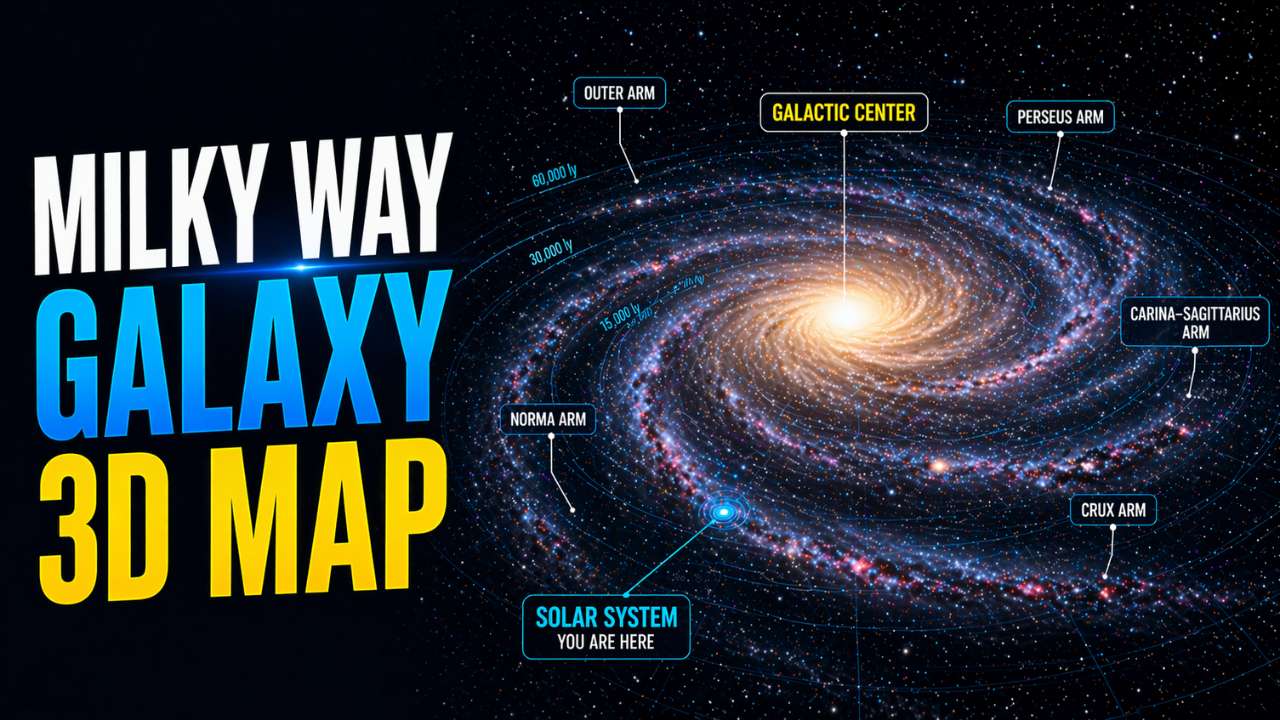 Galactic scale
Milky Way Galaxy 3D Map
Locate the Solar neighborhood inside the barred spiral structure of our home galaxy.
Open interactive map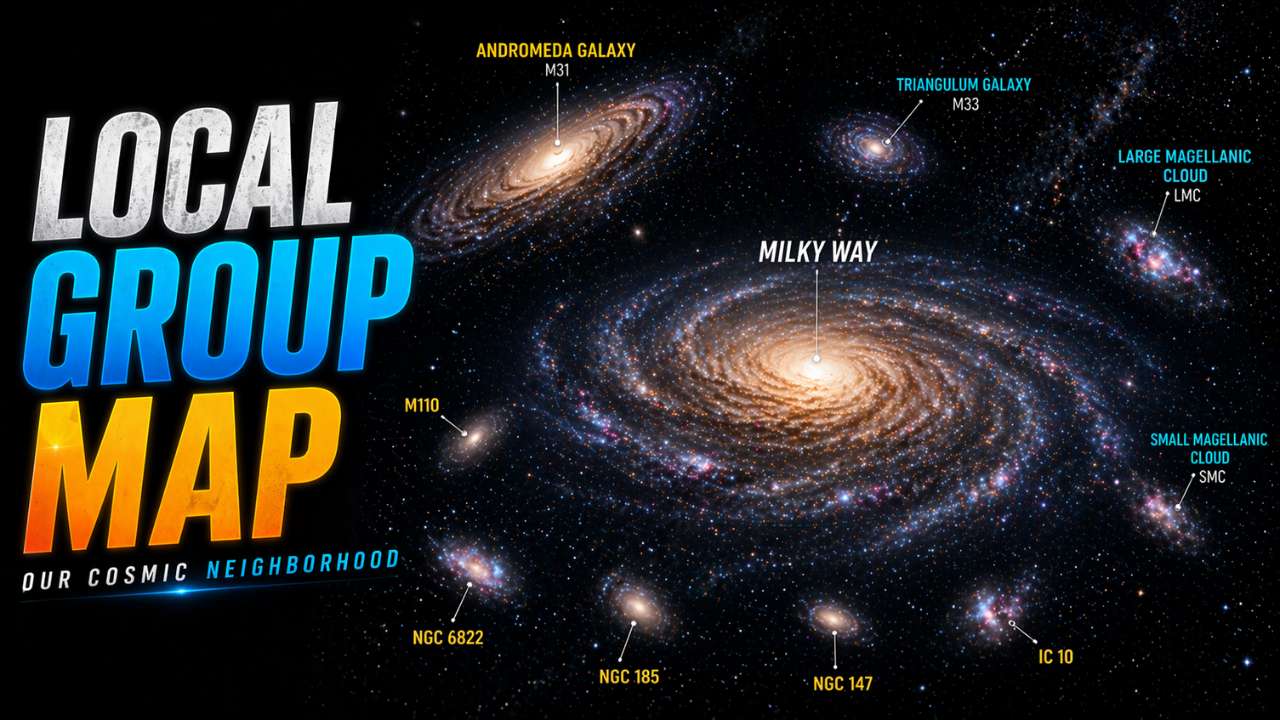 Nearby universe
Local Group Map
Travel from the Milky Way to Andromeda, Triangulum, and the nearby dwarf galaxies.
Open interactive map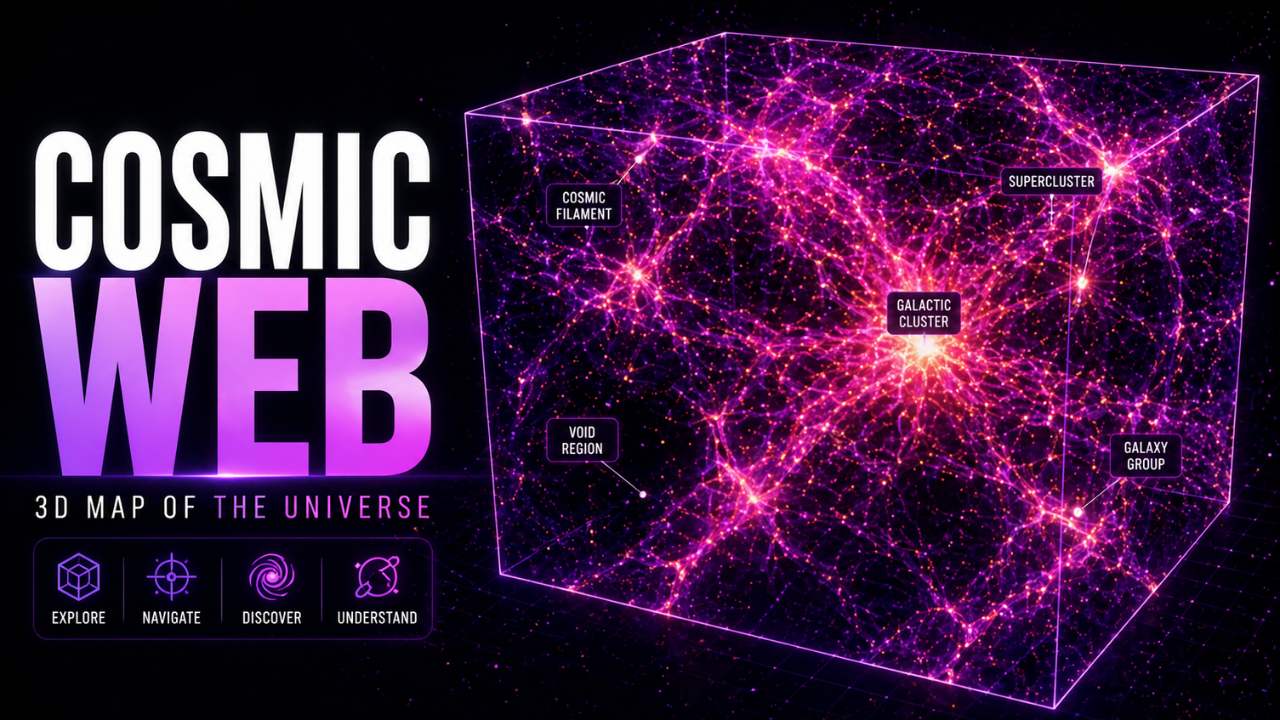 Full atlas
Explore Every 3D Map
Browse planetary systems, galaxies, black holes, voids, dark matter, and large-scale cosmic structure.
Browse the collectionProxima Centauri d FAQ
Direct answers about the closest-in and lowest-mass confirmed planet in the Proxima Centauri system.
Is Proxima Centauri d confirmed?
Yes. It was reported as a planet candidate in 2022, then confirmed in 2025 when the 5.12-day signal remained stable across NIRPS, HARPS, ESPRESSO, and archival measurements. NASA now lists it as a confirmed planet.
Is Proxima Centauri d habitable?
It orbits closer to the star than the classical habitable zone and receives about 1.8 times the stellar energy Earth receives. Its atmosphere and surface are unknown, so the catalog equilibrium temperature cannot establish real surface conditions.
How far away is Proxima Centauri d?
The Proxima Centauri system is about 4.25 light-years from Earth, or roughly 40 trillion kilometres. Within that system, planet d orbits about 0.02881 AU—around 4.31 million kilometres—from its star.
How long is a year on Proxima d?
One orbit takes 5.12338 Earth days. It is the innermost confirmed planet known around Proxima Centauri.
Is Proxima d smaller than Earth?
Its measured minimum mass is 0.260 ± 0.038 Earth masses, about twice Mars’s mass. NASA lists an estimated radius of 0.692 Earth radii, but there is no direct radius measurement, so its size and density remain uncertain.
Can we see Proxima Centauri d?
Not as a resolved planet. It was detected through the extremely small Doppler wobble its gravity produces in the host star. The surface shown in this map is a scientific visualization, not an observation.
How long would it take to travel there?
At light speed the journey would take about 4.25 years from Earth’s frame. At a speed comparable to Voyager 1, a direct trip would take roughly 75,000 years; no current spacecraft can make a practical interstellar journey.
Could Proxima d be tidally locked?
Its very close, nearly circular five-day orbit makes synchronous rotation plausible, but its spin has not been directly measured. The map’s tidal-lock behavior is therefore a physical model, not an observed fact.
Scientific sources
Catalog values and scientific context are tied to primary or authoritative sources so readers can distinguish measurement from visualization.
- NASA Science — Proxima Centauri d catalog
- NASA Exoplanet Archive — Proxima Centauri system and 2025 solution
- European Southern Observatory — 2022 candidate announcement
- Astronomy & Astrophysics — 2022 ESPRESSO candidate study
- Astronomy & Astrophysics — 2025 NIRPS confirmation study
- NASA Exoplanet Archive — July 2025 confirmation notice